
Building a mobile app can feel expensive, confusing, and unpredictable at first. Many startups and business owners worry about overspending or choosing the wrong development approach. The good news is that with the right understanding of custom mobile app development, you can plan your budget smartly and avoid costly mistakes.
A well-built app can grow your business, improve customer experience, and open new revenue streams. But to achieve that, you need clarity on the mobile app development cost, what affects it, and where your money goes.
In this blog, you’ll learn real pricing, detailed cost breakdowns, and practical examples related to custom mobile app development. Whether you’re a startup founder or a business owner, this blog will help you estimate your budget and make informed decisions about app development.
What Is the Average Cost of Building an App in 2026?
The mobile app development cost in 2026 is not a fixed number. It depends on the type of mobile app you want to create, how advanced the features are, and the development team you hire. Essentially, it is the total budget needed to design, develop, test, and launch your mobile app.
For most businesses, the average cost of mobile app development falls between $10,000 and $300,000+. Smaller mobile apps stay on the lower end, while complex, feature-rich mobile apps require a much higher investment.
What Does This Cost Actually Include?
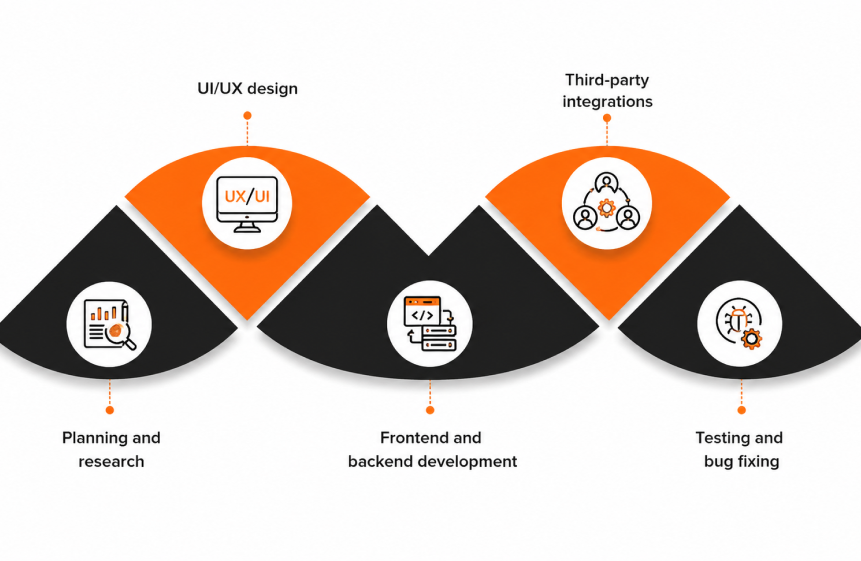
When people ask how much does it cost to build an app?, they often think only about coding. But the real app development cost breakdown includes:
- Planning and research
- UI/UX design
- Frontend and backend development
- Third-party integrations
- Testing and bug fixing
- Deployment and launch
Each of these stages adds to the final mobile app cost estimate.
Important Factors That Affect App Development Cost
Here are the main elements that directly impact the cost to build an app:
| Factor | Description | Impact on Cost |
| App Complexity | The depth of logic and the number of screens (Simple, Medium, or Complex) | Higher complexity means more development time and testing, which increases cost |
| Platform Choice | Choosing between iOS, Android, or both (cross-platform) | Building for both platforms can raise costs by 30–60% |
| Features & Functionality | Adding features like chat, payments, or GPS | Advanced features need more development work, increasing the overall cost |
| Design Quality | The level of UI/UX design, animations, and branding | Custom, high-quality designs cost more than basic or template designs |
| Team Location | The location of your development team | US teams: $80–$150/hour • Offshore teams: $20–$50/hour |
Average Cost Range by App Type
Below is a realistic estimate of mobile app development costs based on the complexity of your app:
| App Type | Features Included | Cost Range |
| Simple App | Basic UI, login, limited features | $10,000 – $30,000 |
| Medium App | API integration, dashboards, and user profiles | $30,000 – $80,000 |
| Complex App | Real-time features, AI, scalability | $80,000 – $300,000+ |
Cost by Development Time
Another way to understand the cost of app development is by timeline:
- Simple apps: 2–3 months
- Medium apps: 3–6 months
- Complex apps: 6–12+ months
Longer development time directly increases the app developer cost.
Real Examples for Better Understanding
- A basic task management app with login and simple UI → Cost: around $10,000 – $20,000
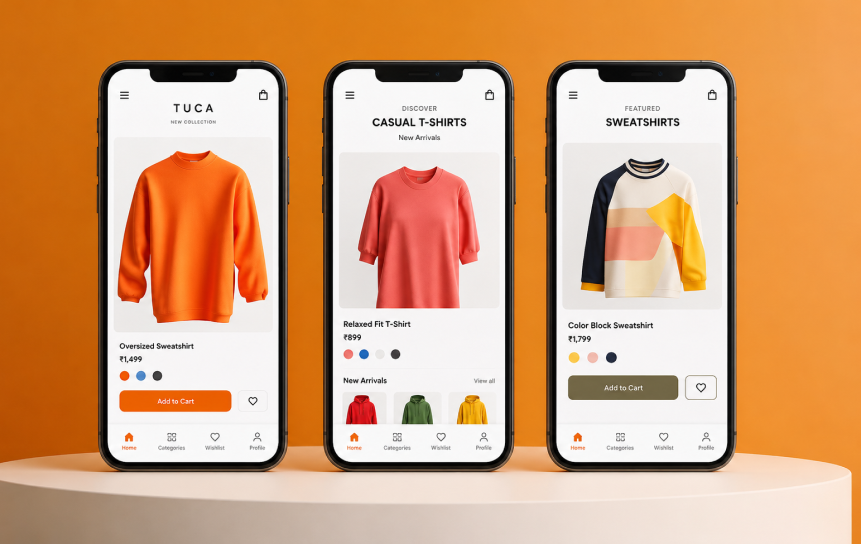
- An e-commerce app with product listings, cart, and payments → Cost: around $40,000 – $100,000
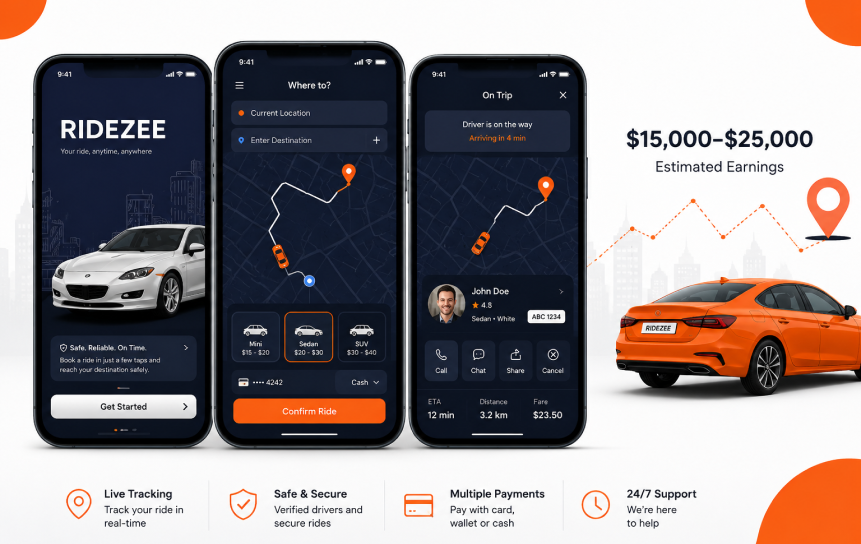
- An on-demand app (like Uber) with real-time tracking and payments → Cost: $120,000 – $250,000+
Main Components of Mobile App Development Costs
App development costs can quickly add up if you don’t plan carefully. It’s not just a single expense; design, development, testing, and deployment all contribute to the total. That’s why many businesses rely on mobile app development services to streamline the process, control costs, and deliver a high-quality app efficiently.
Each stage has its own cost, timeline, and impact on the final product. By clearly understanding this breakdown, you can plan your app development budget more accurately and avoid unexpected expenses.
Core Cost Components
The total cost to build an app is divided into these important parts:
- UI/UX Design
- Frontend Development
- Backend Development
- API & Third-Party Integrations
- QA & Testing
- Deployment
Each component contributes to the final mobile app cost estimate, and skipping any of them can affect app quality.
Overall Cost Overview
| Component | Cost Range |
| UI/UX Design | $5,000 – $20,000 |
| Frontend Development | $10,000 – $50,000 |
| Backend Development | $15,000 – $70,000 |
| API Integration | $5,000 – $25,000 |
| Testing & QA | $5,000 – $20,000 |
| Deployment | $1,000 – $5,000 |
Quick Insight:
For a medium-level app, most businesses spend $40,000 to $100,000 across all these stages.
UI/UX Design Cost
UI/UX design is where your app starts taking shape. It defines how your app looks and how users interact with it. A good design is not just about visuals; it directly impacts user engagement and retention.
A poorly designed app may fail even if the functionality is strong. That’s why investing in design is a critical part of the app development cost breakdown.
What Affects Design Cost
- Number of screens (more screens = higher cost)
- Custom vs template-based design
- Animations, micro-interactions, and transitions
- User research and usability testing
Design Cost Breakdown
| Design Element | Cost Range |
| Wireframing | $1,000 – $5,000 |
| UI Design | $3,000 – $15,000 |
| Prototyping | $1,000 – $5,000 |
Example
A simple business app with 10–15 screens may cost around $5,000–$8,000. A high-end app with custom animations and advanced UX flows can exceed $20,000.
Frontend Development Cost
Frontend development is everything users see and interact with inside the app. This includes layouts, buttons, navigation, animations, and responsiveness across devices.
It plays a major role in defining the user experience and directly affects the mobile app development price.
Key Cost Factors
- Platform (iOS, Android, or both)
- UI complexity and animations
- Performance optimization
- Technology used (native vs cross-platform)
Frontend Cost Estimate
| Frontend Type | Cost Range |
| Simple UI | $10,000 – $20,000 |
| Medium UI | $20,000 – $40,000 |
| Advanced UI | $40,000 – $60,000 |
Example
An e-commerce app with product listings, filters, and a shopping cart may cost around $20,000–$30,000 for frontend development alone.
Backend Development Cost
Backend development is the engine behind your app. It manages data, user authentication, server communication, and overall performance.
This is one of the most critical parts of the cost of app development, especially for apps that handle large amounts of user data or real-time interactions.
What Affects Backend Cost
- Database structure and size
- Number of users and scalability needs
- Server infrastructure (cloud or dedicated)
- Security and data protection requirements
Backend Cost Breakdown
| Backend Type | Cost Range |
| Basic Backend | $15,000 – $30,000 |
| Scalable Backend | $30,000 – $70,000 |
| Enterprise Level | $70,000+ |
Example
A social media app with real-time feeds, messaging, and user profiles may require a backend budget of $50,000 or more.

API and Third-Party Integration Cost
Most modern apps rely on external services to save development time and add advanced features. These integrations are essential but increase the overall app development cost.
Common Integrations
- Payment gateways (Stripe, PayPal)
- Maps and location services
- Social media login (Google, Facebook)
- Push notifications and messaging services
Cost Breakdown
| Integration Type | Cost Range |
| Basic APIs | $5,000 – $10,000 |
| Advanced APIs | $10,000 – $25,000 |
Example
An on-demand app (like Uber) requires maps, real-time tracking, and payments. These integrations alone can cost $15,000–$25,000.
QA and Testing Cost
Testing ensures your app works seamlessly across devices, free of bugs or crashes. It is a critical part of the mobile app development cost breakdown and should never be overlooked.
Skipping proper testing can lead to poor user experience and costly fixes after launch.
Types of Testing
- Manual testing
- Automated testing
- Performance testing
- Security testing
Testing Cost Table
| Testing Type | Cost Range |
| Basic Testing | $5,000 – $10,000 |
| Advanced QA | $10,000 – $20,000 |
Example
An e-commerce app with payments and user accounts requires deep testing, typically costing around $10,000–$15,000.
Deployment Cost
Deployment is the final step where your app goes live on app stores. While it is the smallest part of the budget, it is still essential in the overall cost to develop an app.
What Deployment Includes
- App Store and Google Play submission
- Developer account setup
- Final performance optimization
- Initial post-launch support
Deployment Cost Estimate
| Deployment Task | Cost Range |
| App Store Setup | $500 – $2,000 |
| Google Play Setup | $500 – $1,500 |
| Launch Support | $1,000 – $3,000 |
Example
Launching an app on both platforms with proper setup and support may cost around $2,000–$4,000.
Mobile App Development Cost by App Type
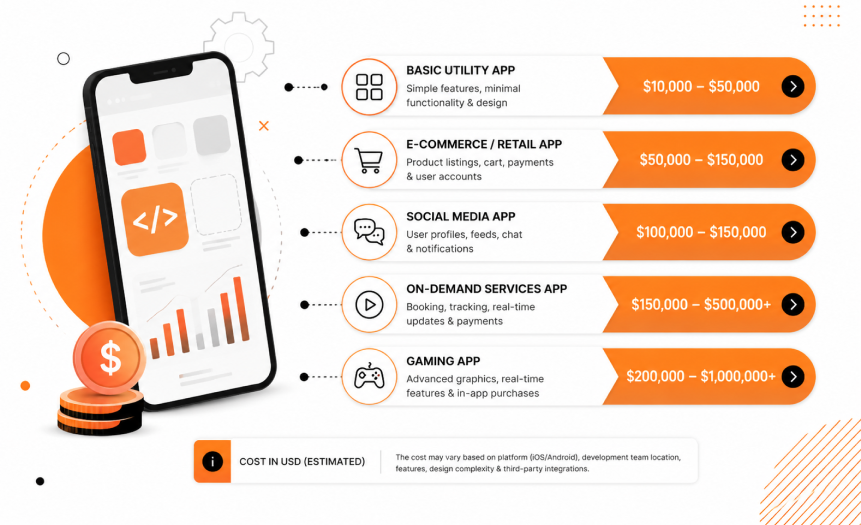
Not all apps cost the same. The mobile app development cost changes significantly based on the type of app you want to build. A simple utility app will cost much less than a real-time platform like a social network or ride-hailing app.
App types help you create a more accurate mobile app development cost estimate and avoid underbudgeting.
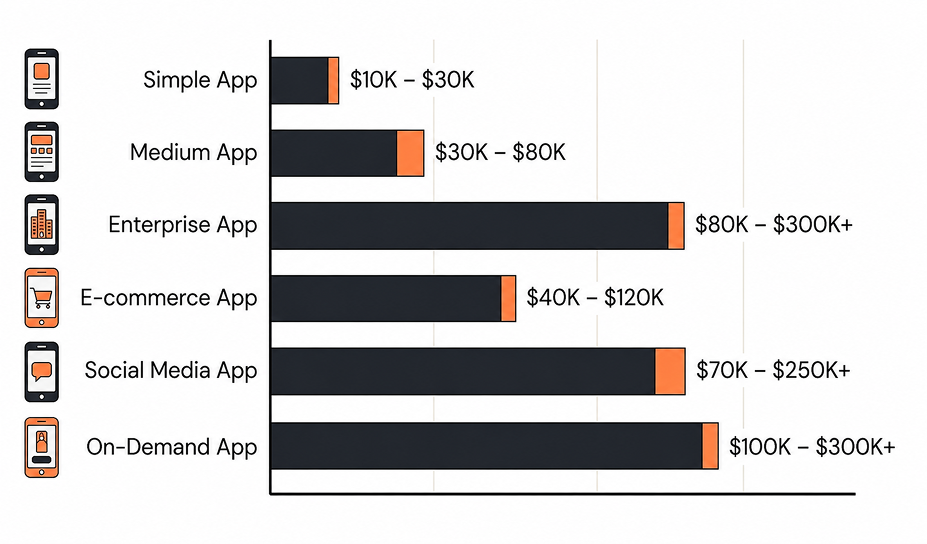
Below is a clear comparison of different app types and their expected pricing.
Cost Comparison Graph By App Type
Cost Overview Table
| App Type | Cost Range | Complexity Level | Common Features |
| Simple App | $10,000 – $30,000 | Low | Login, basic UI |
| Medium App | $30,000 – $80,000 | Moderate | APIs, dashboards |
| Enterprise App | $80,000 – $300,000+ | High | Scalability, security |
| E-commerce App | $40,000 – $120,000 | Medium–High | Payments, cart |
| Social Media App | $70,000 – $250,000+ | High | Chat, feeds |
| On-Demand App | $100,000 – $300,000+ | Very High | Real-time tracking |
Simple App Development Cost
Simple apps are basic applications with limited features. These are ideal for startups testing an idea or small businesses going digital.
They usually include:
- User login/signup
- Simple navigation
- Basic functionality calculator, notes, etc.
Cost Range
| Component | Cost Estimate |
| Design | $1,000 – $5,000 |
| Development | $8,000 – $20,000 |
| Testing | $1,000 – $5,000 |
Total Cost: $10,000 – $30,000
Example
A simple task manager or booking app with minimal features may cost around $15,000.
Medium Complexity App Cost
Medium apps include more features and a better user experience. These are common for growing startups and businesses.
They typically include:
- API integrations
- User dashboards
- Push notifications
- Payment systems (basic)
Cost Range
| Component | Cost Estimate |
| Design | $5,000 – $15,000 |
| Development | $20,000 – $50,000 |
| Testing | $5,000 – $10,000 |
Total Cost: $30,000 – $80,000
Example
An e-commerce app with product listings and checkout functionality usually falls in this range.
Enterprise App Development Cost
Enterprise apps are large-scale applications built for high performance, security, and scalability. These apps handle thousands or millions of users.
They include:
- Advanced backend systems
- Data analytics
- High-level security
- Multi-user roles
Cost Range
| Component | Cost Estimate |
| Design | $10,000 – $30,000 |
| Development | $50,000 – $200,000 |
| Testing | $10,000 – $40,000 |
Total Cost: $80,000 – $300,000+
Example
A banking or enterprise management system can easily exceed $200,000.
E-commerce App Development Cost
E-commerce apps are designed for selling products or services online. Their cost depends on product volume and features.
Key features include:
- Product catalog
- Shopping cart
- Payment gateway
- Order tracking
Cost Range
| Feature Area | Cost Estimate |
| UI/UX Design | $5,000 – $15,000 |
| Development | $30,000 – $80,000 |
| Integrations | $5,000 – $20,000 |
Total Cost: $40,000 – $120,000
Example
An online store similar to Shopify-based apps may cost around $60,000–$100,000.
Social Media App Development Cost
Social media apps are feature-rich and require real-time functionality. These apps are among the most expensive due to their high user engagement features.
They usually include:
- User profiles
- News feeds
- Messaging/chat
- Media sharing
Cost Range
| Component | Cost Estimate |
| Design | $10,000 – $25,000 |
| Development | $40,000 – $150,000 |
| Backend | $20,000 – $80,000 |
Total Cost: $70,000 – $250,000+
Example
Apps like Instagram or Facebook clones can cost $150,000+, depending on features.
On-Demand App Development Cost
On-demand apps connect users with services in real time. These are complex apps with multiple panels user, admin, service provider.
Common features:
- Real-time tracking (GPS)
- Booking system
- Payment integration
- Notifications
Cost Range
| Component | Cost Estimate |
| UI/UX Design | $10,000 – $25,000 |
| Development | $60,000 – $200,000 |
| Integrations | $15,000 – $40,000 |
Total Cost: $100,000 – $300,000+
Example
An app like Uber or food delivery platforms can cost $150,000 to $250,000+.
Platform-Based App Development Cost
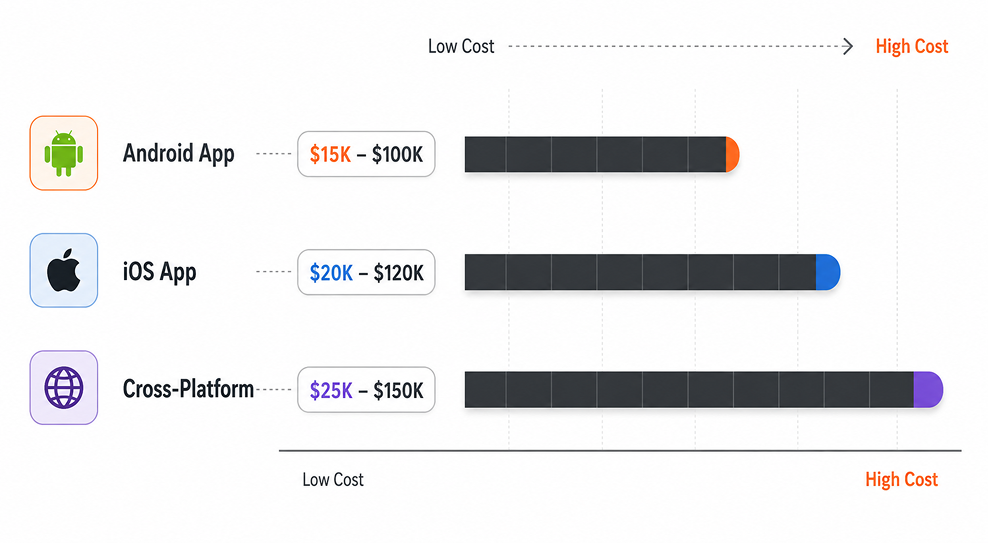
The platform you choose has a direct impact on your mobile app development cost. Building for Android, iOS, or both changes your budget, timeline, and overall development approach.
Some businesses start with one platform to save cost, while others launch on both to reach a wider audience. Your choice should depend on your target users and business goals.
Platform Cost Comparison
PLATFORM COST OVERVIEW 2026
Time to Build:
Android → 2–6 months
iOS → 2–6 months
Cross-Platform → 3–8 months
Best For:
Android → Wider global reach
iOS → Premium users
Cross-Platform → Budget + faster launch
Platform Cost Comparison Table
| Platform | Cost Range | Development Time | Best Use Case |
| Android App | $15,000 – $100,000 | 2–6 months | Mass audience |
| iOS App | $20,000 – $120,000 | 2–6 months | Premium market |
| Cross-Platform | $25,000 – $150,000 | 3–8 months | Budget optimization |
Android App Development Cost
Android apps are widely used across the world. They support a large number of devices, which makes development slightly more complex.
This affects the overall cost to develop an Android app, especially when testing across different screen sizes and OS versions.
What Influences Cost
- Device fragmentation (many screen sizes)
- OS version compatibility
- Custom UI requirements
- Google Play compliance
Cost Breakdown
| Component | Cost Range |
| Design | $3,000 – $12,000 |
| Development | $10,000 – $70,000 |
| Testing | $2,000 – $10,000 |
Total Cost: $15,000 – $100,000
Example
A business app with login, dashboard, and API integration may cost around $25,000–$50,000 on Android.
iOS App Development Cost
iOS apps are known for better performance and a premium user experience, making them a preferred choice in mobile app development.
iOS app development is often more streamlined compared to Android due to fewer devices and a more controlled ecosystem.
However, the iPhone app development cost can be slightly higher because of Apple’s strict design and quality standards.
What Affects Cost
- Apple design guidelines (strict UI rules)
- High-performance expectations
- App Store approval process
- Swift programming requirements
Cost Breakdown
| Component | Cost Range |
| Design | $5,000 – $15,000 |
| Development | $15,000 – $80,000 |
| Testing | $3,000 – $12,000 |
Total Cost: $20,000 – $120,000
Example
An iOS e-commerce app with payment integration and smooth UI may cost around $40,000–$90,000.
Cross-Platform App Development Cost
Cross-platform apps are built using a single codebase that works on both Android and iOS. This approach is popular for reducing the overall app development cost.
It is a smart choice for startups looking to launch faster with a limited budget.
What Impacts Cost
- Framework used (Flutter, React Native)
- App complexity
- Performance requirements
- Third-party integrations
Cost Breakdown
| Component | Cost Range |
| Design | $5,000 – $15,000 |
| Development | $20,000 – $100,000 |
| Testing | $5,000 – $15,000 |
Total Cost: $25,000 – $150,000
Example
A startup app with core features for both platforms can be built for around $30,000–$70,000 by leveraging cross-platform app development services and efficient cross-platform technologies.
Mobile App Development Cost Factors Explained
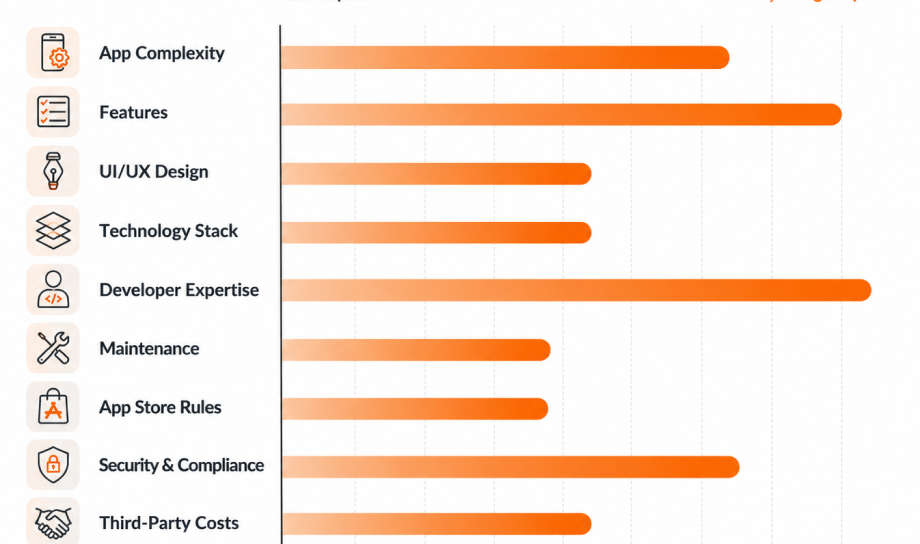
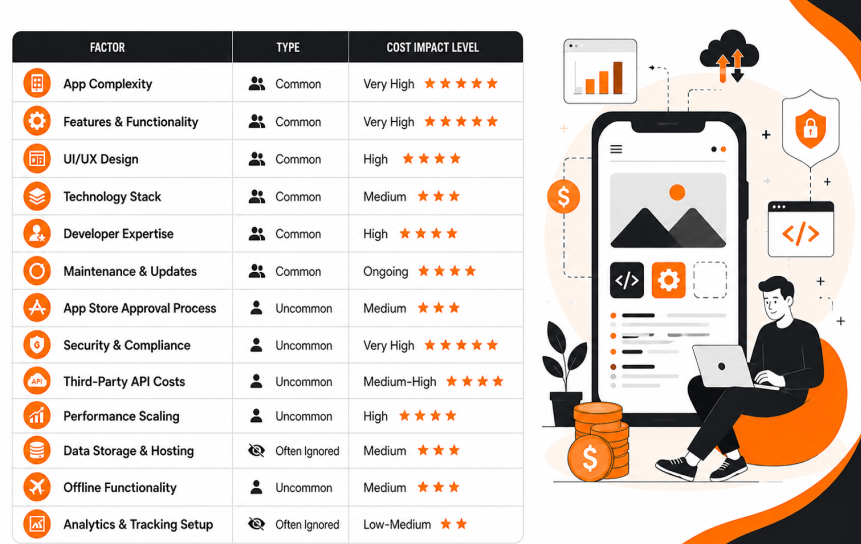
When estimating the mobile app development cost, most people only think about features and design. But in real projects, many “hidden” and less-discussed factors also influence the final budget.
Some of these are obvious like complexity, while others are often ignored until late in development, leading to unexpected increases in app development pricing.
Below is a complete breakdown of both common and slightly uncommon cost factors that shape your final cost to build an app.
Full Cost Impact Map
MOBILE APP COST DRIVERS REAL WORLD
Expanded Cost Factor Table
App Complexity
App complexity is the strongest driver of mobile app development cost. The more logic, screens, and workflows your app has, the higher the budget required.
Types of Complexity
- Simple apps (basic UI, no backend logic)
- Medium apps (APIs, dashboards, user systems)
- Complex apps (AI, real-time systems, large databases)
Cost Impact
| Level | Cost Range |
| Simple | $10,000 – $30,000 |
| Medium | $30,000 – $80,000 |
| Complex | $80,000 – $300,000+ |
Example
A basic calculator app is low-cost, while a fintech trading app is high-cost due to real-time processing.
Features and Functionality
Every feature adds development time, testing effort, and backend logic, which increases the app development cost breakdown.
High-Impact Features
- Chat systems
- Live tracking
- Payment gateways
- AI recommendations
- Multi-language support
Example Cost Impact
- Login system → +$1,000–$3,000
- Chat feature → +$8,000–$20,000
- Payment integration → +$3,000–$10,000
Even small features can significantly affect the cost to develop an app.
UI/UX Design Requirements
Design is not only about visuals; it includes user psychology, flow, and conversion optimization.
Hidden Design Cost Factors
- Micro-interactions (small animations)
- Accessibility design (for disabled users)
- Dark mode support
- Design system creation (for scaling apps)
Cost Range
| Design Type | Cost Range |
| Basic UI | $2,000 – $5,000 |
| Custom UI | $5,000 – $15,000 |
| Premium UX | $15,000 – $30,000+ |
Technology Stack
Technology choice affects performance, scalability, and long-term cost of app development.
Common but Often Ignored Cost Factors
- Framework updates (Flutter/React Native upgrades)
- Legacy code maintenance
- Cross-platform compatibility issues
Cost Influence
| Stack Type | Cost Impact |
| Cross-platform | Lower upfront cost |
| Native apps | Higher quality but costly |
| Custom backend | Higher scalability cost |
Developer Expertise
Developer skill level is a major hidden factor in app developer cost.
Less Obvious Cost Drivers
- Code quality (affects future maintenance cost)
- Development speed (delays increase cost)
- Architecture planning (impacts scalability)
Cost Comparison
| Developer Level | Hourly Rate |
| Junior | $20 – $40 |
| Mid-level | $40 – $80 |
| Senior | $80 – $150 |
Maintenance and Updates
Maintenance is often ignored during initial budgeting, but it can account for 15–25% of total annual cost.
Hidden Maintenance Costs
- OS updates (iOS/Android changes)
- Third-party API updates
- Security patching
- Server scaling during user growth
Annual Cost Range
| Maintenance Type | Cost Range |
| Basic | $5,000 – $10,000 |
| Advanced | $10,000 – $30,000 |
Important Cost Factors
These are often overlooked but can significantly affect the mobile app development cost estimate:
1. App Store Approval Delays
Apple review delays can increase the timeline cost if resubmissions are required.
2. Security & Compliance
Apps handling payments or personal data may need:
- GDPR compliance
- Encryption systems
- Security audits
Can add $5,000 – $25,000+
3. Third-Party API Pricing
Some APIs are not free:
- Google Maps (pay per usage)
- Payment gateways (transaction fees)
4. Performance Scaling
When your app grows:
- Server upgrades
- Load balancing
- Database optimization
Can significantly increase the long-term cost to run an app
5. Offline Functionality
Apps that work without internet require:
- Local storage systems
- Data sync mechanisms
Cost of Common App Features
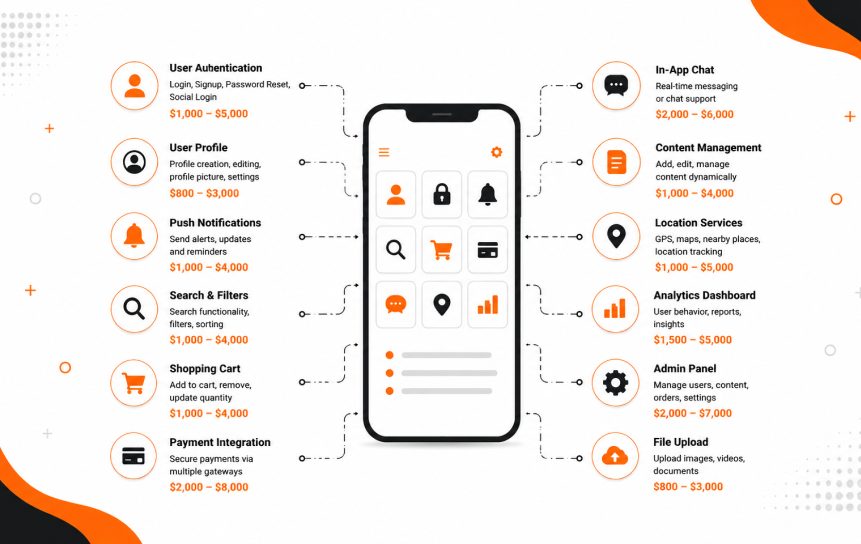
Most people estimate the mobile app development cost based on the “big idea” of the app. But in real projects, the final budget is mostly shaped by small but essential building blocks.
These features often look simple from the outside, but inside development, they involve security rules, server work, third-party services, and long-term maintenance. This is where many hidden parts of the app development cost breakdown come from.
Below is a more practical, real-world explanation of features that quietly impact your budget more than expected.
Login and Authentication Cost
Login systems are not just a “form with email and password.” They are responsible for identity, security, and data protection.
What makes this feature more important than it looks is that every app must handle:
- Secure user identity storage
- Password encryption
- Session management
- Fraud prevention basics
Less obvious cost drivers:
- Social login approval setup (Google/Apple policies)
- OTP verification systems (SMS/email costs)
- Account recovery flows
- Security hardening (to prevent breaches)
Cost range:
| Type of Access System | Estimated Cost |
| Basic login setup | $1,000 – $2,500 |
| Social login + OTP | $2,000 – $4,000 |
| Secure multi-layer login | $3,000 – $5,000+ |
Practical insight:
Even a simple login screen can quietly affect your cost to build an app because it connects to security infrastructure that must scale safely.
Chat Feature Cost
Chat looks like a messaging box on the screen, but behind it is a continuous real-time system that never sleeps.
It is one of those features that silently increases app development pricing because it requires constant data exchange between users.
Hidden complexity factors:
- Real-time server connection (WebSockets)
- Message delivery tracking
- Offline message syncing
- Media storage (images, voice, files)
- Spam and abuse control systems
Cost range:
| Chat Type | Estimated Cost |
| Basic messaging | $8,000 – $12,000 |
| Feature-rich chat | $12,000 – $20,000 |
| High-scale real-time | $20,000 – $25,000+ |
Practical insight:
Chat is often underestimated, but it behaves like a mini social network inside your app; this is why it raises the mobile app development cost estimate significantly.
Payment Integration Cost
Payments are not just add card and pay. They involve financial rules, verification systems, and external gateways.
This feature is especially sensitive because it deals with real money, which increases compliance and testing effort.
Less obvious cost factors:
- Payment gateway approval (Stripe, PayPal, etc.)
- Fraud detection logic
- Currency conversion handling
- Refund and dispute flows
- Transaction security layers
Cost range:
| Payment Setup | Estimated Cost |
| Single payment gateway | $5,000 – $8,000 |
| Multi-provider system | $8,000 – $15,000 |
| Advanced billing engine | $15,000 – $20,000+ |
Practical insight:
Even a small e-commerce app sees a noticeable increase in app development cost breakdown once payments are added.
Push Notifications Cost
Notifications seem simple, but they are actually a user engagement system tied to backend logic, segmentation, and timing control.
They directly influence user retention, which makes them more valuable than their cost suggests.
Hidden complexity factors:
- User segmentation rules (who gets what message)
- Scheduling and automation logic
- Personalization logic
- Device compatibility handling (iOS vs Android rules)
- Delivery tracking and analytics
Cost range:
| Notification Level | Estimated Cost |
| Basic alerts | $2,000 – $3,000 |
| Targeted notifications | $3,000 – $6,000 |
| Advanced engagement flow | $6,000 – $8,000+ |
Practical insight:
Push systems often look cheap but quietly increase the cost to develop an app when personalization is added.
Admin Panel Cost
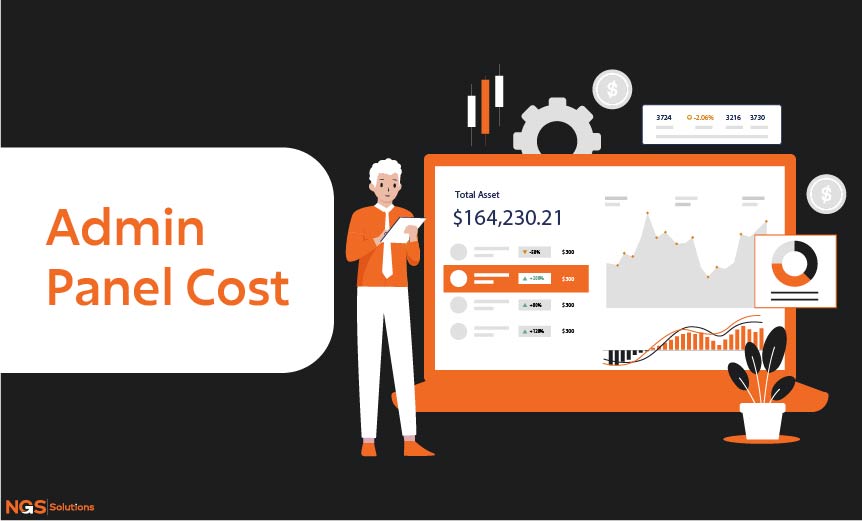
The admin panel is rarely seen by users, but it is one of the most powerful parts of any system.
It controls everything behind the scenes, including users, content, transactions, and business logic.
Hidden complexity factors:
- Role-based access (admin, manager, staff)
- Real-time analytics dashboards
- Data export and reporting tools
- Content moderation systems
- Internal workflow controls
Cost range:
| Admin System Type | Estimated Cost |
| Basic control panel | $10,000 – $15,000 |
| Business dashboard | $15,000 – $25,000 |
| Enterprise-grade system | $25,000 – $30,000+ |
Practical insight:
A strong admin panel reduces long-term operational costs even if it increases initial mobile app development costs.
API Integration Cost
APIs are invisible connectors that power most modern app features. Without them, apps would need to build everything from scratch.
They often seem simple at first, but become complex when scaled.
Less obvious cost drivers:
- API usage limits and pricing models
- Data synchronization between systems
- Version updates from third-party providers
- Failure handling (what happens when the API is down)
- Security and authentication tokens
Cost range:
| Integration Level | Estimated Cost |
| Single API connection | $5,000 – $8,000 |
| Multiple integrations | $8,000 – $15,000 |
| Complex ecosystem APIs | $15,000 – $25,000 |
Practical insight:
APIs reduce development time but can increase the long-term cost of app development due to usage-based pricing and maintenance.
How to Estimate Mobile App Development Cost
Estimating the mobile app development cost is not guesswork. It is a structured process based on requirements, features, time, and developer pricing.
Most inaccurate budgets happen when planning is skipped. A proper estimate helps you understand the true cost of building an app, avoid surprises, and control your app development costs from the start.
Below is a simple, practical step-by-step method used in real projects.
Define App Requirements
The first step is to define what you are building clearly. Without clarity, any mobile app cost estimate will be unreliable.
This step focuses on the purpose and scope of your app.
What to define:
- Target users (who will use the app)
- App goal (what problem it solves)
- Platform (Android, iOS, or both)
- Core functionality
Why it matters:
- Prevents scope confusion later
- Helps set realistic budget expectations
- Reduces unnecessary app development cost breakdown changes
Example:
A food delivery app and a booking app may look similar, but their backend and features are completely different in terms of cost structure.
List Features
Once requirements are clear, the next step is to list all features your app will include. This is where most of the cost of app development is determined.
Each feature adds development time, testing effort, and sometimes external service costs.
What to include:
- Must-have features (core functionality)
- Nice-to-have features (future upgrades)
- Optional features (post-launch additions)
Why it matters:
- Helps avoid feature overload
- Keeps the budget aligned with priority
- Makes the app development cost breakdown more accurate
Example:
Instead of adding chat, payments, and analytics at launch, a startup may start with login + basic listing features to reduce initial cost.
Estimate Development Hours
After listing features, each one is converted into an estimated development time.
This is one of the most practical ways to calculate how much it costs to develop an app.
How it works:
- Each feature = number of hours required
- Total hours = full project effort
- Includes design, development, testing, and fixes
Example estimation:
| Feature | Estimated Hours |
| Login system | 40 – 80 hours |
| Chat system | 120 – 250 hours |
| Payment system | 80 – 150 hours |
| Admin panel | 150 – 300 hours |
Why it matters:
- Converts ideas into measurable effort
- Helps compare different app scopes
- Forms base of a real mobile app development cost estimate
Apply Hourly Rate
Once you have the total hours, you multiply them by the developer’s hourly rates to calculate the final cost.
This step directly defines the app developer cost and overall budget.
Typical hourly rates:
| Developer Type | Hourly Rate |
| Junior developer | $20 – $40 |
| Mid-level | $40 – $80 |
| Senior developer | $80 – $150 |
Formula:
Total Cost = Total Hours × Hourly Rate
Example:
- 400 hours × $50/hour = $20,000
- 400 hours × $100/hour = $40,000
Why it matters:
- Makes pricing transparent
- Helps compare agencies and freelancers
- Prevents overpaying for app development charges
MVP vs Full App Cost Calculation
One of the smartest ways to control mobile app development cost is to separate MVP (Minimum Viable Product) from a full-featured app.
This helps you launch faster and reduce risk.
MVP (Minimum Viable Product)
An MVP includes only the core features needed to test the idea.
Characteristics:
- Basic functionality only
- Minimal design complexity
- Faster development time
- Lower cost
Cost Range:
- $10,000 – $50,000 (depending on app type)
Full App Version
A full app includes all advanced features, scalability, and long-term infrastructure.
Characteristics:
- Advanced features (chat, AI, analytics)
- Strong backend system
- High scalability
- Polished UI/UX
Cost Range:
- $50,000 – $300,000+
Comparison Table
| Version | Features Included | Cost Range |
| MVP | Core features only | $10K – $50K |
| Full App | Advanced + scalable system | $50K – $300K+ |
How to Reduce Mobile App Development Cost
Cutting down the mobile app development cost doesn’t mean compromising on quality or performance. In fact, most cost overruns happen because of planning gaps, unclear priorities, or building too much too early.
A smarter approach is to control scope, choose the right technology, and make decisions based on long-term value instead of assumptions. This directly improves your app development cost breakdown and keeps your budget realistic from day one.
Build Only What You Need First (MVP Thinking)
Instead of developing a complete product at once, start with a lean version that proves your idea in the market.
An MVP helps you focus only on essential functionality and avoid unnecessary complexity.
This approach reduces early-stage pressure on:
- Development hours
- Design workload
- Testing effort
- Initial infrastructure cost
Example:
A delivery app doesn’t need loyalty programs, AI suggestions, or advanced analytics in the first version. Starting with ordering, payment, and tracking is enough to validate the idea and significantly reduce the cost to build an app.
Focus on Features That Drive Value
Not every idea on paper needs to become a feature in the first release. One of the most effective ways to manage app development pricing is separating “core value” from “extra ideas.”
A useful approach is:
- Build features that solve the main problem
- Delay features that enhance the experience but are not essential
- Remove anything that doesn’t support user retention or revenue
This prevents feature overload, which is a common reason behind rising mobile app development cost estimates.
Choose a Single Codebase When Possible
Instead of building separate apps for Android and iOS, using cross-platform development can reduce effort significantly.
Frameworks like Flutter or React Native allow a shared codebase, which means:
- Less duplicate development work
- Faster release cycles
- Lower maintenance overhead
This decision alone can reduce the overall cost of app development by a noticeable margin, especially for startups and mid-size businesses.
Work With the Right Development Model
The team you choose has a direct impact on your app development costs. It’s not just about hourly rates; mobile app developers expertise, efficiency, and communication skills significantly influence both the overall cost and the quality of your app.
Different models affect cost differently:
- Freelancers: Lower cost, but limited scalability
- Offshore teams: Cost-efficient with good expertise
- Agencies: Higher cost but structured delivery
A balanced approach often works best, especially for complex apps where both quality and budget matter.
Keep Features Lean in Early Stages
One of the most overlooked reasons for high mobile app development costs is overbuilding.
Adding too many features early creates:
- Longer development cycles
- More bugs and testing effort
- Higher backend complexity
- Increased maintenance cost after launch
Instead of building everything up front, it’s better to release in phases and expand based on user feedback.
Example:
A booking app doesn’t need chat, rewards, AI suggestions, and advanced dashboards at launch. These can be added later once the core system is stable.
Hidden Costs of Mobile App Development
When planning the mobile app development cost, most people focus only on design, development, and testing. But in real-world projects, the initial build is just one part of the total investment.
After launch, several ongoing expenses appear that are often overlooked during budgeting. These hidden elements can significantly increase the long-term cost to build an app and should be included in any realistic app development cost breakdown.
Maintenance Cost
Once your app is live, it is not “finished.” It requires continuous updates to stay stable, secure, and compatible with new devices and operating systems.
Maintenance is one of the most consistent long-term expenses in any app project.
What it includes:
- Bug fixes and performance improvements
- OS updates (iOS and Android changes)
- Security patches
- Small feature updates
Why it matters:
Even a stable app can break after system updates, which makes maintenance unavoidable.
Cost range:
| Maintenance Level | Annual Cost |
| Basic updates | $5,000 – $10,000 |
| Active maintenance | $10,000 – $25,000 |
| High-scale support | $25,000+ |
Cloud Infrastructure Cost
Modern apps rely on cloud services for storing data, running servers, and managing traffic. This cost grows with usage.
What affects pricing:
- Number of users
- Data storage size
- Server requests per second
- Media uploads (images/videos)
Why it matters:
A small app may start cheaply, but as users grow, cloud expenses increase automatically.
Cost range:
| Usage Level | Monthly Cost |
| Low traffic app | $100 – $500 |
| Medium-scale app | $500 – $2,000 |
| High traffic app | $2,000 – $10,000+ |
Scaling Cost
As your app grows, it needs to handle more users, more data, and more requests without slowing down.
Scaling is not just about adding servers; it involves architectural changes.
What increases scaling cost:
- Load balancing systems
- Database optimization
- Performance upgrades
- Microservices architecture
Why it matters:
Apps that go viral or grow quickly often face unexpected infrastructure upgrades.
Cost range:
| Scaling Stage | Estimated Cost |
| Early scaling | $5,000 – $15,000 |
| Growth phase | $15,000 – $50,000 |
| Enterprise scaling | $50,000+ |
Post-Launch Support Cost
After launch, users will report issues, request improvements, and expect updates. This creates an ongoing support requirement.
What it includes:
- User bug reports handling
- Minor feature improvements
- App performance monitoring
- Version updates
Why it matters:
Ignoring support can lead to poor ratings and user drop-off.
Cost range:
| Support Type | Monthly Cost |
| Basic support | $500 – $2,000 |
| Active support | $2,000 – $5,000 |
| Dedicated team | $5,000+ |
Marketing Cost
Even a perfectly built app will not succeed without users. Marketing is often the most underestimated part of the mobile app development cost journey.
Common marketing activities:
- App Store Optimization (ASO)
- Paid ads (Google, Meta, TikTok)
- Influencer campaigns
- Content marketing
Why it matters:
User acquisition often costs more than development itself in competitive markets.
Cost range:
| Marketing Stage | Monthly Budget |
| Basic promotion | $1,000 – $5,000 |
| Growth campaigns | $5,000 – $20,000 |
| Aggressive scaling | $20,000+ |
Is Mobile App Development Worth It?
Whether the mobile app development cost is worth it depends on what you are trying to achieve. For some businesses, an app becomes the main revenue channel. For others, it is a support tool that improves customer experience or operational efficiency.
The real question is not just how much does it cost to develop an app, but what value it brings in return.
When planned correctly, a mobile app can generate long-term benefits that often outweigh the initial app development cost.
When Mobile Apps Deliver Strong Value
A mobile app is usually worth the investment when it directly supports business growth or customer engagement.
This is especially true for:
- E-commerce businesses are increasing repeat sales
- Service-based companies are improving booking systems
- Startups validating and scaling digital products
- Platforms that rely on user interaction or subscriptions
In these cases, the app becomes more than software; it becomes a revenue engine.
Business Benefits That Justify the Cost
Instead of focusing only on the cost to build an app, it’s important to look at what you gain:
- Direct access to customers anytime
- Better brand visibility and trust
- Higher customer retention rates
- Automation of manual processes
- New digital revenue streams
Even a moderate investment in app development pricing can produce strong returns if the app is aligned with a real business need.
When It May Not Be Worth It
A mobile app may not be the right investment if:
- Your audience does not need mobile access
- The idea is still unclear or untested
- Web platforms already solve the problem well
- There is no plan for user acquisition
In such cases, even a well-built app may not justify the mobile app development cost.
ROI Perspective (Simple View)
| Scenario | Investment Outcome |
| Strong business use case | High return potential |
| Weak or unclear idea | Low or uncertain return |
| MVP-first approach | Lower risk, better validation |
Conclusion
Most apps don’t struggle because the idea was wrong; they struggle because the spending path was unclear. The mobile app development cost is less about a fixed number and more about how intentionally each stage is handled.
Every decision adds a layer: what features to include, how the design feels, what technology to use, and when to scale. These layers quietly shape the cost to build an app, often more than the initial estimate suggests.
What often gets missed is the life after launch. The app doesn’t stop costing, it continues through updates, servers, improvements, and user-driven changes. This ongoing cycle becomes the real app development cost breakdown, not just the build itself.
A strong app is not defined by how much was spent, but by how well that spending was directed. When each part of the journey has purpose, the cost of app development turns into something more meaningful, less of a burden, and more of a foundation for steady growth.
Book a consultation today to stop losing time on inefficient processes. Our expert mobile app developers will help you streamline workflows and take full control.
FAQs
Answering the most common questions related to the cost of mobile app development.
- What is the mobile app development cost?
Mobile app development cost is the complete investment required to build, design, test, and launch an app. If you’re wondering how much does it cost to build a mobile app or how much does it cost to make an app, the answer depends on scope, but the average cost of app development includes everything from idea to launch, not just coding.
- How is the mobile app development cost calculated?
The cost is calculated based on features, development hours, and the mobile app developer cost. Each feature takes time, and time multiplied by developer rates defines your app development fees. A clear mobile app cost breakdown helps you estimate accurately and avoid unexpected expenses.
- Why does the cost of mobile app development vary between apps?
The business app development cost varies because every app is different. A simple app costs less, while complex apps with real-time features, integrations, and scalability increase the budget for app development. Complexity, design, and functionality all influence the final cost.
- How do features affect app development cost?
Features are the biggest cost drivers. Every added feature increases development time, which raises app development fees. Keeping features focused helps control the budget for app development while still delivering value.
- When should risk and contingency costs be added?
Risk buffers should be included early in your mobile app cost breakdown. Adding extra budget (usually 10–20%) helps cover unexpected changes in app development software cost, integrations, or delays, ensuring your project stays stable.
- What happens if cost estimates are too low?
If you underestimate how much does it cost to develop a mobile app, you may face delays, reduced quality, or missing features. Unrealistic budgets often lead to higher long-term app development fees and rework after launch.
- 7. How does platform choice impact app cost?
Platform choice directly affects how much does it cost to build a mobile app. Building separate apps increases cost, while shared solutions can reduce it. This decision plays a major role in shaping your total business app development cost.
- 8. How do QA and testing affect total app cost?
QA and testing are essential parts of the mobile app cost breakdown. They ensure your app works smoothly before release. Skipping them may reduce upfront cost to launch an app, but it often leads to expensive fixes and poor user experience later.


