Machine Learning Services

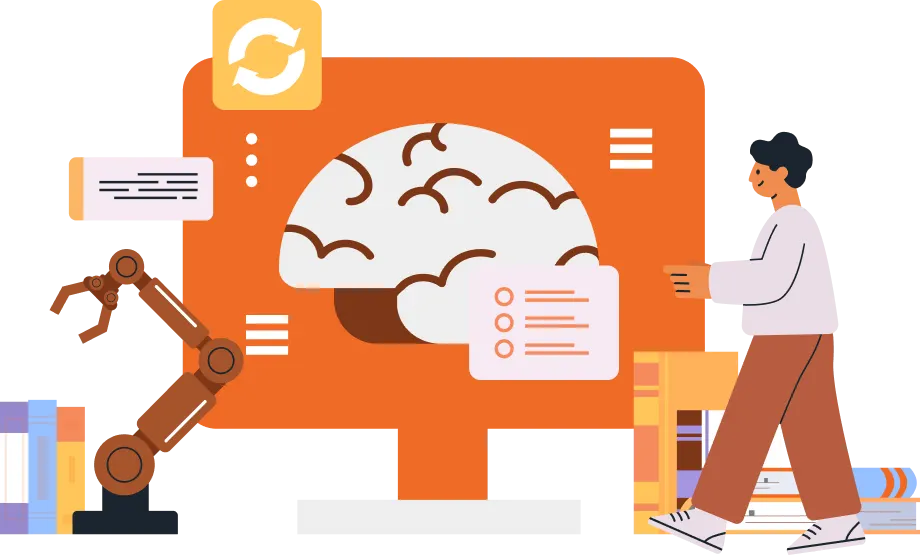
Turn enterprise data into practical intelligence with our machine learning services. We help organizations identify high-value opportunities, develop customized ML models, integrate intelligent capabilities, and deploy production-ready solutions. Our approach connects business objectives with data, engineering, and measurable outcomes. From operational forecasting to intelligent applications, we help teams establish machine learning capabilities that support efficiency, accuracy, and sustainable growth.
Homepage showcasing AI and machine learning solutions for business growth and innovation
Machine learning solutions for business growth

Machine Learning Solutions for Businesses

Businesses can use machine learning to identify patterns, forecast demand, automate decisions, personalize customer experiences, and improve operational performance. Our machine learning solutions development focuses on measurable business outcomes rather than technology for its own sake. We assess existing processes, data availability, and technology environments to create solutions that strengthen decision-making, reduce manual effort, and support scalable operations.

Our Machine Learning Development Services

Our machine learning development services cover the technical lifecycle required to move ML initiatives from concept to production. We address model development, software integration, engineering, deployment, and optimization within the existing enterprise environment. This end-to-end approach helps organizations establish dependable ML capabilities while maintaining performance, operational continuity, governance requirements, and the flexibility needed to accommodate future business priorities.
Custom machine learning development for predictive modeling, intelligent automation, and tailored business analytics solutions

Custom Machine Learning Development

Our custom machine learning development services align ML capabilities with specific business requirements, datasets, workflows, and performance objectives. We assess the operational problem before selecting an appropriate technical approach, helping avoid unnecessary complexity. Customized development can support industry-specific applications, internal platforms, customer-facing products, and decision-support systems while maintaining alignment between model performance, business processes, and measurable commercial objectives.
Machine learning model development for accurate predictions and scalable AI solutions

Machine Learning Model Development

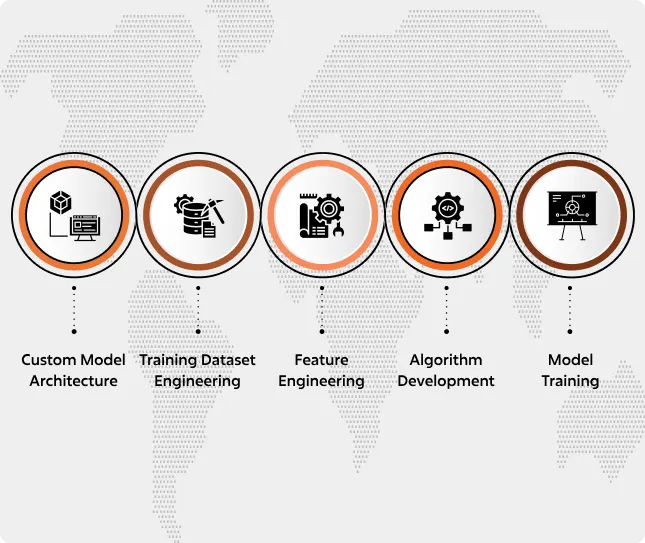
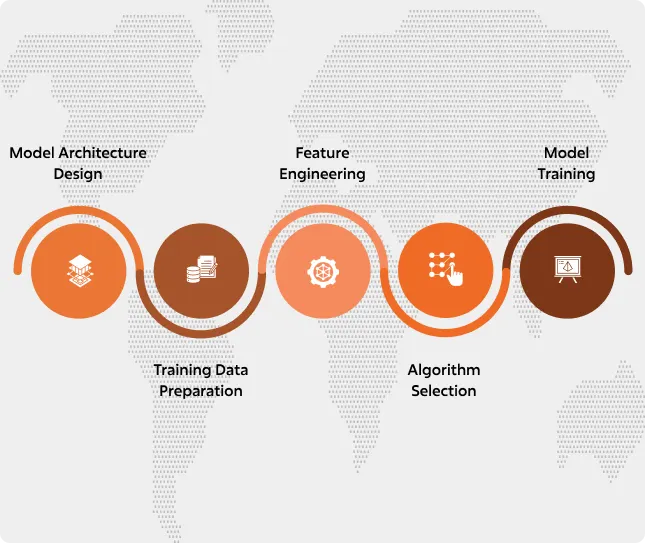
Effective models require disciplined development, from dataset preparation through validation and deployment. Our ML model development services cover model selection, training, evaluation, optimization, and performance testing against defined business criteria. We consider data quality, prediction requirements, operational constraints, and expected outcomes throughout development. This approach helps organizations establish models that deliver reliable results within practical business environments.
Machine learning software development for scalable, intelligent business applications

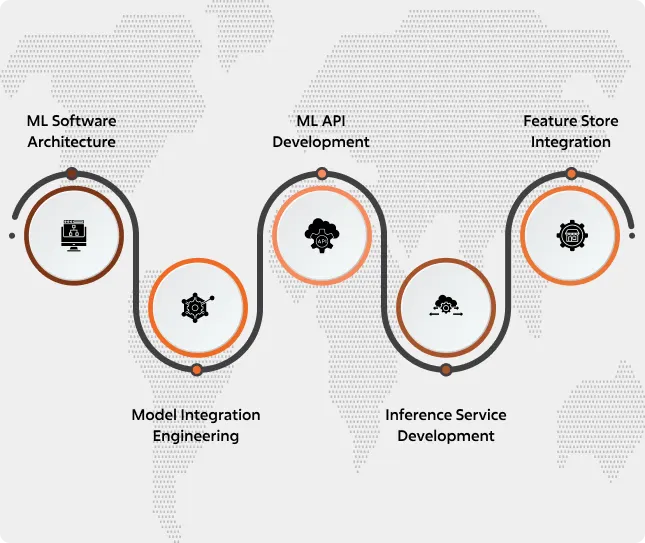
Machine Learning Software Development

Our machine learning software development services integrate ML capabilities into applications, platforms, APIs, and existing enterprise systems. We connect trained models with business workflows so teams can access predictions, classifications, recommendations, and automated outputs within familiar environments. This approach helps organizations operationalize machine learning without creating disconnected technology, while supporting maintainability, system performance, integration requirements, and future product enhancements.
Machine learning engineering for scalable AI models, deployment, and optimization

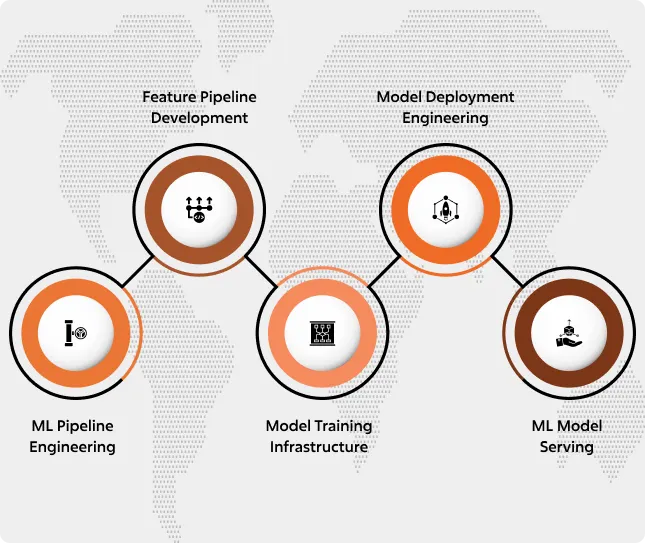
Machine Learning Engineering

Reliable ML systems require engineering discipline beyond model development. Our machine learning engineering services address production pipelines, infrastructure, deployment, scalability, system reliability, and performance optimization. Our ML engineering services help connect development environments with operational systems, creating repeatable processes for managing machine learning workloads. The focus remains on dependable execution, efficient resource utilization, and sustainable production performance.
Deep learning development for neural networks, image recognition, natural language processing, and intelligent automation

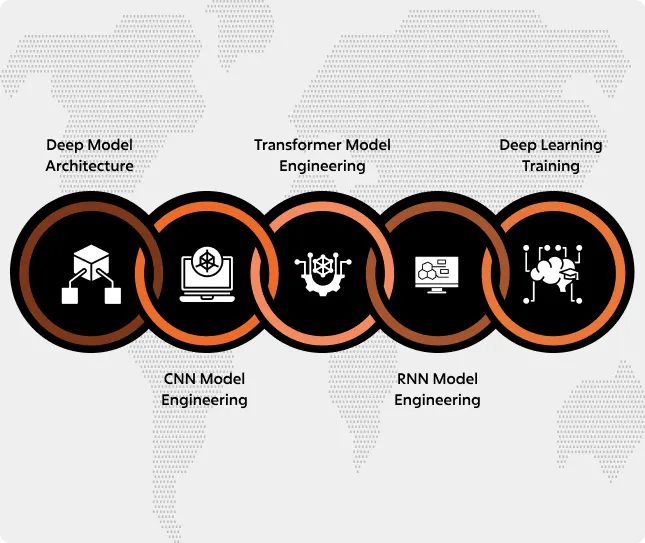
Deep Learning Development

Deep learning supports complex machine learning requirements where conventional approaches may not provide sufficient performance. Our deep learning development services can address demanding datasets and advanced computational workloads across appropriate business applications. We also provide deep learning consulting to evaluate technical feasibility, data requirements, infrastructure considerations, and expected business value before organizations commit significant resources to deep learning initiatives.

Machine Learning Consulting Services

Machine learning initiatives require clear priorities, suitable data, and a practical implementation strategy. Our consultants help organizations evaluate potential use cases, assess feasibility, define technical requirements, and establish implementation plans. Through structured machine learning consulting, businesses can identify realistic opportunities, manage technical risk, and align ML investments with operational priorities, strategic objectives, and measurable performance targets.
Machine learning opportunity assessment for business growth and AI adoption

Machine Learning Opportunity Assessment

Our opportunity assessments examine business problems, available datasets, operational workflows, technical feasibility, and potential return on investment. We determine where machine learning can provide meaningful improvement and where conventional approaches may be more appropriate. This structured evaluation gives stakeholders a clearer basis for prioritization, budgeting, and implementation decisions while reducing the risk of pursuing technically attractive but commercially unsuitable initiatives.

Machine learning strategy and roadmap for business growth

Machine Learning Strategy and Roadmap

A practical ML strategy establishes priorities before development begins. Our machine learning consulting services help organizations define target use cases, technology requirements, implementation stages, data needs, and scaling priorities. We develop a machine learning strategy and roadmap that connects short-term initiatives with broader digital objectives. This enables leadership teams to coordinate resources, establish realistic milestones, and build machine learning capabilities progressively.

Machine learning consulting for AI implementation and business optimization

Machine Learning Implementation Consulting

Implementation requires coordination across data, engineering, applications, infrastructure, and business teams. Our consultants provide technical planning, integration guidance, implementation support, and production deployment direction. As a machine learning consulting company, we help organizations translate approved strategies into operational solutions. Our approach considers architecture, system dependencies, deployment requirements, performance expectations, and organizational readiness throughout implementation.

AI and Machine Learning Development

AI and machine learning can work together to support intelligent applications, automated workflows, predictive systems, and data-driven decision support. Our AI and machine learning development services connect broader AI capabilities with ML models where they provide practical value. We focus on business requirements, existing technology environments, and measurable outcomes to create solutions that improve processes without introducing unnecessary technical complexity.
AI and machine learning solutions for business growth, automation, and insights

AI and Machine Learning Solutions

Organizations can combine machine learning with broader AI capabilities to address complex operational and customer-facing requirements. Our AI and machine learning development services support solutions designed around specific business objectives, data environments, and application requirements. Through AI & machine learning services, businesses can strengthen automation, prediction, personalization, and intelligent decision support while maintaining alignment with existing systems and operational processes.

AI and machine learning consulting for business growth, automation, and innovation

AI and Machine Learning Consulting

Evaluating AI and ML opportunities requires more than identifying available technologies. Our AI and machine learning consulting helps organizations assess business cases, data readiness, technical feasibility, integration requirements, and implementation priorities. We help stakeholders determine where intelligent technologies can create measurable value and establish practical strategies that balance innovation with security, operational requirements, resource constraints, and long-term scalability.

MLOps and Machine Learning Deployment

Moving an ML model into production requires controlled deployment, reliable infrastructure, continuous monitoring, and disciplined lifecycle management. Our approach helps organizations transition models from development environments into operational systems while maintaining performance and reliability. We address deployment architecture, automation, monitoring, version control, testing, and optimization so production ML workloads can support changing business requirements without creating unnecessary operational overhead.
Machine learning as a service for scalable AI solutions

Machine Learning as a Service

Machine learning as a service gives businesses access to specialized capabilities without requiring every ML function to be built internally. Organizations can engage expertise across development, deployment, infrastructure, monitoring, and ongoing optimization according to project requirements. This flexible model can support individual initiatives or broader ML programs while helping businesses manage technical resources, delivery timelines, operational responsibilities, and changing priorities.

Machine Learning Outsourcing Services

Machine learning outsourcing allows businesses to extend technical capacity without maintaining every specialized capability internally. Organizations can outsource complete ML initiatives, specific development requirements, engineering activities, or ongoing operational support. Our approach aligns external delivery with internal teams, systems, and governance requirements, helping businesses access specialized expertise while maintaining clear ownership, communication, performance expectations, and implementation control.
Dedicated machine learning teams for AI development

Dedicated Machine Learning Teams

Dedicated teams provide businesses with flexible access to ML professionals who can work alongside internal technology and business stakeholders. Teams can support model development, engineering, integration, testing, deployment, and optimization according to project scope. This model helps organizations expand delivery capacity, address specialist requirements, and accelerate initiatives without immediately increasing permanent internal headcount or restructuring existing technical teams.
Ongoing machine learning support for AI systems

Ongoing Machine Learning Support

Production ML systems require continuous attention as data, business conditions, and performance requirements change. Our support covers monitoring, maintenance, troubleshooting, optimization, model improvements, and operational adjustments. Through machine learning outsourcing, organizations can maintain dependable ML capabilities while extending internal resources. Where appropriate, managed machine learning services for enterprises can provide structured ongoing operational support across larger ML environments.

Our Machine Learning Development Process

A structured development process helps organizations control technical risk while keeping ML initiatives aligned with business objectives. We move from business and data assessment through strategy, model development, validation, integration, deployment, and optimization. Each stage establishes clear inputs and outcomes, helping stakeholders understand project progress while ensuring technical decisions remain connected to operational requirements and measurable business goals.
Machine learning development process from planning to deployment

01

Business and Data Assessment

We begin by examining the business objective, operational challenge, available data, existing systems, and expected outcomes. This assessment establishes whether machine learning is appropriate and identifies potential data limitations early. Understanding the business context also helps define relevant performance measures, stakeholder requirements, integration considerations, and implementation priorities before technical development begins.

02

Solution Strategy and Planning

The strategy stage converts identified requirements into a practical technical plan. We define the proposed solution architecture, development priorities, data requirements, integration points, deployment approach, and project milestones. Planning provides stakeholders with a clear delivery framework while helping technical teams manage dependencies, resources, risks, and scalability considerations throughout the machine learning development lifecycle.

03

Data Preparation and Feature Engineering

Model performance depends heavily on the quality and relevance of its input data. We prepare datasets, address inconsistencies, identify relevant variables, and develop useful features based on the selected business problem. This stage establishes a stronger foundation for model training and evaluation while helping teams identify data gaps that could affect accuracy, reliability, or production performance.

04

Model Development and Training

We develop and train models against defined business requirements and evaluation criteria. Model selection considers the problem type, dataset characteristics, performance expectations, and operational constraints. Training activities include iterative refinement and performance analysis, allowing teams to compare results and improve the selected approach before advancing toward formal validation and production deployment.

05

Testing and Validation

Testing verifies whether a model performs reliably against expected requirements and realistic scenarios. We evaluate predictive performance, identify weaknesses, and assess behavior against relevant datasets and business conditions. Validation provides stakeholders with evidence for deployment decisions while helping technical teams identify opportunities for refinement before integrating the model into production applications or enterprise workflows.

06

Deployment and Integration

Validated models are integrated into the applications, APIs, platforms, or business systems that require their outputs. Deployment planning considers system dependencies, performance, security, availability, and operational workflows. This stage turns a validated ML capability into a usable business function while maintaining compatibility with the surrounding technology environment and minimizing disruption to existing operations.

07

Monitoring and Optimization

ML systems require ongoing observation because data patterns and business conditions can change. We monitor operational performance, identify potential degradation, and apply optimization where necessary. Continuous improvement helps organizations maintain useful model outputs over time while supporting changing requirements, new datasets, evolving workflows, and increasing production workloads.

Machine Learning Use Cases

Machine learning can support a wide range of business objectives when the underlying data and operating conditions are suitable. We focus on practical applications where predictive or intelligent capabilities can improve measurable outcomes. Common opportunities include forecasting, personalization, fraud prevention, anomaly identification, process automation, and decision support across customer, operational, financial, and strategic workflows.

Predictive Analytics −

Predictive analytics uses historical and current data to estimate future outcomes. Businesses can apply these capabilities to revenue planning, customer behavior, operational performance, risk assessment, and other measurable business scenarios. With Data Analytics consulting services, organizations can turn predictive model outputs into clearer business insights, giving decision-makers earlier visibility into potential outcomes and supporting more informed planning.

Customer Personalization +

Recommendation Systems +

Fraud Detection +

Demand Forecasting +

Anomaly Detection +

Process Automation +

Intelligent Decision Support +

Predictive analytics solutions using AI and machine learning to forecast future trends and support data-driven business decisions

Why Choose Us for Machine Learning Services?

Businesses need ML solutions that work beyond prototypes and demonstrations. Our approach combines experienced machine learning professionals, custom solution development, scalable architecture, modern ML technologies, existing-system integration, and end-to-end delivery. As experienced machine learning service providers, we focus on practical implementation, measurable outcomes, production reliability, and ongoing optimization rather than technology adoption without a clear business purpose.

Industries We Serve

Machine learning can address different operational and strategic requirements across industries when supported by relevant data and clear objectives. Our industry-focused approach considers sector workflows, customer expectations, operational constraints, and compliance requirements when shaping ML initiatives. We focus on practical applications that align technical capabilities with measurable business priorities.

01

Financial Services

Financial organizations can leverage fintech services powered by machine learning (ML) for fraud detection, risk analysis, customer personalization, financial forecasting, credit scoring, transaction monitoring, compliance analytics, and decision support. ML-powered fintech services enable teams to analyze large datasets, identify patterns and anomalies, and generate actionable insights for faster, more informed operational decisions. These solutions can strengthen fraud prevention, risk management, regulatory compliance, and customer experiences while improving the efficiency and scalability of data-intensive financial workflows.
AI-powered financial services solutions for fraud detection and smarter data-driven decision-making

02

Healthcare

Healthcare organizations can apply machine learning to suitable analytical, operational, and administrative use cases. Our healthcare machine learning consulting services can support pattern analysis, forecasting, workflow optimization, and decision-support capabilities where appropriate data and governance processes are available. Solutions should align with organizational requirements for security, privacy, accuracy, and responsible data management.
AI-powered healthcare solutions for improving patient care and enhancing clinical decision-making using machine learning

03

Retail & E-commerce

Retail and e-commerce businesses can use ML to improve personalization, recommendation systems, demand forecasting, customer analysis, and inventory planning. Our machine learning solutions development expertise can help businesses better understand purchasing behavior, anticipate demand, and deliver more relevant customer experiences while supporting operational efficiency across digital and physical commerce environments.
AI-powered retail and e-commerce solutions for personalized product recommendations and sales optimization

04

Manufacturing

Manufacturers can apply machine learning to predictive maintenance, anomaly detection, production optimization, quality analysis, and demand planning. ML can help identify operational patterns within production data and support earlier intervention. This can improve resource utilization, reduce avoidable disruption, and strengthen visibility across manufacturing operations.
AI-powered manufacturing solutions for predictive maintenance, and improved operational efficiency using machine learning

05

Logistics

Logistics organizations can use machine learning for demand forecasting, operational planning, anomaly detection, and process optimization. ML can analyze historical and real-time operational data to identify patterns that support better resource allocation and planning. These capabilities can contribute to more efficient logistics workflows and improved service reliability.
AI-powered logistics solutions for route optimization and supply chain management to improve operational efficiency

06

Technology

Technology companies can integrate machine learning into software products, platforms, analytics systems, and internal operations. Common opportunities include personalization, recommendation engines, anomaly detection, predictive analytics, and intelligent automation. ML capabilities can help technology organizations strengthen product functionality while creating more data-driven operational and customer experiences.
AI-powered technology solutions for software development and digital transformation using machine learning

07

Professional Services

Professional services organizations can apply machine learning to document analysis, forecasting, workflow automation, customer insights, and decision support. ML can help teams process large volumes of structured and unstructured information while reducing repetitive analytical work. The right applications can improve productivity and allow professionals to focus more time on higher-value client and business activities.
AI-powered professional services solutions for workflow automation and improved business productivity using machine learning
“My experience with this agency so far has been great. Everything is easy, from creating visualization, scheduling, collaboration and many more”
Bettie Porter
Designer
Positive client experience describing smooth visualization creation, easy scheduling, seamless collaboration, and efficient agency support

Need a second
opinion? 🤔

Frequently Asked Questions

Machine learning services cover the consulting, development, engineering, deployment, integration, and ongoing optimization required to implement ML capabilities. Businesses can use these services to develop predictive models, automate processes, analyze complex data, personalize experiences, and integrate intelligent functionality into applications or existing enterprise systems.
A machine learning development company helps businesses turn suitable use cases and data into operational ML solutions. Services can include opportunity assessment, data preparation, model development, software integration, engineering, testing, deployment, monitoring, and optimization. The exact scope depends on the organization’s objectives, technology environment, data readiness, and implementation requirements.
Machine learning consulting helps organizations identify valuable use cases, assess data readiness, evaluate feasibility, define technical strategies, and plan implementation. Consultants can help leadership and technical teams make informed investment decisions while reducing avoidable development risks. The objective is to connect ML initiatives with measurable operational, customer, financial, or strategic outcomes.
Machine learning development services can include solution planning, data preparation, feature engineering, model selection, training, validation, software integration, deployment, and optimization. The scope depends on project requirements and existing capabilities. End-to-end engagements can also include infrastructure, MLOps, monitoring, and ongoing support for production ML systems.
Machine learning costs depend on project complexity, data requirements, model type, integrations, infrastructure, development scope, and ongoing support needs. A focused predictive model can require significantly fewer resources than a large enterprise ML platform. A detailed assessment provides a more reliable estimate based on technical requirements, business objectives, and expected delivery scope.
Development timelines depend on data readiness, solution complexity, integration requirements, model objectives, testing needs, and deployment scope. A focused proof of concept may move faster than a production enterprise system. Projects generally progress through assessment, planning, data preparation, development, validation, integration, and deployment before entering ongoing monitoring and optimization.
Yes. Machine learning capabilities can be integrated into existing applications through appropriate software components, APIs, services, and data workflows. Integration planning considers the application’s architecture, performance requirements, security controls, data flows, and user workflows. This allows organizations to introduce ML functionality without necessarily replacing established business applications.
Machine learning as a service provides access to ML expertise and capabilities through a flexible delivery model. Depending on requirements, businesses can obtain support for development, deployment, infrastructure, monitoring, optimization, or ongoing operations. This approach can help organizations access specialized ML capabilities while managing internal resources according to project priorities.

Build Your Machine Learning Solution With Us

Our team helps organizations build practical solutions around real data, operational requirements, and scalable technology. Whether you need a focused model or broader ML capabilities, we provide the technical direction and implementation support needed to move forward.

Transform Your Ideas into Impactful Software Solutions!

We enable you to make a difference through technology. Trust our experts as they build robust and scalable applications from concept to code while focusing your goals. Together we will innovate, grow, and succeed!

or call Noor on +1 (972) 474-3919

    Latest Blogs

    No matter how big or small the project is, we love working on design.

    Native vs Cross Platform Mobile Development: Which Is Better in 2026?

    Native vs Cross Platform Mobile Development: Which Is Better in 2026?

    Every successful mobile app starts with the right foundation. The decision between native vs cross platform mobile development influences how…
    Top 10 SharePoint Migration Tools in 2026

    Top 10 SharePoint Migration Tools in 2026

    Moving to Microsoft 365 is a critical step in digital transformation, helping organizations improve collaboration, strengthen security, reduce infrastructure costs,…
    The Ultimate Guide to SharePoint Migration in 2026: Strategy, Tools, Services, Benefits & Best Practices

    The Ultimate Guide to SharePoint Migration in 2026: Strategy, Tools, Services, Benefits & Best Practices

    As organizations embrace digital transformation, cloud-based collaboration has become essential for improving security, productivity, and business agility. Microsoft SharePoint Online…

    Scroll to Top

    YOUR NEXT BIG IDEA DESERVES ATTENTION!

    Let’s build something extraordinary together