
In today’s fast-moving digital world, businesses in New York aren’t just asking if they need a mobile app, they want one that truly delivers results. From small startups in Brooklyn to large companies in Manhattan, the demand for custom mobile app development New York is rising as competition grows and customer expectations evolve.
Working with a trusted mobile app development company in New York helps turn ideas into successful apps. A great app doesn’t happen by chance. It requires careful planning, a structured process, and a realistic understanding of costs and timelines. Many projects fail not because the idea is weak, but because expectations don’t match the reality of development.
This guide explains everything in simple terms. Business owners and decision-makers will learn how mobile app development works, what affects costs, and how apps can succeed in 2026.
What is Custom Mobile App Development?
Custom mobile app development refers to building a mobile application specifically designed for a business’s unique goals, workflows, and user experience requirements. Unlike generic templates or pre-built software, custom solutions are created from the ground up.
In New York’s competitive digital ecosystem, businesses often choose custom development because it allows full control over functionality, scalability, and branding.
Difference Between Custom vs Off-the-Shelf Apps
Off-the-shelf solutions are pre-built systems designed for mass use. They may work for basic needs but often lack flexibility.
Custom apps, on the other hand, are tailored to solve specific business problems. For example, a logistics startup in NYC might need real-time tracking, driver management, and predictive routing, features rarely available in ready-made apps.
The key difference is simple:
- Off-the-shelf = quick setup, limited flexibility
- Custom app = longer development, long-term scalability
Benefits for Startups and Enterprises
Businesses investing in custom app developers New York often experience:
- Better user engagement due to tailored UX design
- Higher scalability for future growth
- Stronger brand identity through unique interfaces
- Improved operational efficiency
Startups especially benefit from building a product that reflects real market needs rather than adapting to software limitations.
When to Choose Custom Development
Custom development makes sense when:
- Your business model is unique
- You require advanced integrations
- You plan to scale rapidly
- Security and control are critical
In short, when your app is a core business asset, not just a supporting tool, custom development becomes essential.
Complete Mobile App Development Process in New York
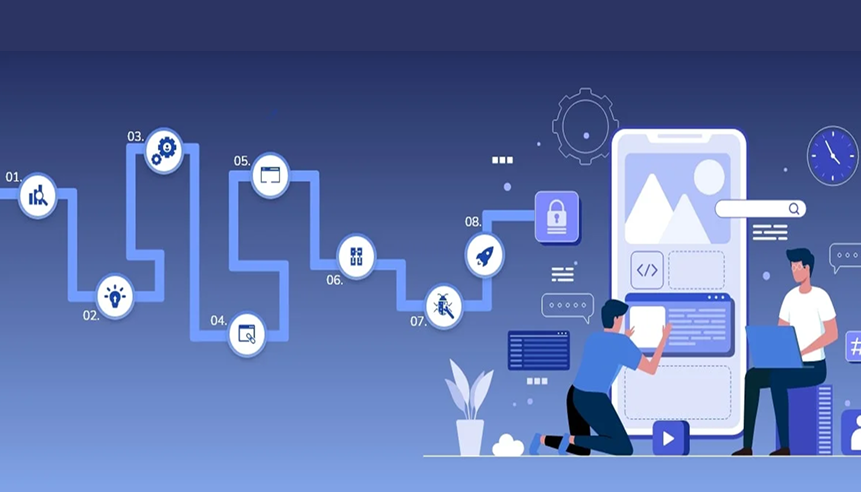
Understanding the mobile app development process NYC helps businesses avoid unrealistic expectations and budget surprises. While each project is unique, most successful apps follow a structured lifecycle.
Step 1: Idea Validation & Market Research

Every strong app begins with validation, not coding. This stage involves understanding user needs, competitor analysis, and identifying gaps in the market.
In New York’s saturated digital environment, skipping this step often leads to apps that fail to gain traction.
Step 2: Planning & Requirement Analysis

Once the idea is validated, developers and stakeholders define:
- Core features
- Target audience
- Technical architecture
- Budget range
This stage forms the blueprint for the entire project.
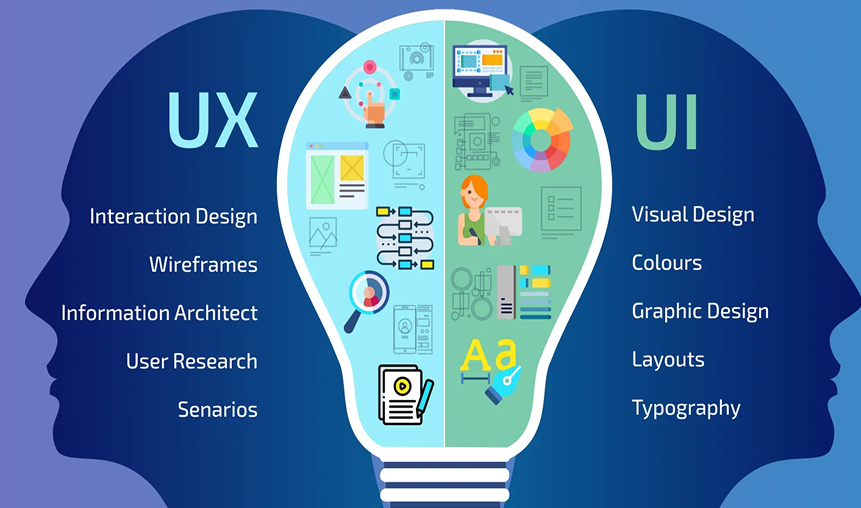
Step 3: UI/UX Design
The UI/UX design process focuses on user experience, interface flow, and usability. In NYC, where users expect polished digital experiences, design plays a critical role in retention.
Good design is not just visual, it determines how easily users interact with the app.
Step 4: Frontend Development
Frontend development transforms design into a working interface. It includes:
- App screens
- Navigation systems
- Interactive elements
This is what users directly interact with.
Step 5: Backend Development

Backend development powers the app behind the scenes. It includes:
- Databases
- APIs
- Server logic
The backend development cost often depends on complexity and scalability requirements.
Step 6: Testing & Quality Assurance

Before launch, apps go through rigorous testing to ensure:
- No bugs or crashes
- Smooth performance
- Security compliance
Quality assurance ensures the app performs reliably under real-world conditions.
Step 7: Deployment & Launch

Once testing is complete, the app is deployed to platforms like iOS and Android. This step also includes app store optimization and compliance checks.
Step 8: Maintenance & Updates

Post-launch support ensures long-term success. Apps require:
- Bug fixes
- Feature updates
- Security patches
Ignoring maintenance often leads to performance decline over time.
Mobile App Development Timeline in New York

One of the most common questions businesses ask is: how long does it take to build an app in NYC?
The answer depends on complexity, features, and team structure.
Timeline for Simple Apps (4–8 Weeks)

Simple apps typically include basic features such as:
- User login
- Static content
- Basic UI
These projects move quickly due to limited complexity.
Timeline for Medium Apps (8–16 Weeks)
Medium complexity apps may include:
- Payment integration
- User dashboards
- API connections
This category represents most startup apps in New York.
Timeline for Complex Apps (4–8+ Months)
Complex applications often include:
- Real-time systems
- AI features
- Advanced backend infrastructure
- Multi-role platforms
Enterprise-grade apps in NYC often fall into this category.
Custom Mobile App Development Cost in New York 2026
The custom app development cost New York varies widely depending on scope and technical requirements.
Basic App Cost
Typically ranges from moderate to low investment levels. These apps include simple features and minimal backend systems.
Medium Complexity App Cost
This is the most common category for startups and small businesses. Costs increase due to:
- API integrations
- Custom UI design
- User management systems
Advanced / Enterprise App Cost
Enterprise apps require significant investment due to:
- High scalability
- Security requirements
- Complex architecture
These are long-term digital products rather than simple applications.
Detailed Cost Breakdown of App Development
Understanding cost structure helps businesses plan effectively.
Planning & Research Cost
Includes:
- Market analysis
- Technical feasibility
- Product strategy
UI/UX Design Cost
Depends on:
- Number of screens
- Complexity of interactions
- Design revisions
Frontend Development Cost

Frontend cost is influenced by:
- Platform choice
- Animation complexity
- Responsiveness
Backend Development Cost
Often the most significant cost factor due to:
- Database design
- API development
- Server setup
Testing & QA Cost
Includes manual and automated testing cycles to ensure reliability.
Deployment & Maintenance Cost
Ongoing costs include:
- Cloud hosting
- App store updates
- Bug fixes
Mobile App Cost Per Feature in New York
Mobile app development costs in New York vary because each feature adds different levels of complexity, backend requirements, security needs, and development time. Below is a breakdown of common features and why they influence overall pricing.
User Authentication & Login
This feature allows users to securely create accounts and access the app.
It typically includes:
- Email and password registration and login
- Social login options (Google, Apple, Facebook)
- Password recovery through email or OTP
- Security measures such as encryption and session handling
Why it affects cost:
Although it appears basic, authentication requires strong security architecture, secure database design, and careful handling of user data. Adding social login increases complexity due to third-party integrations.
Payment Integration
This enables users to make in-app purchases, subscriptions, or transactions.
It typically includes:
- Integration with payment gateways such as Stripe or PayPal
- Support for one-time payments and recurring subscriptions
- Transaction history and receipts
- Fraud prevention and compliance with security standards (such as PCI-DSS)
Why it affects cost:
Payment systems require high-level security, encryption, and regulatory compliance. Extensive testing is needed to prevent financial risks, making it one of the more expensive features.
Real-Time Chat Feature
This allows users to communicate instantly within the app.
It typically includes:
- One-to-one and group messaging
- Real-time message delivery and synchronization
- Read receipts and typing indicators
- Media sharing such as images, files, and voice notes
Why it affects cost:
Real-time communication requires continuous data synchronization and a robust backend infrastructure, often using WebSockets or services like Firebase. This increases both development complexity and server costs.
Push Notifications
This feature is used to re-engage users by sending alerts and updates.
It typically includes:
- Promotional messages
- Activity or order updates
- Personalized notifications
- Scheduled or segmented messaging campaigns
Why it affects cost:
While implementation may seem simple, effective push notification systems require backend logic, user segmentation, analytics, and integration with services like Firebase Cloud Messaging or Apple Push Notification Service.
Admin Dashboard
This is a web-based panel used to manage the app’s operations.
It typically includes:
- User management (adding, blocking, editing users)
- Content management (posts, products, listings)
- Analytics and reporting tools
- System configuration settings
Why it affects cost:
The admin dashboard is essentially a separate web application requiring its own UI/UX design, secure access control, and data visualization systems.
API Integrations
This involves connecting the app to external systems or services.
Examples include:
- Google Maps integration
- Social media APIs
- CRM or ERP systems
- Logistics and shipping providers
Why it affects cost:
Each API has different documentation, limitations, and authentication methods. Integration requires testing, data mapping, and ongoing maintenance, especially when external services update.
Factors That Influence Mobile App Development Cost
Mobile app pricing is not fixed because every project has different technical and business requirements. Below is a restructured breakdown that groups cost drivers in a more organized way.
1. Product Scope and Complexity
This category defines what the app actually does and how advanced it is.
Key elements:
- Number of features and screens
- Logic complexity (simple app vs multi-functional system)
- Real-time features such as chat or live tracking
- Data processing and user roles (admin, user, vendor, etc.)
Impact on cost:
A larger and more complex app requires more development time, stronger backend architecture, and more testing cycles. This directly increases both cost and timeline.
2. Platform Strategy
This refers to where and how the app will run.
Options:
- Native iOS development
- Native Android development
- Cross-platform development (single codebase for both)
Impact on cost:
Building separate native apps for iOS and Android increases workload significantly. Cross-platform solutions can reduce development time, but may require trade-offs in performance or native feature access.
3. Design and User Experience
This covers the visual and interactive side of the app.
Key elements:
- Standard UI vs fully custom UI/UX
- Animations and motion design
- User journey mapping and wireframes
- Interactive components and micro-interactions
Impact on cost:
More customized and polished designs require additional design hours and front-end development effort. Advanced animations also increase technical complexity.
4. Development Resources and Location
This refers to who is building the app and where they are based.
Key elements:
- Freelancers vs agencies vs in-house teams
- Developer experience level (junior, mid, senior)
- Geographic location, such as New York
Impact on cost:
Developers in high-cost markets like New York typically charge higher rates due to demand and living expenses. More experienced teams also charge more but deliver higher quality and faster execution.
5. Timeline and Delivery Requirements
This defines how quickly the app needs to be completed.
Key elements:
- Standard development schedule
- Fast-track or urgent delivery
- Parallel development with larger teams
Impact on cost:
Shorter timelines usually require more developers working simultaneously, which increases total cost. Extended timelines may reduce pressure but can increase coordination overhead.
New York Developer Rates 2026
Mobile app development costs in New York depend heavily on who you hire and how the work is structured. Below is a different way to understand pricing through comparison and breakdown.
1. Pricing by Type of Developer
Freelancers
Freelancers are independent developers working solo or in small setups.
Typical traits:
- Lower hourly or project rates
- Flexible engagement styles
- Variable skill levels and experience
- Limited capacity for large systems
Cost behavior:
Freelancers are often cheaper upfront, but costs can increase indirectly if rework, delays, or lack of scalability become issues.
Agencies:
Agencies operate as structured teams offering end-to-end development.
Typical traits:
- Multiple specialists (design, frontend, backend, QA)
- Formal project management processes
- Built-in testing and quality assurance
- Long-term support and maintenance options
Cost behavior:
Higher upfront cost, but more predictable delivery, better coordination, and reduced risk for complex apps.
2. Cost Structure in New York Market
Instead of focusing only on “rates,” New York pricing can be understood through cost drivers:
Key drivers:
- High operational expenses (office, salaries, overhead)
- Strong competition for experienced developers
- Demand for fast and high-quality delivery
- Specialized expertise in fintech, SaaS, and enterprise apps
Result:
These factors push pricing above global averages, especially compared to offshore development markets.
3. Comparison View: NYC vs Other Regions
New York
- Higher hourly rates
- Strong senior-level talent availability
- Better alignment with US business standards
Other global outsourcing regions
- Lower hourly rates
- Larger junior-to-mid-level workforce
- Cost-efficient for simpler or well-defined projects
Trade-off:
Lower cost does not always mean lower total project expense, especially if communication, revisions, or quality issues arise.
Hidden Costs of Custom App Development
Beyond the initial development budget, there are several ongoing and often overlooked costs that can significantly impact the total investment in a mobile app.
1. Post-Launch Maintenance and Updates
Launching the app is not the end of development—it’s the beginning of continuous improvement.
What it includes:
- Bug fixes and performance optimization
- Compatibility updates for new OS versions
- Feature enhancements based on user feedback
- Security patches and monitoring
Cost impact:
Apps require ongoing technical support to remain functional and competitive. These recurring costs are essential for long-term success and user retention.
2. Third-Party Integrations and Services
Many apps rely on external tools and APIs to extend functionality.
Examples:
- Payment gateways
- Mapping and location services
- Analytics and tracking tools
- Messaging or notification services
Cost impact:
While integration may be part of the initial build, many third-party services operate on subscription or usage-based pricing models, leading to ongoing expenses that grow with app usage.
3. Cloud Hosting and Infrastructure
Apps need servers and infrastructure to store data and handle user activity.
What it includes:
- Cloud storage and databases
- Backend servers and APIs
- Content delivery networks (CDNs)
- Scalability to handle increasing users
Cost impact:
Hosting costs may start small but increase as the app scales. Higher traffic, more data, and real-time features can significantly raise monthly infrastructure expenses.
4. App Store and Deployment Costs
Publishing and maintaining an app on major platforms comes with its own requirements.
What it includes:
- App store developer account fees
- Annual subscription charges
- Compliance with platform guidelines
- App review and update submissions
Cost impact:
Both Apple and Google charge fees for app distribution and may require ongoing compliance updates. These costs, while relatively smaller, are recurring and necessary for keeping the app live.
How to Reduce Custom App Development Cost
Smart planning can significantly reduce budget pressure. Here are some effective strategies:
| Strategy | Description | Benefit |
| Build an MVP First | Develop a Minimum Viable Product with only core features. | Reduces initial investment and tests market viability early. |
| Use Cross-Platform Development | Utilize frameworks that allow one codebase for multiple platforms (iOS, Android, web). | Saves time and development cost compared to separate native apps. |
| Outsource Smartly | Combine local (e.g., NYC) and offshore developers for a hybrid team. | Balances cost efficiency with quality and oversight. |
| Focus on Core Features | Limit early versions to essential functionality only. | Avoids spending on non-essential features and simplifies maintenance. |
Custom App vs Pre-Built Solutions: Cost Comparison
| Factor | Pre-Built Solutions | Custom Apps | Key Insight |
| Cost Difference | Lower initial cost. | Higher upfront investment. | Pre-built tools are cheaper initially, but custom apps offer better long-term ROI. |
| Flexibility & Scalability | Limited customization and scalability. | Fully customizable and scalable. | Custom apps allow full control over future growth. |
| Long-Term ROI | May incur recurring costs and limitations in performance. | Potential for higher returns through optimized performance and user retention. | Businesses often recover investment over time with improved efficiency and retention. |
Final Thoughts
Building a successful app in New York is less about coding and more about structured planning, realistic budgeting, and strategic decision-making. Businesses that understand the full lifecycle, from idea validation to maintenance, are far more likely to succeed in a competitive digital market.
When planning your budget, start with MVP thinking, focus on essential features, and account for long-term maintenance. Choosing the right development approach is equally important. Whether working with NYC mobile app developers or outsourcing globally, the best choice depends on your goals, timeline, and scalability needs.
Book a consultation with our mobile app developer in New York to streamline your workflows and enhance internal process control today.
FAQs
Answering the most common questions related to custom mobile app development in New York.
-
How much does custom app development cost in New York?
Costs vary widely depending on complexity, typically ranging from basic apps with minimal features to enterprise-level systems requiring advanced infrastructure and long-term maintenance.
-
How long does it take to build a mobile app in NYC?
Simple apps may take 4–8 weeks, while complex enterprise apps can take 4–8 months or longer depending on features.
-
Should I build a custom app or use ready-made solutions?
Custom apps are better for long-term growth and scalability, while ready-made solutions work for short-term or limited needs.
-
What factors affect app development cost the most?
Key factors include app complexity, platform choice, design requirements, backend infrastructure, and developer rates.
-
Is it better to hire NYC developers or outsource?
NYC developers offer strong communication and quality, while outsourcing can reduce costs. Many businesses choose a hybrid approach for balance.


