
Building a mobile app today is more than just planning a budget; it’s a business decision that can affect how fast your company grows and how well it competes. Boston has become a strong tech hub, especially for healthcare, fintech, SaaS, and education apps, which means the quality of work and developer rates can vary based on demand and expertise.
For businesses looking to create or grow a mobile product, choosing the right development team is very important. A good team doesn’t just build the app; they help shape the idea, avoid costly mistakes, and make sure the final product actually supports your business goals.
When people ask how much it costs to develop an app in Boston, the answer is not fixed. It depends on what you want to build, how complex it is, and who is building it. That’s why understanding app development cost in Boston helps you plan better instead of guessing numbers.
In the end, building a successful app is not just about coding; it’s about creating something that can grow with your business. Working with experienced teams in the best mobile app development in Boston can make the whole process smoother, faster, and more reliable.
What Affects Mobile App Development Cost in Boston?
The cost to build an app in Boston is influenced by multiple moving parts that interact with each other. Treating app development as a single fixed-price service is one of the most common mistakes founders make.
Types of Mobile Apps
Different applications carry fundamentally different cost structures. A simple utility app with static content might require minimal backend infrastructure, while a fintech platform with real-time transactions demands security audits, compliance layers, and scalable architecture.
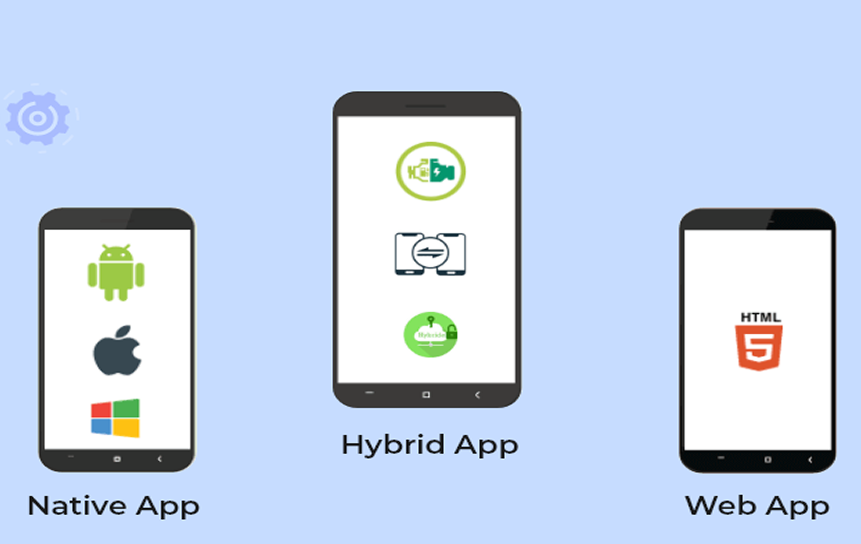
Native apps for iOS and Android typically increase mobile app development cost in Boston, while cross-platform frameworks may reduce initial expenses but require trade-offs in performance or customization.
MVP vs Full App Development
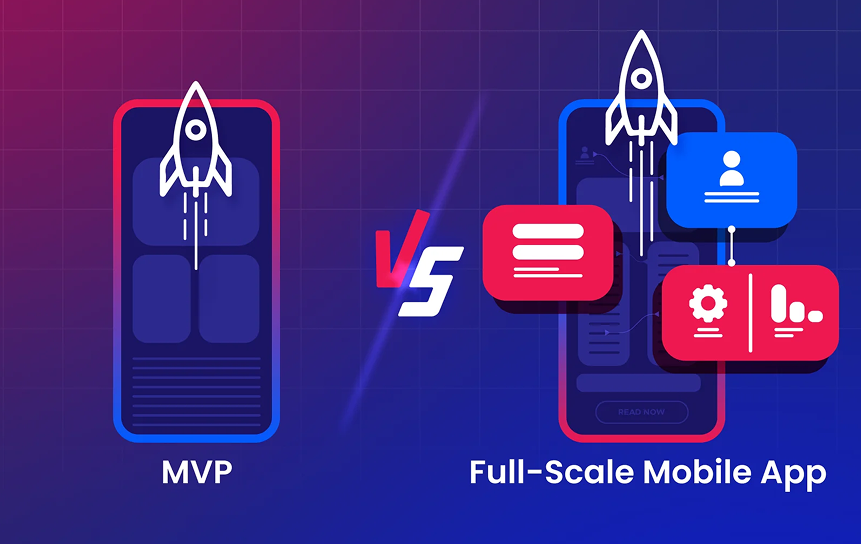
A Minimum Viable Product (MVP) is often the smartest entry point for startups in Boston. It reduces app development costs in Boston by focusing only on essential features that validate market demand.
Full-scale development, on the other hand, includes scalability planning, advanced UI/UX, and long-term architecture decisions that significantly raise costs but reduce future technical debt.
Importance of Budget Planning
Proper planning is often the difference between controlled spending and runaway budgets. Without a clear roadmap, app development costs in Boston can increase by 30–60% due to scope creep, unclear requirements, and repeated redesign cycles.
Average App Development Cost in Boston 2026
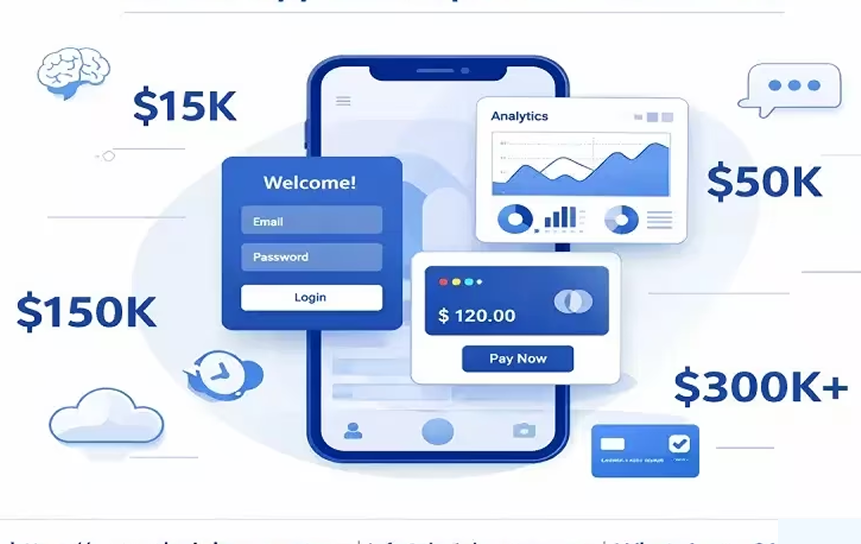
In 2026, pricing for digital products in Boston varies widely based on scope, technical depth, and the expertise required to deliver the solution. While every build is different, most projects still fall within a fairly predictable range.
Overall, app development costs in Boston typically span from $25,000 to $250,000+, depending on how simple or advanced the product is.
Cost Breakdown by App Type (Boston 2026)
| App Category | What It Includes | Estimated Range |
| Basic App | MVPs, content-based apps, simple booking tools | $25,000 – $50,000 |
| Medium Complexity App | APIs, authentication, dashboards, databases | $50,000 – $120,000 |
| Advanced / Enterprise App | AI features, real-time systems, and strict compliance | $120,000 – $250,000+ |
Basic App Cost

Entry-level applications are built for speed and validation rather than scale. They usually serve a single purpose and avoid heavy engineering.
Common traits:
- Limited screens and straightforward user flow
- Lightweight backend or third-party services
- Minimal integrations and simple data handling
- Short production cycles with fast release goals
This category is typically chosen when teams want to reduce early-stage spending and validate product ideas before increasing investment.
Medium Complexity App Cost
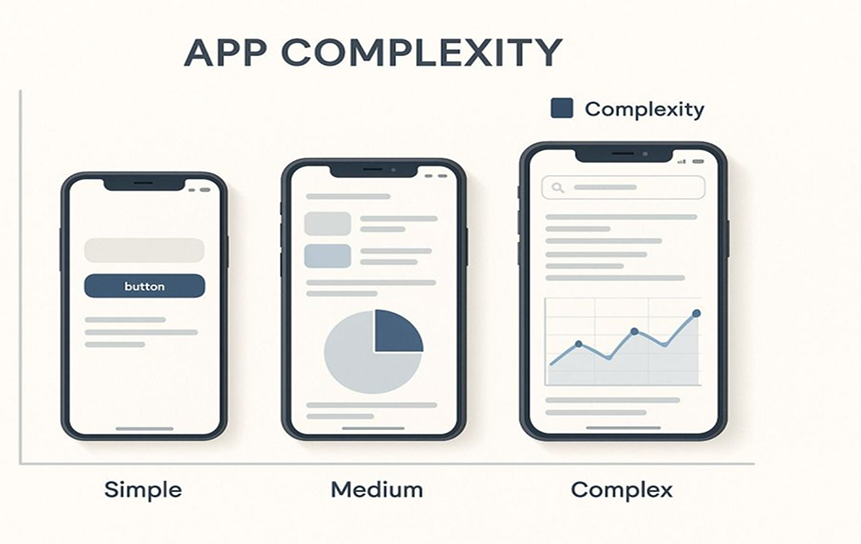
This is the most common category for startups and growing businesses. It balances functionality with scalability and usually requires more structured engineering.
Typical scope includes:
- User accounts and secure login systems
- API-based integrations with external services
- Database-driven functionality and dashboards
- More refined UI/UX with interactive elements
- Notification systems and personalization features
At this level, development effort increases significantly due to backend architecture and system coordination, which naturally raises mobile app development cost in Boston compared to simpler builds.
Advanced / Enterprise App Cost

Enterprise-level applications are designed for performance, scale, and long-term reliability. These systems often support large user bases and complex operational requirements.
Common characteristics:
- AI or machine learning capabilities
- Real-time data processing and synchronization
- Cloud-native or microservices architecture
- High-security standards and compliance layers
- Multi-role systems with advanced permissions
- Extensive third-party integrations
These projects require senior-level engineers, system architects, and long-term infrastructure planning. As a result, they represent the highest tier of app development cost in Boston, especially when built by experienced teams handling mission-critical systems.
App Development Cost by Complexity
One of the most practical ways to understand app development cost in Boston is by looking at how complexity affects pricing. The more advanced your app becomes, the more time, technical effort, and specialized expertise it requires. Complexity is often the single biggest factor that determines whether a project stays within budget or expands beyond expectations.
Simple App (Core Features Only)
Simple apps are designed with a narrow focus and minimal functionality. They usually serve a single purpose, such as displaying information, handling basic user input, or validating an idea in the market.
These apps are commonly used for MVPs and early-stage startups that want to test demand before investing heavily.
Key characteristics include:
- Limited number of screens and features
- Basic user interface with minimal customization
- Simple backend or even backend-light architecture
- Few or no third-party integrations
- Short development cycles and faster release timelines
Because of their simplicity, these apps help reduce the initial cost to build an app in Boston and allow businesses to launch quickly, gather feedback, and iterate based on real user behavior.
Medium Complexity App
Medium complexity apps are the most common category for growing startups and small businesses. They go beyond basic functionality and introduce more interactive and dynamic features.
Typical examples include apps with user accounts, dashboards, notifications, and third-party integrations.
Common characteristics:
- Multiple interconnected features and workflows
- User authentication and profile management
- API integrations with external services
- More structured backend systems and databases
- Improved UI/UX design with better interaction flow
- Moderate testing requirements across devices and use cases
At this level, the mobile app development cost in Boston increases noticeably because both frontend and backend systems become more complex. These apps require stronger coordination between design, development, and QA teams to ensure everything works seamlessly together.
Complex / Enterprise-Level App
Complex or enterprise-level applications are built for scale, performance, and long-term growth. They are typically used by large organizations or fast-scaling startups with advanced technical needs.
These systems often support thousands or even millions of users and require strong infrastructure planning from the beginning.
Key characteristics include:
- Cloud-based architecture designed for scalability
- Advanced security and compliance requirements
- Microservices or modular backend structures
- Real-time data processing or AI-driven functionality
- Multiple user roles and permission systems
- Extensive third-party integrations and APIs
- Continuous testing, monitoring, and performance optimization
Because of their depth and scale, these projects represent the highest range of app development costs in Boston. They also require experienced engineers, system architects, and long-term maintenance planning to ensure stability and performance over time.
Detailed Cost Breakdown of App Development
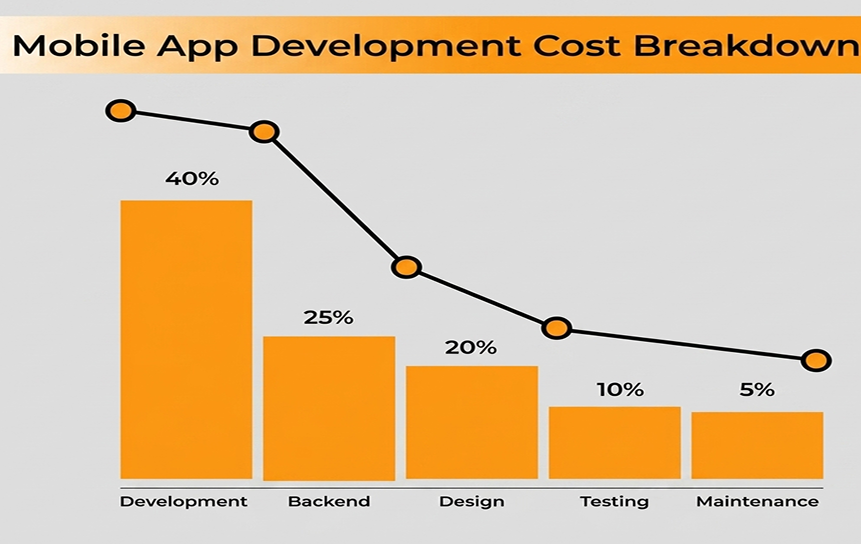
A realistic app development cost Boston estimate becomes much clearer when you stop looking at it as one lump sum and instead break it into development phases. Each phase contributes differently to the final budget, and understanding them helps you avoid surprises later in the project.
Planning & Requirement Analysis
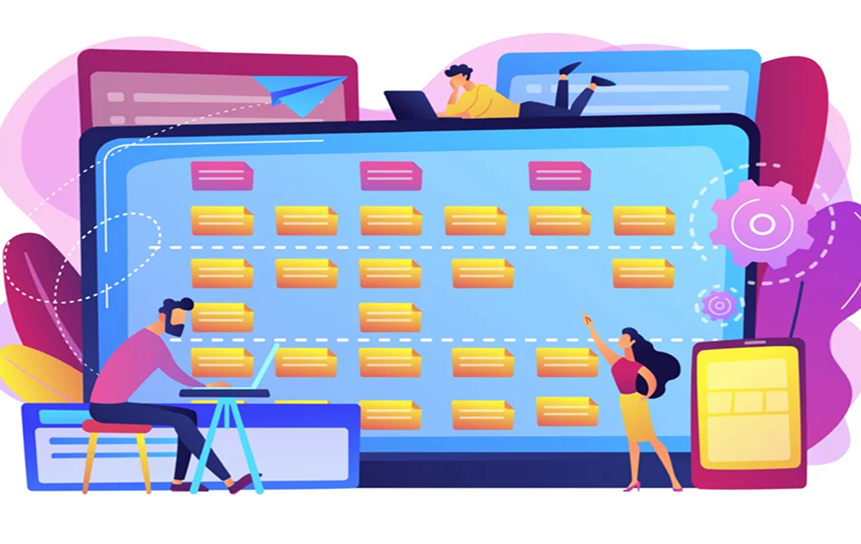
This is the foundation of the entire project. It defines what you are building, why you are building it, and how it will function.
At this stage, teams focus on product vision, user journeys, technical scope, and feature prioritization. In most projects, this phase accounts for around 10–15% of the total budget.
A strong planning phase helps reduce misunderstandings later, which directly prevents unnecessary increases in app development cost in Boston caused by rework or scope changes.
UI/UX Design Cost

UI/UX design shapes how users interact with your app and how intuitive the experience feels. It includes wireframes, prototypes, visual design, and interaction flow.
In Boston, design costs typically range from $5,000 to $40,000, depending on:
- Level of customization
- Brand identity requirements
- Number of screens
- Depth of user interaction and animations
Better design often requires more time and iteration, which naturally increases mobile app development cost in Boston, but it also improves user retention and satisfaction.
Frontend Development Cost
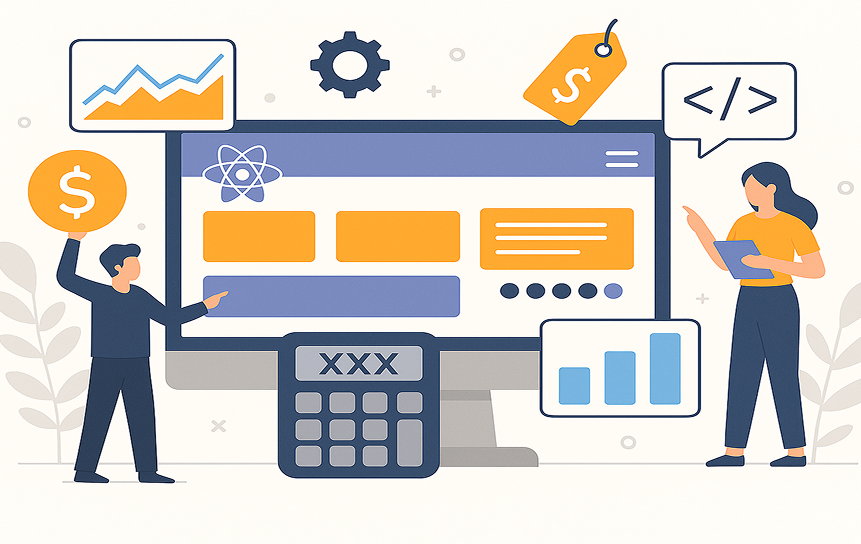
Frontend development is where design becomes a functional product. It focuses on everything users see and interact with, including buttons, screens, navigation, and animations.
The cost depends on:
- Number of screens
- Complexity of interactions
- Platform choice (iOS, Android, or cross-platform)
- Performance optimization needs
While it may not always be the most expensive phase, it plays a critical role in shaping the user experience and overall quality of the app.
Backend Development Cost
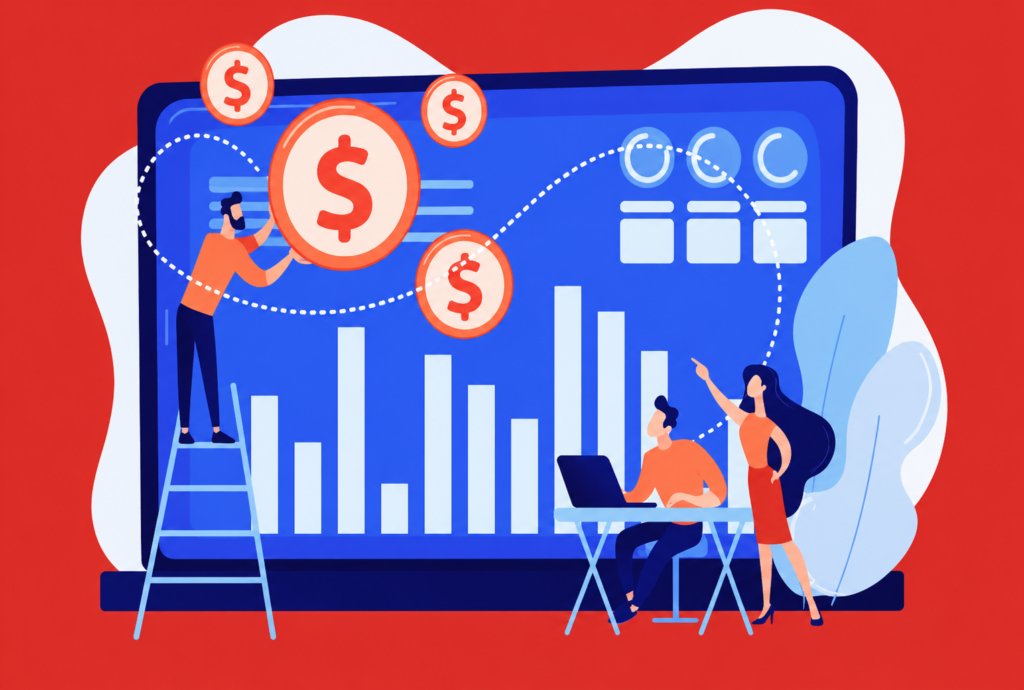
Backend development is the engine of your application. It handles databases, user authentication, APIs, business logic, and server-side processing.
This is often the most expensive part of app development in Boston because it requires:
- Secure architecture design
- Scalable database systems
- API development and integration
- Cloud infrastructure setup
The complexity of backend systems increases significantly as your app grows, especially for apps handling real-time data or large user bases.
Testing & QA Cost

Testing ensures your app works correctly across devices, platforms, and real-world conditions. It includes functional testing, performance testing, security checks, and usability testing.
This phase helps identify bugs before launch and prevents costly issues after release. While often underestimated, it plays a crucial role in controlling long-term app development costs in Boston by reducing post-launch fixes.
Deployment & Maintenance Cost
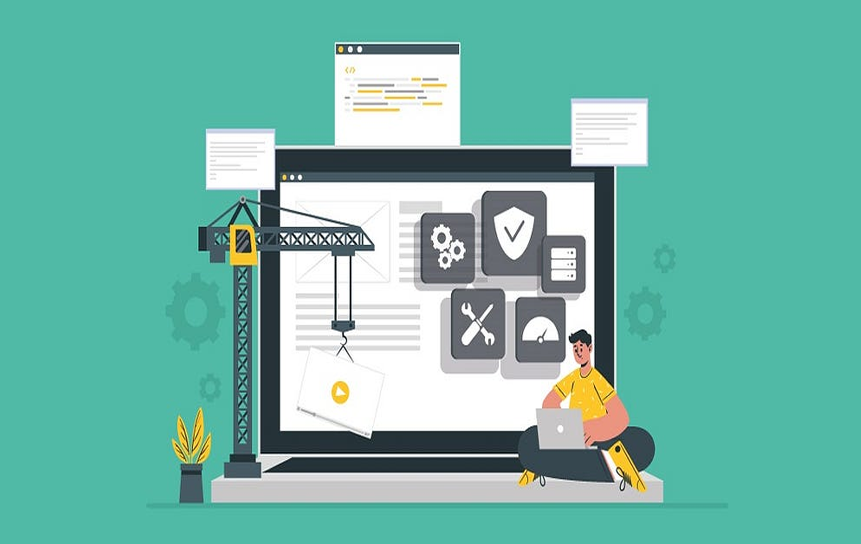
Once the app is launched, ongoing work begins. Deployment involves publishing the app to stores, setting up production environments, and ensuring smooth release processes.
After launch, maintenance includes:
- Bug fixes and updates
- Performance monitoring
- Feature improvements
- Compatibility updates for new OS versions
This phase is frequently overlooked during planning, yet it continues to add to app development costs in Boston over the entire lifecycle of the product.
App Development Cost Per Feature in Boston
User Login & Authentication
User login is one of the first systems built into almost every application. It may look simple on the surface, but it often involves security protocols, database handling, and sometimes third-party authentication systems. Depending on whether it’s a basic login or includes features like social sign-in and multi-factor authentication, the cost typically ranges from $2,000 to $10,000.
Payment Integration
Payment systems require careful implementation because they deal with sensitive financial data and compliance requirements. Integrating gateways like Stripe or PayPal, setting up subscription models, and handling transaction security can add between $3,000 and $15,000 to mobile app development costs in Boston, depending on complexity and scale.
Real-Time Chat Feature
Real-time chat is more complex than it appears because it requires continuous data synchronization between users. It relies on technologies such as WebSockets or cloud-based messaging services to ensure instant communication. Due to backend infrastructure and scalability needs, this feature often exceeds $10,000.
Push Notifications
Push notifications are widely used for engagement, reminders, and updates. While they are relatively simpler to implement compared to other features, they still require proper setup for targeting, scheduling, and delivery across devices. Costs usually range from $1,000 to $5,000, depending on customization.
Admin Dashboard
Admin dashboards are essential for managing app operations behind the scenes. These tools usually include things like managing users, analytics, reporting tools, and system controls. The cost of a dashboard depends on how detailed and data-heavy it is. It can cost between $5,000 and $20,000, which is a lot of money. This is a big part of the cost of developing apps in Boston.
API Integrations
API integrations connect your app with external services such as CRMs, maps, payment systems, or AI tools. Each integration comes with its own setup complexity, documentation challenges, and testing requirements. Because of this variability, pricing can differ widely depending on the number and type of APIs used.
Key Factors That Affect App Development Cost
If you’re trying to figure out how much it costs to develop an app in Boston, it’s helpful to understand what affects the price. Costs aren’t random. They depend on product decisions, how complicated the technology is, and how the team is set up. The easier these factors are to understand, the easier it is to control your budget.
Features & Functionalities
- Every feature adds development time, testing effort, and maintenance work
- Simple features (like static screens) cost far less than dynamic ones
- Backend-heavy features such as user accounts, payments, or data processing increase complexity significantly
- Advanced functionality often requires APIs, databases, and server-side logic
In short, the more features your app has, the more expensive it is to develop in in Boston.
Platform (iOS, Android, Cross-Platform)
- Building separate native apps for iOS and Android increases the total development effort
- Cross-platform solutions reduce duplication by using a shared codebase
- Native apps may offer better performance, but require more time and budget
- Platform choice directly impacts both timeline and long-term maintenance costs
The way you decide to develop your mobile app can have a big impact on how much it costs in Boston.
Design Complexity
- Simple UI designs are faster and cheaper to build
- Custom animations, advanced interactions, and unique layouts increase effort
- More complex designs require additional UI/UX design and frontend development time
- Design revisions during development can also raise costs
A well-designed user experience makes a product better, but it also costs more to develop. This is because there is more work involved in the design and implementation.
Developer Rates in Boston
- Local professionals offer strong accountability and easier collaboration
- Choosing to hire app developers in Boston typically comes at a higher hourly rate than outsourcing
- Agencies provide structured teams, but include higher overhead costs
- Freelancers may reduce costs, but vary in consistency and availability
This factor often determines whether a project stays within budget or exceeds expectations.
Project Timeline
- Longer projects require more developer hours, increasing the total cost
- Delays caused by unclear requirements or scope changes add extra expenses
- Faster delivery can reduce cost, but may limit flexibility or polish
- Efficient planning helps avoid unnecessary extension of development cycles
Simply put, time directly influences app development cost Boston; the longer it takes, the more it costs.
Boston Developer Hourly Rates 2026
When estimating app development cost in Boston, hourly rates are one of the most important factors to understand. They directly influence your total budget, especially for projects billed on a time-and-materials basis. In 2026, Boston remains a competitive but mid-to-high range tech market, shaped by strong demand in healthcare tech, AI, fintech, and enterprise software.
Here’s a clearer breakdown of what you can expect.
Freelancer Rates
- Typical range: $40–$120 per hour
- Junior freelancers usually fall on the lower end of this range
- Experienced specialists (mobile, backend, or UI/UX) charge significantly more
- Rates vary depending on expertise, portfolio strength, and niche skills
Freelancers can be a cost-effective option for small projects or MVPs, especially when you want to control the early mobile app development cost in Boston. But the quality, availability, and consistency can be different, so it’s important to choose wisely.
Agency Pricing
- Typical range: $100–$250 per hour
- Includes structured teams (developers, designers, QA, project managers)
- Higher rates often reflect deeper expertise and better project coordination
- Suitable for medium to complex applications requiring reliability and scalability
Working with an app development company in Boston usually costs more upfront, but it often reduces long-term risks like rework, delays, or technical inconsistencies. Agencies also make it easier to hold people responsible for their work and manage the project process, which is very helpful for large projects.
Boston vs Other Cities Comparison
- Boston is generally more affordable than New York, where developer demand and operational costs push rates higher
- It is more expensive than Austin, where the startup competition and cost of living are lower
- Compared to offshore teams, Boston developers are significantly higher in price, but offer stronger communication, alignment, and easier collaboration
This positioning makes Boston a middle-ground option, balancing cost with access to highly skilled engineers. For many startups, this balance is what shapes their overall app development cost in Boston, especially when long-term product stability is a priority.
Hidden Costs of App Development
When people estimate app development cost in Boston, they usually focus on design and coding. But in reality, a significant portion of spending appears after the app is launched. These ongoing or indirect expenses often determine whether a product stays profitable or becomes financially draining over time.
Below is a clearer breakdown of the most common hidden costs and why they matter.
Maintenance & Updates
Once your app is live, it enters a continuous improvement cycle. This phase is essential for stability and user satisfaction, but it also adds recurring cost.
- Bug fixes after real user testing
- Compatibility updates for new iOS and Android versions
- Security patches and vulnerability fixes
- Small feature improvements based on feedback
- Ongoing performance monitoring
In most cases, maintenance alone can add 15–20% annually to the original app development cost in Boston, especially for apps with active user bases or frequent updates.
Third-Party Services & APIs
Modern apps rely heavily on external tools to function efficiently. These services speed up development but introduce monthly or usage-based fees.
- Payment gateways (for transactions)
- Analytics tools (for tracking user behavior)
- Authentication services (login systems, OTP, social login)
- Messaging and email APIs
- Location, mapping, or AI-based services
These costs often start small but scale with usage. As your user base grows, so does your monthly operational expense, gradually increasing the total mobile app development cost in Boston over time.
Cloud Hosting & Infrastructure
Every app needs a backend environment to store data, manage users, and handle traffic. Cloud hosting costs are usually underestimated at the beginning.
- Server usage and scaling
- Database storage expansion
- Load balancing for performance stability
- Content delivery networks for faster access
- Backup systems and disaster recovery setups
For early-stage products, costs may seem minimal. However, as traffic increases, infrastructure becomes one of the most significant long-term expenses, especially for apps developed by Boston mobile app developers targeting large user bases.
App Store & Deployment Costs
Publishing and maintaining an app on platforms like the Apple App Store and Google Play also comes with recurring requirements.
- Developer account registration fees
- App submission and review compliance
- Certificates and security validations
- Ongoing updates to meet store policies
While these are relatively smaller costs compared to development, they still contribute to the overall app development cost in Boston, particularly for apps with frequent updates or strict compliance requirements.
App Development Timeline in Boston
When planning a digital product, understanding the timeline is just as important as estimating app development cost in Boston. Time affects not only your budget but also your ability to reach users, test assumptions, and compete in the market. In Boston’s fast-moving tech ecosystem, timelines are shaped by project complexity, team structure, and how clearly the product requirements are defined from the beginning.
Below is a more detailed and practical breakdown of what you can realistically expect.
Timeline for Simple Apps
Simple applications typically take 2 to 3 months, especially when the goal is to launch an MVP quickly.
These are usually apps with limited functionality, such as basic booking systems, informational apps, calculators, or early-stage prototypes designed to test an idea.
What this timeline usually includes:
- A short planning phase to define core features and user flow
- Lightweight UI/UX design focused on usability rather than advanced branding
- Basic frontend development for user interaction screens
- Simple backend setup, often using ready-made services or minimal infrastructure
- Limited integrations, usually only essential ones like login or basic data storage
- A short testing phase focused on core functionality rather than edge cases
At this stage, the main priority is speed and validation. Startups often choose this approach to control the initial cost to build an app in Boston and get real user feedback as early as possible. Instead of aiming for perfection, the focus is on answering one question: Does the product solve a real problem?
Timeline for Medium Apps
Medium-complexity apps generally take around 4 to 6 months, depending on how many features and integrations are involved.
These apps go beyond basic MVPs and usually include user accounts, dashboards, APIs, notifications, and more refined UI/UX design.
A typical development flow looks like this:
- A more structured discovery phase to define features, user journeys, and technical requirements
- Detailed UI/UX design with multiple screens, interactions, and responsive layouts
- Frontend development with more advanced navigation and state management
- Backend development with databases, APIs, and secure authentication systems
- Integration with third-party services such as payments, analytics, or external platforms
- Multiple rounds of testing, including functional, usability, and performance checks
At this level, mobile app development cost Boston increases because more time is spent on coordination, refinement, and ensuring different parts of the system work together smoothly. Many growing startups fall into this category as they transition from MVP to a more stable product.
This stage is also where collaboration with Boston mobile app developers becomes more structured, often involving dedicated project managers and iterative feedback cycles.
Timeline for Complex Apps
Complex or enterprise-level applications usually require 9 to 12 months or longer, especially when the product involves advanced technology, high user traffic, or strict compliance requirements.
These apps often include platforms like fintech systems, healthcare solutions, enterprise dashboards, or large-scale SaaS products.
The development process is significantly more layered:
- Extensive planning and architectural design to ensure scalability and security
- Advanced UI/UX design with multiple user roles and workflows
- Backend systems built using scalable architectures such as microservices or cloud-native setups
- Integration with multiple APIs, external systems, and sometimes legacy infrastructure
- Strong focus on security, compliance, and data protection standards
- Parallel development teams working on frontend, backend, QA, and DevOps
- Continuous testing cycles, including load testing, security testing, and regression testing
Because of this complexity, app development costs in Boston increase not just due to longer timelines but also due to higher skill requirements and deeper engineering effort. Many app development companies in Boston assign specialized roles such as solution architects, DevOps engineers, and security experts to handle these projects effectively.
At this level, delays are common if requirements are not clearly defined early, which is why proper planning has a major impact on both cost and delivery speed.
How to Reduce App Development Cost
Managing app development cost in Boston effectively is not about cutting corners, it’s about making structured, informed decisions from the very beginning. Most cost overruns happen when teams expand features too early, skip validation, or choose overly complex solutions before confirming real user demand.
Below are practical, real-world ways to keep your budget under control while still building a strong, scalable product.
an MVP First
- Build a Minimum Viable Product (MVP) to test your idea in the real market
- Focus only on essential functionality instead of full-feature development
- Validate demand before increasing investment in development
- Reduce the initial cost to build an app in Boston by avoiding unnecessary features
- Use real user feedback to decide what to build next
Use Cross-Platform Development
- Use frameworks that support both iOS and Android from a single codebase
- Reduce duplicate development effort across platforms
- Lower mobile app development cost in Boston by simplifying maintenance and updates
- Speed up development timelines without significantly sacrificing user experience
- Avoid building separate native apps unless performance demands it
Outsource Smartly
- Combine local expertise with offshore development teams for cost efficiency
- Work with an app development company in Boston for planning, architecture, and oversight
- Delegate execution tasks to skilled remote developers where appropriate
- Maintain clear communication to avoid misalignment and rework
- Balance affordability with accountability instead of choosing only the cheapest option
Focus on Core Features
- Prioritize features that directly solve the main user problem
- Avoid adding unnecessary complexity in the first version
- Delay secondary features until after launch and user validation
- Keep the product lean to reduce development and testing effort
- Improve long-term scalability by building a clean, focused foundation
Boston vs Other Cities: App Development Cost Comparison
When planning a digital product, understanding the app development cost in Boston in relation to other tech hubs helps you make smarter financial and strategic decisions. Pricing is not just about location; it reflects talent demand, ecosystem maturity, and how development teams structure their services.
Below is a clear, user-friendly comparison to help you see where Boston stands and when it makes sense to stay local or explore alternatives.
Boston vs New York
New York is one of the most expensive places in the U.S. to build software. High rent, intense competition for developers, and a dense startup ecosystem all push prices upward.
In practical terms, Boston app development pricing is usually more balanced than New York’s. You still get access to highly skilled engineers, especially in industries like healthcare, AI, and enterprise software, but without the extreme overhead costs that inflate New York rates.
For many startups, this difference matters early on. The cost to build an app in Boston can be significantly lower than in New York for the same scope, especially when working with mid-sized agencies or specialized teams.
If your priority is investor networking and rapid scaling in media or fintech circles, New York may still appeal. But for stable engineering quality at a more controlled budget, Boston often provides better value.
Boston vs Austin
Austin has become a popular alternative for startups looking to stretch budgets. Development teams are generally more affordable, which can reduce overall build costs.
Compared to Boston, Austin usually offers lower hourly rates and slightly cheaper project estimates. This is why some founders see it as a way to reduce early-stage expenses.
However, Boston stands out when projects require deeper technical expertise or industry specialization. Many Boston mobile app developers work on complex systems in biotech, robotics, and enterprise platforms, which influences how solutions are designed and built.
Austin teams often excel in fast-moving consumer apps and SaaS products, while Boston teams tend to focus more on precision, scalability, and long-term architecture. So while Austin may reduce upfront spending, Boston can offer stronger technical depth depending on your product type.
Boston vs Remote Teams
Remote development is often the most cost-effective option, and it can dramatically lower initial expenses compared to local hiring. This is why many startups consider it when trying to reduce early burn rate.
However, cost savings should be balanced with workflow efficiency. Remote teams often work across different time zones, which can slow down feedback cycles and require more structured communication.
In contrast, working with an app development company in Boston gives you easier collaboration, faster iteration, and tighter alignment during product design and development stages.
Remote teams can be a great choice for MVPs or well-defined projects where requirements are already clear. But when building more complex products, many businesses prefer a hybrid approach, combining local product leadership with distributed engineering support.
This approach helps manage app development costs in Boston more efficiently while maintaining quality and control over the final product.
Final Thoughts
Planning a digital product is not just about estimating numbers; it’s about understanding how those numbers behave over time. When evaluating app development cost in Boston, the most successful teams are those that think beyond the initial build and consider the full lifecycle of the product, including scaling, maintenance, and evolution.
A practical budgeting approach always includes a buffer. Even with clear requirements, software projects naturally evolve as users interact with the product and new insights emerge. This is why experienced founders typically set aside a contingency fund of around 10–20% of the total budget. It helps absorb unexpected changes without disrupting development or delaying launch timelines.
Another important aspect is choosing the right development strategy from the beginning. There is no universal model that fits every project. Some products benefit from fast MVP launches, while others require more structured engineering from day one. The right decision depends on how scalable the product needs to be, how quickly it must reach the market, and what long-term vision the business is working toward.
In Boston’s competitive tech ecosystem, working with experienced teams or Boston mobile app developers can help align technical execution with business goals more effectively. However, the key is not just choosing the right team, but also ensuring the approach matches the product’s growth trajectory.
Ultimately, managing app development costs in Boston successfully comes down to clarity, flexibility, and long-term thinking. When budgeting is treated as an ongoing process rather than a one-time estimate, it becomes much easier to build a product that is both financially sustainable and technically scalable.
Book a consultation with our app developer in Boston to streamline your workflows and enhance internal process control today.
FAQs
Answering the most common app development cost in Boston questions ensures clarity for both beginners and advanced users alike.
-
How much does it cost to build an app in Boston?
The app development cost in Boston usually falls between $25,000 and $250,000+. The final price depends on how complex the app is, how many features it includes, and the level of design and backend work required. Simple apps sit at the lower end, while advanced platforms with integrations or real-time functionality cost significantly more.
-
Can I build an app under $20,000 in Boston?
Yes, but only if the app is very basic. At this budget, you’re typically limited to a simple MVP with minimal features and no advanced backend or custom functionality. It’s best suited for testing an idea rather than building a fully scalable product.
-
How long does app development take in Boston?
Most projects take anywhere from 2 to 12 months. A simple MVP can be completed in a few months, while medium and complex applications take longer due to design, development, testing, and integration requirements.
-
Should I hire Boston developers or outsource?
Hiring Boston mobile app developers is ideal if you want strong communication, accountability, and close collaboration. Outsourcing is usually more cost-effective and works well for well-defined projects or budget-sensitive builds. The right choice depends on your priorities, cost, control, or speed.
-
What hidden costs should I expect?
Even after launch, there are ongoing expenses such as maintenance, cloud hosting, third-party APIs, app store fees, and scaling infrastructure. These recurring costs can gradually increase the overall app development cost Boston, especially as your user base grows.


