
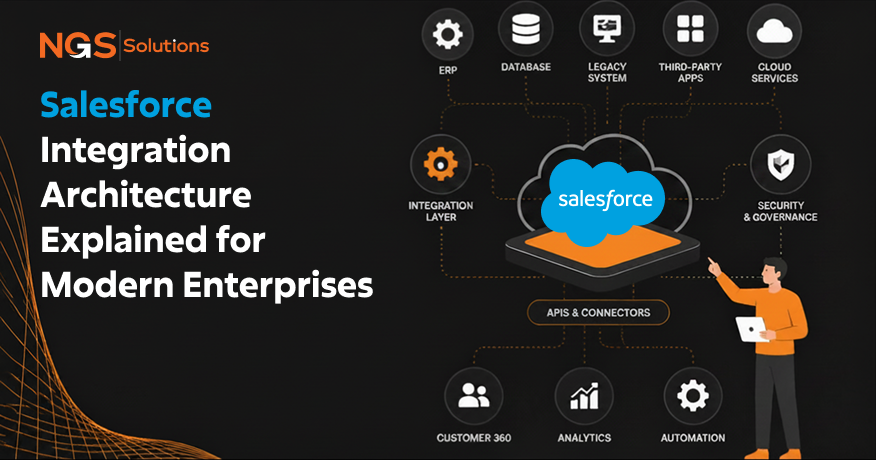
In many enterprises, systems grow faster than their ability to communicate. A company might have Salesforce handling sales data, SAP managing finance, an inventory platform running separately, and a customer support system sitting somewhere else entirely. Each system works fine on its own, but the gaps show up when data needs to move between them, and this is exactly where Salesforce integration Solutions become important.
A sales order closed in Salesforce might take hours or days to reflect in the ERP system. Customer support may not see updated account information. Finance teams often rely on exports instead of real-time data. These gaps usually don’t come from the tools themselves; they come from how the systems are connected and maintained through proper Salesforce integration Solutions.
That’s where Salesforce integration architecture becomes a deciding factor. It defines how Salesforce fits into the larger enterprise system architecture and how all these moving parts communicate without breaking under load or complexity. Strong Salesforce integration Solutions ensure these connections are designed properly from the start, instead of being patched later.
Architecture decisions here are not just technical details. They directly impact scalability, reliability, and how easily the business can grow without rebuilding integrations every time a new system is added.
What Is Salesforce Integration Architecture?
Definition of Integration Architecture
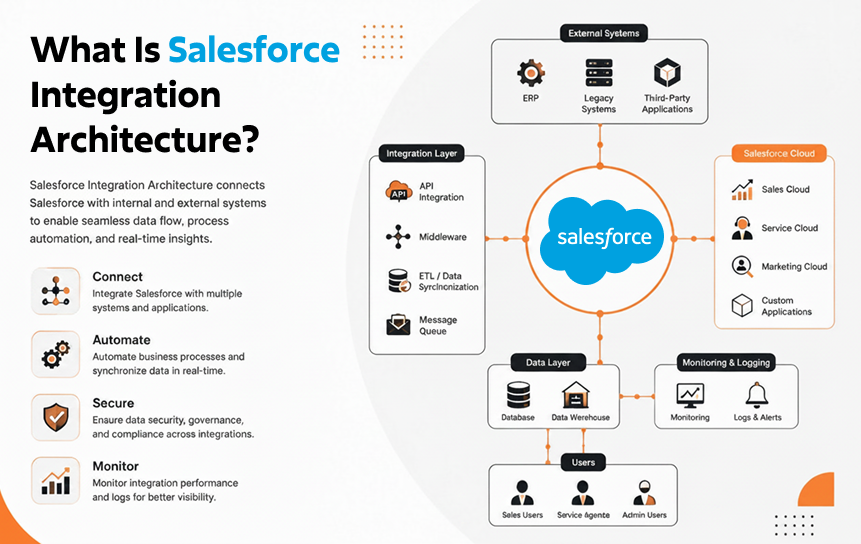
Salesforce integration architecture is the structured design that defines how Salesforce connects with external systems such as ERP platforms, marketing tools, data warehouses, and custom applications. It controls how data flows, how systems communicate, and how business logic is shared across platforms.
Why Architecture Matters in Salesforce Systems
Without a clear structure, integrations quickly turn into a tangled web of connections. One system talks directly to another, then another connection gets added, and soon changes become risky and slow.
A well-planned enterprise integration architecture avoids that mess. It creates predictable paths for data movement, making systems easier to manage and scale.
Role of Salesforce in Enterprise Ecosystems
Salesforce often acts as the CRM backbone in enterprise environments. It holds customer data, sales activity, and service interactions. But it rarely works alone. It needs to connect with ERP systems, analytics platforms, and cloud applications.
In modern setups, Salesforce integration architecture defines how Salesforce interacts with platforms like AWS, Azure, and enterprise systems built on Microservices Architecture.
Core Design Principles
A solid design usually follows a few simple rules:
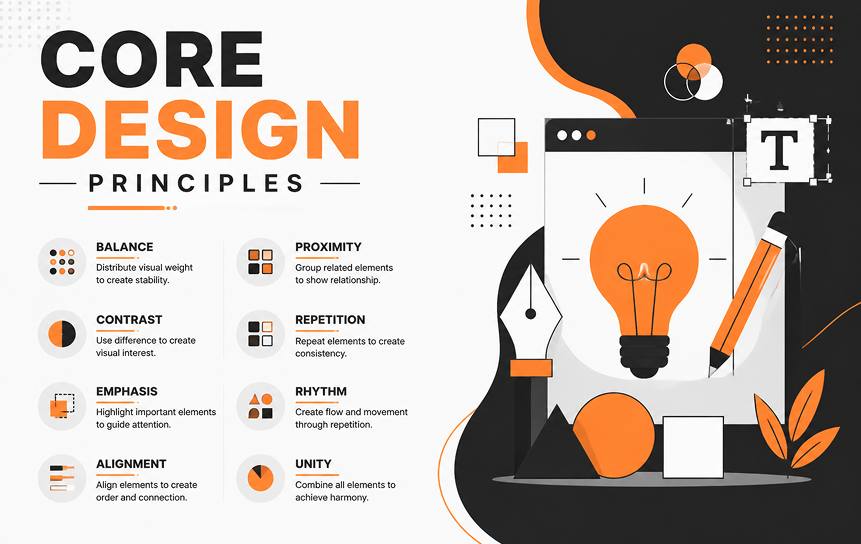
- Keep systems loosely connected
- Avoid unnecessary dependencies
- Standardize data movement paths
- Prefer reusable integration layers
- Design for change, not just current needs
These principles help teams design scalable integration design patterns that don’t collapse under future growth.
Importance of Scalability and Flexibility
Enterprise systems rarely stay static. New applications get added, old ones get replaced, and business rules change over time. A flexible architecture allows Salesforce to stay connected without constant redesign.
Core Layers of Salesforce Integration Architecture
Presentation Layer (User Systems)
This is where users interact with business applications, Salesforce UI, customer portals, mobile apps, and partner dashboards. These systems generate the data that eventually flows downstream.
Application Layer (Salesforce CRM)
Salesforce sits in the application layer, handling CRM processes such as leads, opportunities, accounts, and service cases. It acts as both a data producer and consumer in enterprise environments.
Integration Layer (APIs and Middleware)
This layer is where most of the real work happens. APIs, event brokers, and middleware platforms like MuleSoft sit here. They connect Salesforce with other enterprise systems, handle transformations, and manage routing logic.
This layer is critical for improving system communication structure and reducing tight coupling between applications.
Data Layer (Databases and Storage Systems)
Behind every system are databases, ERP data stores, data lakes, cloud storage systems, and analytics platforms. Salesforce interacts with these systems through controlled integration flows.
Communication Between Layers
Data typically moves like this:
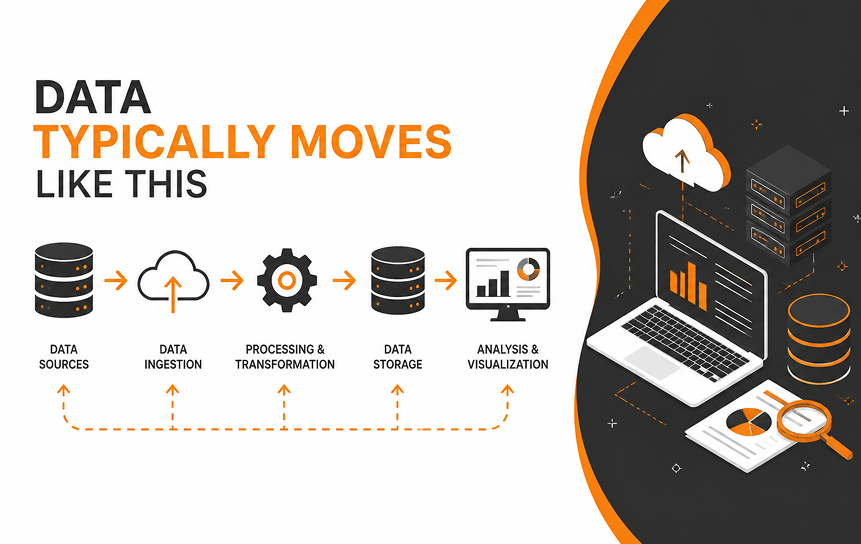
User action → Salesforce → Integration layer → External system → Response back to Salesforce
In more advanced setups, event-driven flows allow systems to communicate in real time without waiting for direct requests.
Common Integration Patterns in Salesforce Architecture
Point-to-Point Integration
Point-to-point integration is the most basic approach, where Salesforce connects directly with another system through a dedicated interface or API. While this model is simple to implement and works well for small-scale environments, it quickly becomes difficult to manage as the number of systems increases. Each new connection adds additional dependencies, making troubleshooting, updates, and governance more complex over time. As a result, this pattern is generally suitable only for limited or short-term integration needs.
Hub-and-Spoke Model
In the hub-and-spoke architecture, a central integration hub manages communication between Salesforce and all other connected systems (the spokes). Instead of maintaining multiple direct connections, each system communicates through the central hub, which simplifies connectivity and reduces point-to-point complexity. However, this centralization can introduce risks if the hub is not properly designed for scalability, availability, and fault tolerance, as it may become a performance bottleneck or single point of failure.
API-Led Connectivity Model
The API-led connectivity approach is a modern integration pattern that structures APIs into three distinct layers: System APIs (for core systems), Process APIs (for business logic), and Experience APIs (for user-facing interfaces). This layered design promotes reusability, consistency, and separation of concerns across enterprise systems. In the Salesforce ecosystem, this model is commonly implemented using platforms like MuleSoft, which helps design, manage, and secure APIs at scale. API-led connectivity is widely adopted in enterprise architectures due to its flexibility and ability to support evolving business requirements.
Event-Driven Architecture Model
In an event-driven architecture, systems communicate through events rather than direct API calls. When a significant action occurs in Salesforce, such as record creation, update, or deletion, an event is published, and subscribed systems react independently. This approach enables near real-time data synchronization, reduces tight coupling between systems, and improves scalability. It is especially useful in distributed environments where responsiveness and decoupled communication are critical.
Hybrid Integration Models
In practice, most enterprise environments do not rely on a single integration pattern. Instead, they adopt a hybrid model that combines point-to-point integrations, API-led connectivity, and event-driven architectures based on specific business and technical requirements. For example, legacy systems may still use direct connections, while modern applications leverage APIs and event streams. Over time, organizations typically evolve toward more standardized and loosely coupled patterns as their integration maturity increases.
Role of Middleware in Salesforce Architecture
Why Middleware Is Needed
As enterprise ecosystems expand, point-to-point integrations become increasingly difficult to manage and scale. Each new system connection adds complexity, tight coupling, and maintenance overhead. Middleware addresses this challenge by acting as a centralized integration layer that manages communication between Salesforce and other systems. It provides a controlled, standardized way to handle data exchange, reducing dependency chaos and improving overall system governance.
MuleSoft in the Salesforce Ecosystem
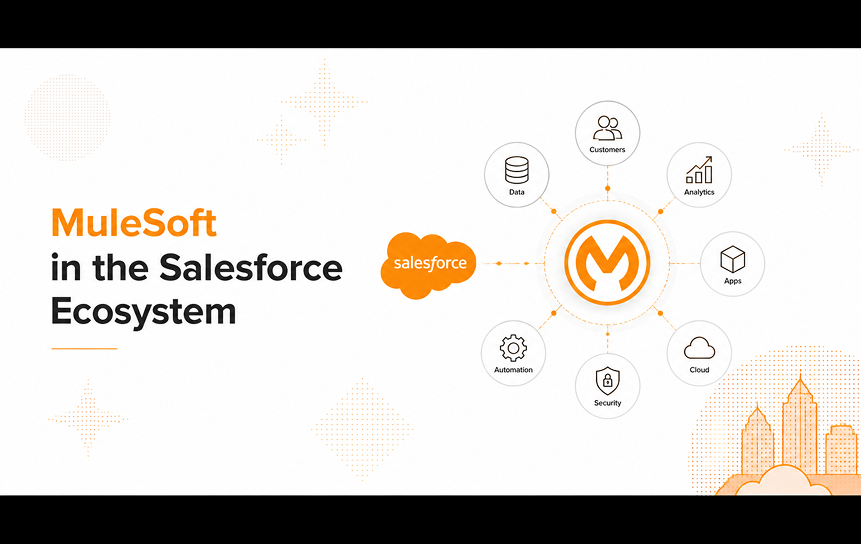
MuleSoft plays a key role in the Salesforce integration ecosystem by enabling seamless connectivity across diverse enterprise applications. It provides tools for API management, system orchestration, and reusable integration assets. Within Salesforce architectures, MuleSoft is often used to implement API-led connectivity, allowing organizations to expose, secure, and manage APIs in a structured and scalable way. This makes it easier to integrate legacy systems, SaaS platforms, and on-premise applications into a unified Salesforce integration ecosystem.
Data Transformation and Routing
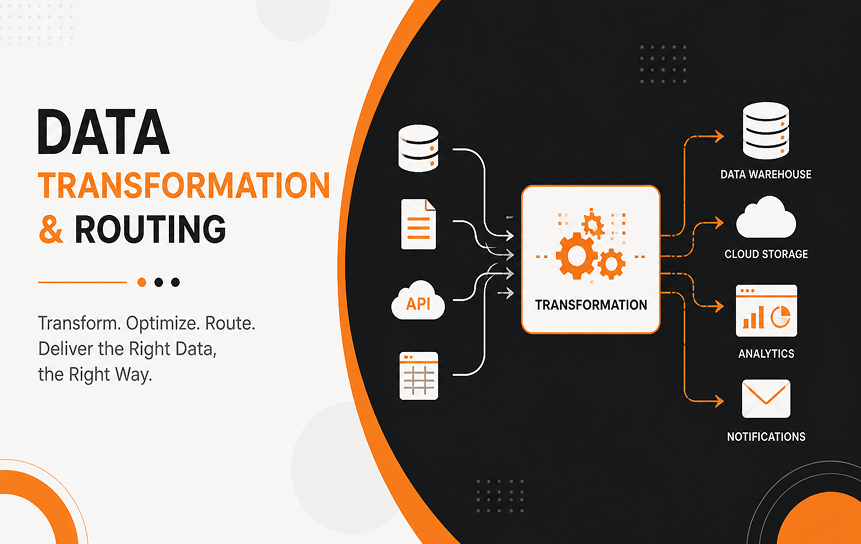
Different systems often use different data formats, protocols, and schemas, which creates integration friction. Middleware solves this by performing data transformation and mapping between systems without requiring custom logic in Salesforce or other endpoints. It also handles intelligent routing of data based on rules, conditions, or event triggers, ensuring that information reaches the correct destination in the right format and at the right time.
Reducing System Complexity
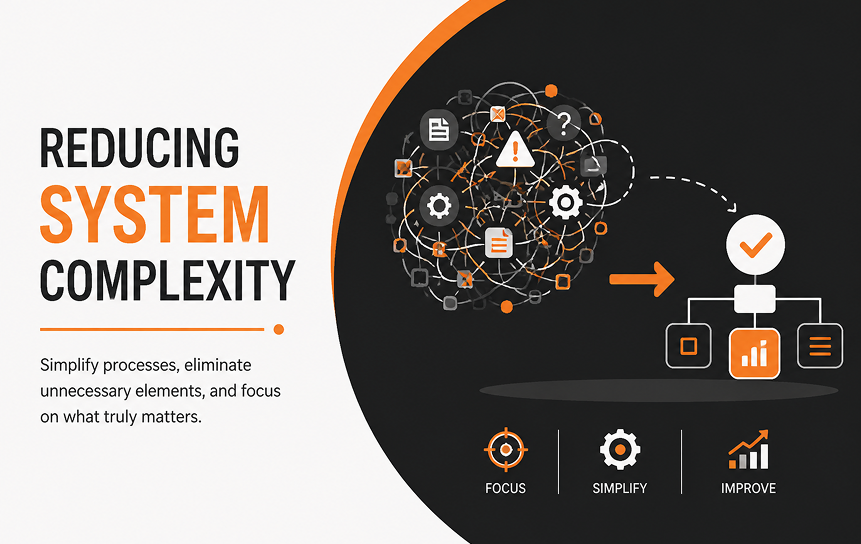
Without middleware, organizations often end up with a dense web of direct integrations that are hard to understand and maintain. Middleware reduces this complexity by centralizing integration logic into a single layer. This decouples systems from one another, meaning each application only needs to connect to the middleware rather than every other system individually. The result is a cleaner, more modular architecture that is easier to troubleshoot and evolve.
Improving Integration Scalability
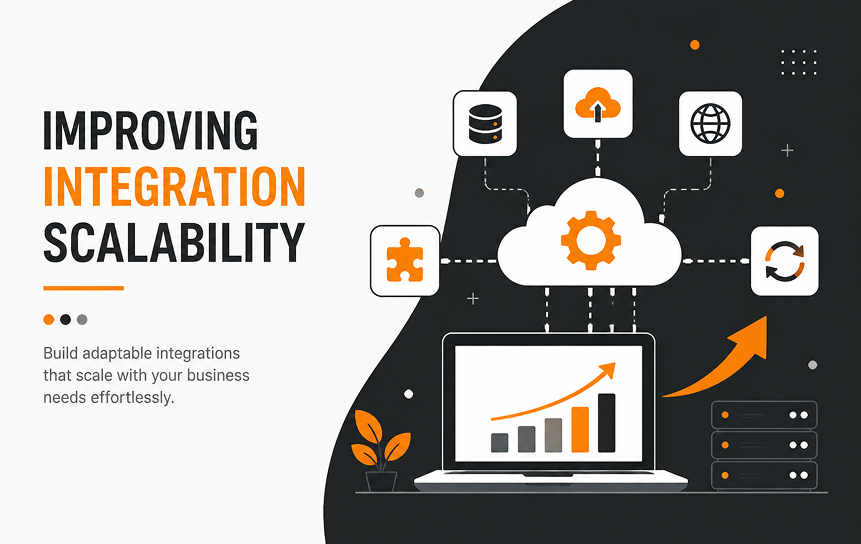
Middleware significantly improves scalability by allowing new systems to be integrated without redesigning existing connections. Instead of modifying multiple point-to-point links, developers can simply add new APIs, connectors, or flows within the middleware layer. This reduces development effort, minimizes regression risks, and supports long-term growth as the enterprise architecture evolves.
Challenges in Designing Salesforce Integration Architecture
Legacy System Compatibility
Many enterprises still rely on legacy applications that were not designed for modern API-based communication. These systems may lack REST or SOAP interfaces, requiring custom connectors, middleware, or file-based batch processing to enable integration with Salesforce. In some cases, additional transformation and adapter layers are needed to bridge protocol and data format gaps, which increases both complexity and maintenance overhead.
Data Consistency Issues
When multiple systems can create, update, or delete the same records, maintaining data consistency becomes a major challenge. Without clearly defined system-of-record rules, conflicts such as duplicate updates, version mismatches, or overwritten data can occur. Implementing master data management (MDM) principles, data ownership rules, and synchronization strategies is essential to ensure that Salesforce and connected systems remain aligned.
Performance Bottlenecks
Poorly designed integration flows can introduce significant performance issues, especially when handling large data volumes or real-time transactions. Synchronous integrations that rely heavily on external system response times can slow down user interactions in Salesforce. Additionally, inefficient API usage, excessive polling, or unoptimized queries can lead to latency, throttling, and system instability under peak load conditions.
Security and Compliance Requirements
Enterprise integrations must adhere to strict security standards to protect sensitive business and customer data. This includes implementing strong authentication mechanisms (such as OAuth 2.0), encrypting data both in transit and at rest, and enforcing role-based access controls. Additionally, organizations often need to maintain detailed audit logs and comply with regulatory frameworks such as GDPR or industry-specific standards, which adds further design complexity.
Complex System Dependencies
As the number of integrated systems grows, dependencies between them become increasingly complex and harder to manage. A change in one system can have cascading effects on multiple downstream applications, making updates risky and time-consuming. Without proper documentation, modular architecture, and decoupling strategies (such as event-driven design or middleware layers), these hidden dependencies can significantly increase operational risk and reduce system agility.
Best Practices for Salesforce Integration Architecture
Use API-Led Design
API-led connectivity is a structured approach that organizes integrations into reusable layers, including System APIs, Process APIs, and Experience APIs. This separation improves modularity and allows different applications to consume the same backend services without duplication. It also enhances agility, as changes in one layer do not necessarily impact others, enabling faster development and easier maintenance across the enterprise integration landscape.
Standardize Data Models
Establishing consistent and well-defined data models across systems is critical for reducing complexity in data exchange. Standardization minimizes the need for repetitive transformations, lowers the risk of data mismatches, and improves overall data quality. By aligning on common schemas and naming conventions, organizations can ensure smoother integration between Salesforce and external systems while also simplifying debugging and future enhancements.
Avoid Point-to-Point Dependencies
Direct, hard-coded integrations between individual systems should be avoided wherever possible. While point-to-point connections may seem faster to implement initially, they create tightly coupled architectures that are difficult to scale and maintain. Instead, adopting middleware or an integration layer helps centralize communication, reduce dependency chains, and make the overall system more resilient to change.
Design for Scalability
Integration architecture should be built with future growth in mind, including increased transaction volumes, expanding user bases, and additional connected systems. Scalable designs often leverage asynchronous processing, event-driven patterns, and elastic infrastructure to handle load efficiently. This ensures that performance remains stable even as business demands evolve, without requiring major redesigns or costly rework.
Monitor System Performance
Continuous monitoring of integration flows is essential for maintaining reliability and operational efficiency. By tracking key metrics such as response times, error rates, throughput, and system latency, teams can quickly identify bottlenecks or failures. Implementing centralized logging, alerting mechanisms, and dashboards enables proactive issue resolution and helps maintain consistent service levels across integrated systems.
Future of Salesforce Integration Architecture
Composable Enterprise Architecture
Enterprises are steadily shifting toward composable architectures, where systems are built as modular, interchangeable components rather than tightly coupled monoliths. In this model, applications, services, and data capabilities can be assembled like building blocks and replaced independently without disrupting the broader ecosystem. For platforms like Salesforce, this means greater emphasis on reusable services, API-first design, and flexible integration layers that allow businesses to adapt quickly to changing requirements. Over time, this approach reduces vendor lock-in and improves organizational agility by making integration architecture more plug-and-play.
AI-Driven System Design
Artificial intelligence is increasingly influencing how integration systems are designed, optimized, and maintained. AI-powered tools can assist in intelligent routing decisions, detect anomalies in data flows, and suggest performance improvements across distributed systems. Within the Salesforce ecosystem, capabilities such as Einstein AI are already contributing to predictive analytics and automation-driven decision-making. As these capabilities mature, integration architectures will become more self-optimizing, with systems dynamically adjusting to load, failures, and usage patterns without manual intervention.
Hyperautomation Trends
Hyperautomation extends traditional automation by combining integration platforms, AI, machine learning, and low-code tools to automate end-to-end business and IT processes. In integration architecture, this means reducing manual effort not just in workflows, but also in monitoring, error handling, and system coordination. Platforms like Salesforce and integration tools such as MuleSoft are increasingly being used to orchestrate complex process chains that span multiple systems. The long-term direction is toward self-operating integration environments where routine tasks such as retries, transformations, and scaling are handled automatically.
Real-Time Enterprise Systems
Modern enterprises are moving away from batch-based data exchange toward real-time or near-real-time synchronization across systems. This shift is driven by the need for faster decision-making, improved customer experiences, and more responsive operations. In a Salesforce-centric architecture, real-time integration is often achieved through event-driven patterns, streaming APIs, and asynchronous messaging. As adoption grows, systems will increasingly maintain continuous synchronization, ensuring that data in Salesforce and connected platforms remains consistently up to date, reducing latency between business events and system response.
Conlusion
Salesforce integration architecture is basically how Salesforce connects and talks with other business systems so information doesn’t get stuck in silos. When the design is layered properly, each part has a clear job, which keeps things simple instead of messy. Different setups exist, like API-led, event-driven, hub-and-spoke, or even simple point-to-point links, depending on how big or complex the system is.
Tools like MuleSoft act like a middle layer that keeps everything moving smoothly by handling data changes, routing, and system communication in one place. Without this kind of setup, systems often start fighting each other, data doesn’t match, performance slows down, and fixing issues becomes a regular headache.
A good integration setup turns Salesforce into a strong CRM core inside a bigger digital system, where everything works together instead of separately. It keeps things flexible, faster to scale, and easier to manage when the business grows or changes. In the end, the way you design integration decides how smoothly your whole enterprise runs.
Need help designing a scalable Salesforce integration architecture? Contact us today.
FAQs
-
What is Salesforce integration architecture?
Salesforce integration architecture is the structured design that defines how Salesforce connects with external systems in an enterprise environment. It includes how data flows between systems, how APIs are used, and how middleware, events, and integration patterns are applied. The goal is to create a reliable structure where Salesforce can communicate with ERP systems, cloud platforms, and other enterprise applications without creating tight dependencies or fragile connections.
-
Why is integration architecture important for Salesforce?
Integration architecture is important because Salesforce rarely operates alone. It needs to connect with finance systems, marketing platforms, and data warehouses. Without a structured approach, integrations become inconsistent and hard to maintain. A strong architecture improves scalability, reduces system complexity, and ensures data consistency across platforms while supporting long-term business growth.
-
What are common Salesforce integration patterns?
Common Salesforce integration patterns include point-to-point integration, hub-and-spoke models, API-led connectivity, event-driven architecture, and hybrid approaches. Each pattern serves different needs. Point-to-point works for simple cases, while API-led and event-driven models are better for scalable enterprise environments. Most real-world systems use a combination depending on business requirements and system maturity.
-
What role does middleware play in Salesforce architecture?
Middleware acts as a central integration layer between Salesforce and other systems. It handles routing, data transformation, security, and error handling. Tools like MuleSoft help reduce direct system dependencies and simplify complex integration landscapes. Middleware improves scalability by allowing new systems to be added without changing existing connections, making enterprise integration more manageable.
-
How does Salesforce support scalable architecture?
Salesforce supports scalable architecture through APIs, event-driven capabilities, and integration-friendly design. It allows systems to connect using standard protocols and supports both real-time and batch processing. When combined with proper integration design patterns and middleware, Salesforce can operate within large enterprise ecosystems without performance issues or data inconsistencies.
-
What is API-led integration architecture?
API-led integration architecture is a structured approach where integrations are built in layers. System APIs connect directly to backend systems, process APIs handle business logic, and experience APIs deliver data to users or applications. This approach improves reuse, reduces duplication, and creates a scalable integration model that works well in enterprise environments with Salesforce and other connected systems.


