
Businesses today communicate with customers across more channels than ever before. From email newsletters and websites to social media platforms and mobile applications, brands need to manage thousands of customer interactions while still delivering personalised experiences.
This growing demand for faster and more relevant communication has made marketing automation an essential part of modern digital marketing strategies. Instead of relying entirely on manual marketing processes, businesses can use marketing automation solutions to automate repetitive activities, understand customer behaviour, and create meaningful connections at scale.
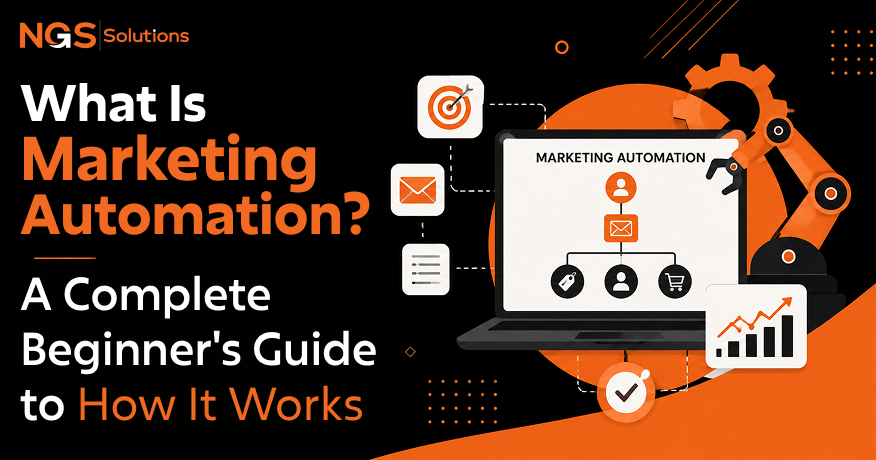
For beginners, understanding what is marketing automation is the foundation for learning how businesses use technology to improve their marketing efforts. In simple terms, marketing automation uses specialised software to plan, manage, and optimise marketing activities automatically based on customer actions, preferences, and data.
A modern marketing automation platform can help businesses manage email campaigns, segment audiences, nurture leads, track engagement, and measure campaign performance. These capabilities allow marketing teams to spend less time on repetitive tasks and more time on developing strategies that drive business growth.
Whether a company wants to improve customer retention, generate better leads, or create more personalised experiences, marketing automation provides the tools needed to build stronger customer relationships.
This beginner-friendly guide explains what is marketing automation and how does it work, including its benefits, components, examples, challenges, and future trends.
What Is Marketing Automation?
Definition of Marketing Automation
Marketing automation is the process of using software and technology to automate marketing activities that are normally completed manually. It helps businesses deliver targeted messages, manage customer relationships, and improve marketing efficiency by using customer data and predefined workflows.
Simply explaining what is marketing automation, it is a system that allows businesses to automatically communicate with customers based on specific actions, behaviours, or stages in the customer journey.
For example, when someone subscribes to a company newsletter, downloads a resource, visits a product page, or completes a purchase, marketing automation software can automatically respond with a relevant message. Instead of a marketer manually sending each communication, the system completes the task based on previously created rules.
Marketing automation is commonly used for activities such as email marketing, lead nurturing, audience segmentation, campaign management, and customer engagement automation. It combines customer data with automated workflows to create more personalised marketing experiences.
Unlike traditional marketing methods that often send the same message to a large audience, automation allows businesses to communicate with customers according to their interests and behaviours. This makes marketing campaigns more relevant and improves the overall customer experience.
A successful marketing automation strategy does not replace marketers. Instead, it gives marketing teams more time to focus on creativity, planning, customer understanding, and business growth.
How Marketing Automation Works
Understanding what is marketing automation and how does it work requires looking at how automation systems collect information, make decisions, and complete marketing actions.
Marketing automation begins with collecting customer data from different touchpoints. These touchpoints may include website visits, email interactions, online purchases, social media engagement, and customer enquiries. The collected information helps businesses understand customer preferences and predict future behaviour.
Once customer data has been collected, businesses create automated workflows based on specific goals. These workflows determine what action should happen when a customer completes a particular activity.
For example, a customer who signs up for a free trial may enter a workflow that sends educational emails, provides product guidance, and encourages them to upgrade to a paid plan. Similarly, a customer who abandons an online shopping cart may automatically receive a reminder message encouraging them to complete their purchase.
Marketing automation works through behavioural triggers. These triggers allow businesses to respond automatically when customers take specific actions. Common triggers include:
- Signing up for a newsletter
- Downloading content
- Viewing certain products
- Opening or clicking emails
- Completing a purchase
The final stage involves analysing results. Marketing automation platforms track important performance information, including engagement metrics, conversion rates, customer interactions, and campaign performance. These insights help businesses improve their future strategies.
Through this process, companies can create efficient marketing workflow automation systems that support customers throughout the entire customer lifecycle.
Why Businesses Are Adopting Marketing Automation
Businesses are adopting marketing automation because customer expectations have changed significantly. Modern customers want quick responses, personalised recommendations, and communication that feels relevant to their needs.
Managing these expectations manually becomes increasingly difficult as businesses grow. A company with thousands of customers cannot realistically create individual messages, track every interaction, and manage every follow-up without support from technology.
One major reason why businesses need marketing automation is the ability to communicate with customers at scale while maintaining personalisation. Automation allows companies to create targeted experiences without increasing the workload of marketing teams.
For example, an online retailer can use automation to recommend products based on browsing behaviour, send reminders about abandoned carts, and provide personalised offers to returning customers. A software company can use automated workflows to educate leads before they speak with a sales representative.
Marketing automation also improves collaboration between marketing and sales teams. By tracking customer behaviour and identifying high-quality leads, automation helps sales teams understand which prospects are most likely to convert.
Another reason businesses are investing in automation is the growing importance of data-driven decision-making. Modern marketing requires businesses to understand customer preferences, measure campaign performance, and continuously improve their strategies.
With the help of marketing automation tools and marketing automation software, companies can create smarter campaigns, improve customer engagement, and support long-term growth.
Why Marketing Automation Matters for Modern Businesses
Marketing has changed significantly in recent years. Customers now expect brands to provide useful information, quick responses, and personalised experiences across multiple communication channels. Businesses that rely only on manual marketing methods often struggle to keep up with these expectations.
Marketing automation helps organisations manage complex marketing activities while maintaining consistent and meaningful customer interactions. By combining customer data, automated workflows, and analytics, businesses can create more effective campaigns and improve their overall marketing performance.
The importance of marketing automation goes beyond saving time. It helps companies understand their audiences better, improve communication, increase efficiency, and create stronger relationships throughout the customer journey.
Managing Customer Communication at Scale
As businesses grow, managing customer communication becomes more challenging. A small business may be able to respond manually to individual customers, but larger organisations often communicate with thousands or even millions of people across different platforms.
Marketing automation allows businesses to manage these customer interactions efficiently without sacrificing personalisation. Instead of sending the same message to everyone, companies can create targeted communication based on customer behaviour, interests, and previous interactions.
For example, a customer who has recently purchased a product may receive a follow-up message with usage tips, while a new subscriber may receive educational content introducing the brand. These automated messages create a more natural customer experience because they are connected to the customer’s specific situation.
Through customer engagement automation, businesses can maintain regular communication throughout the customer lifecycle. This helps brands stay connected with customers, build trust, and encourage long-term relationships.
Automation also supports communication across different channels. Businesses can coordinate email campaigns, website messages, mobile notifications, and other digital channels to create a consistent brand experience.
When communication is managed effectively, customers receive the information they need at the right time, while marketing teams can focus on improving strategy rather than managing repetitive activities.
Improving Marketing Efficiency
One of the biggest reasons businesses invest in marketing automation is to improve efficiency. Traditional marketing often requires teams to complete repetitive tasks manually, including sending emails, organising customer lists, scheduling campaigns, and monitoring responses.
These activities can consume significant time, especially when businesses run multiple campaigns at the same time. Marketing automation software helps reduce this workload by completing routine processes automatically.
For example, a company can create an automated workflow that sends a series of educational emails after someone downloads a guide. The system can determine when each message should be delivered, track customer engagement, and adjust future communication based on customer actions.
This allows marketing teams to work more efficiently while maintaining consistent communication quality.
Automation also reduces the chances of human error. A properly designed system ensures that customers receive messages according to planned schedules and conditions. This creates smoother marketing processes and improves campaign reliability.
By using workflow automation, businesses can manage larger campaigns without needing to increase manual effort. This makes marketing operations more scalable and allows teams to focus on activities that require human creativity, such as content development, strategic planning, and brand development.
Creating Better Customer Experiences
Customer experience has become one of the most important factors influencing business success. Customers are more likely to engage with brands that understand their needs and provide relevant information at every stage of their journey.
Marketing automation helps businesses create better experiences by using customer data to deliver personalised communication. Instead of treating every customer the same, automation allows brands to respond according to individual preferences and behaviours.
For example, an online retailer can recommend products based on previous purchases, while a software company can provide helpful tutorials based on the features a customer uses most frequently.
This type of personalised marketing creates interactions that feel more valuable because customers receive information that matches their interests.
Marketing automation also helps businesses understand the different stages of the customer journey. A first-time visitor, an active customer, and a long-term loyal customer all have different needs. Automation allows businesses to create specific experiences for each group.
When customers receive relevant messages and helpful resources, they are more likely to remain engaged with a brand. Over time, this can improve customer satisfaction, loyalty, and customer retention.
Increasing Marketing Productivity
Marketing productivity is not only about completing more tasks; it is about achieving better results with available resources. Marketing automation helps teams improve productivity by allowing them to manage campaigns more effectively and make smarter decisions.
Without automation, marketing teams may spend large amounts of time handling administrative tasks instead of focusing on growth strategies. Automation removes many of these repetitive responsibilities and allows professionals to concentrate on activities that create greater value.
For example, instead of manually reviewing customer activity, a marketing automation platform can identify engaged leads, organise customer segments, and provide insights into campaign performance.
This improved visibility helps marketing teams understand what works and where improvements are needed.
Marketing automation also supports better decision-making through marketing analytics. By tracking engagement metrics, conversion rates, and customer behaviour, businesses can adjust campaigns based on real performance data rather than assumptions.
A productive marketing team can create more effective campaigns, respond faster to customer needs, and improve overall business outcomes.
How Does Marketing Automation Work?
Marketing automation works by connecting customer information, automation rules, communication channels, and analytics into one organised system. The goal is to create efficient marketing processes that respond automatically to customer actions while delivering personalised experiences.
A successful automation strategy follows the customer journey from the first interaction to long-term loyalty. Businesses use customer data and behavioural triggers to determine what message should be delivered, when it should be sent, and which channel should be used.
This helps businesses choose the right approach and create campaigns that deliver measurable results.
Collecting and Understanding Customer Data
Customer data is the foundation of every successful marketing automation strategy. Without accurate information, businesses cannot create relevant messages or understand customer behaviour.
Marketing automation platforms collect data from multiple sources, including websites, email interactions, social media activity, online purchases, and customer support conversations.
This information helps businesses understand important details about their audience, such as:
- Customer interests and preferences
- Previous purchases
- Website behaviour
- Level of engagement
- Position within the customer lifecycle
For example, when a visitor repeatedly views specific products on a website, automation systems can identify this behaviour and use it to create more relevant communication.
Customer data also helps businesses improve audience segmentation. Instead of sending identical messages to everyone, companies can group customers based on shared characteristics and create more targeted campaigns.
Accurate customer data improves the effectiveness of automated marketing campaigns because messages are based on real customer needs rather than general assumptions.
However, businesses must also maintain high-quality data practices. Incorrect or outdated information can lead to poor targeting and reduce the effectiveness of automation efforts.
Creating Automated Workflows
Automated workflows are one of the most important parts of marketing automation. They allow businesses to create a series of planned actions that happen automatically when customers complete certain activities or meet specific conditions.
A marketing workflow defines how a business communicates with customers at different stages of the customer journey. Instead of manually deciding when and how to contact every customer, businesses can create systems that automatically deliver the right message based on customer behaviour.
For example, when someone downloads an industry report from a company website, the automation system can add that person to a lead nurturing workflow. The customer may first receive a thank-you email, followed by educational content, product information, and eventually a sales invitation if they show strong interest.
These automated workflows are built around behavioural triggers. A trigger is an action or event that tells the system when to begin a specific process. Common triggers include signing up for a newsletter, visiting a pricing page, completing a purchase, or becoming inactive for a certain period.
Businesses use different types of marketing automation workflows depending on their goals. A new customer may enter an onboarding workflow, while an inactive customer may receive a re-engagement campaign. A potential buyer may receive educational content designed to guide them closer to a purchase decision.
Effective workflow automation helps businesses create consistent communication while reducing manual effort. It ensures customers receive timely messages and allows marketing teams to manage complex campaigns more efficiently.
Sending Personalized Messages
Personalisation is one of the main reasons businesses use marketing automation. Customers are more likely to engage with brands when they receive messages that match their interests, needs, and previous interactions.
Traditional marketing often relies on broad messages designed for large audiences. While this approach can reach many people, it does not always create meaningful connections. Marketing automation allows businesses to move towards personalised marketing by using customer data to deliver more relevant communication.
For example, an online retailer can send product recommendations based on previous purchases, while a streaming platform can suggest content based on viewing history. Similarly, a software company can provide educational resources based on the features a user has explored.
Marketing automation software makes this level of personalisation possible by analysing customer behaviour and automatically adjusting communication.
Personalised messages can appear through different communication channels, including email, websites, mobile notifications, and social media. The goal is to provide useful information at the right moment rather than sending unnecessary promotional messages.
When businesses create personalised experiences, customers often feel better understood and valued. This can lead to stronger customer engagement, improved satisfaction, and higher conversion rates.
However, effective personalisation requires a balance between relevance and privacy. Businesses should use customer data responsibly and ensure that automated communication provides genuine value.
Tracking Customer Engagement
Tracking customer engagement allows businesses to understand how customers respond to their marketing efforts. Without measurement, companies cannot determine whether their campaigns are effective or identify areas that need improvement.
Marketing automation platforms provide detailed insights into customer interactions, helping businesses monitor campaign performance and make informed decisions.
Important engagement metrics include email open rates, click-through rates, website activity, conversion rates, and customer responses. These measurements show how customers interact with different types of communication.
For example, if an automated email receives a high open rate but very few clicks, it may indicate that the subject line is effective, but the content or offer needs improvement. Similarly, if a customer segment consistently responds well to certain campaigns, businesses can use those insights to create better future campaigns.
Marketing analytics also helps companies understand customer behaviour over time. By analysing patterns, businesses can identify which messages create engagement, which channels perform best, and where customers may lose interest.
This information allows marketing teams to improve their automated workflows and create more effective campaigns. Continuous analysis ensures that marketing automation remains a dynamic process rather than a set of fixed actions.
Key Components of Marketing Automation
Marketing automation consists of several connected components that help businesses manage customer communication, improve campaign performance, and create more efficient marketing processes.
While businesses may use different marketing automation tools depending on their needs, most successful systems include features for email automation, lead management, customer segmentation, campaign planning, and performance analysis.
Email Marketing Automation
Email marketing automation is one of the most widely used forms of marketing automation. It allows businesses to send targeted emails automatically based on customer actions, preferences, or specific time periods.
Instead of manually sending individual emails, businesses can create automated email campaigns that continue working in the background. These campaigns can welcome new subscribers, educate leads, promote products, or maintain relationships with existing customers.
For example, when someone joins a company’s mailing list, they may automatically receive a welcome email explaining the brand, followed by a series of helpful messages introducing products, services, or useful resources.
Email automation is also commonly used for customer retention. Businesses can send reminders, exclusive offers, product updates, and personalised recommendations to encourage continued engagement.
To have a successful automated email strategy, you need to have the right content, timing, audience segmentation, and customer preferences.
When businesses use email automation effectively, they can maintain consistent communication while creating more personalised customer experiences.
Lead Nurturing Workflows
Lead nurturing focuses on developing relationships with potential customers before they are ready to purchase. Many customers need time to research, compare options, and build confidence before making a buying decision.
Marketing automation supports lead nurturing by creating structured workflows that guide prospects through different stages of the customer journey.
For example, a person who downloads a free guide may not immediately become a customer. Instead, an automated workflow can provide additional educational content, answer common questions, and introduce relevant solutions over time.
This process helps businesses build trust and stay connected with potential customers without using aggressive sales methods.
Lead nurturing also improves sales alignment because marketing teams can identify which prospects are showing strong interest. When a lead reaches a certain engagement level, the system can notify the sales team for further follow-up.
Effective lead nurturing improves the quality of leads, shortens the sales process, and increases the chances of conversion.
Customer Segmentation
Customer segmentation involves dividing an audience into smaller groups based on shared characteristics, behaviours, or preferences.
Segmentation is essential because different customers have different needs. A new customer may need educational information, while an existing customer may respond better to loyalty offers or product updates.
Marketing automation tools use customer data to create detailed audience segments automatically. These segments may be based on purchase history, website behaviour, engagement levels, location, interests, or customer lifecycle stage.
For example, an online store may create separate groups for first-time buyers, repeat customers, and inactive customers. Each group can then receive communication designed specifically for their situation.
Effective audience segmentation improves campaign relevance and reduces the risk of sending unnecessary messages. Customers are more likely to engage with content that matches their interests and needs.
By combining segmentation with automation, businesses can create more targeted campaigns and improve overall marketing effectiveness.
Campaign Management
Campaign management involves planning, organising, launching, and measuring marketing activities. Marketing automation simplifies this process by bringing different campaign activities into one organised system.
A marketing automation platform allows teams to create campaigns, schedule communication, monitor results, and analyse performance from a central location.
For example, a company launching a new product can create a complete automated campaign that includes announcement emails, educational content, customer follow-ups, and performance tracking.
Campaign management becomes more efficient because businesses can coordinate multiple activities without manually managing every step.
Automation also helps teams understand campaign performance by providing insights into customer behaviour and engagement metrics. These insights allow marketers to adjust campaigns and improve future results.
Marketing Analytics
Marketing analytics is a critical component of marketing automation because it helps businesses measure success and make data-driven decisions.
Through analytics, businesses can understand how customers interact with campaigns and identify which strategies generate the best results.
Marketing automation platforms track information such as campaign performance, customer engagement, conversion rates, and customer behaviour patterns.
These insights help businesses improve their marketing processes and focus resources on strategies that deliver the strongest outcomes.
For example, analytics may reveal that one audience segment responds better to educational content, while another prefers promotional offers. Businesses can use this information to improve personalisation and increase campaign effectiveness.
Marketing analytics transforms marketing automation from a simple task management system into a powerful decision-making tool that supports long-term growth.
Common Marketing Automation Examples
Marketing automation becomes easier to understand when looking at how businesses use it in real situations. Companies across industries use automation to manage customer communication, improve engagement, and create smoother experiences throughout the customer journey.
From the first interaction with a brand to post-purchase follow-ups, automated marketing campaigns help businesses deliver timely and relevant messages without requiring constant manual effort. These examples show how marketing automation supports different stages of customer relationships.
Welcome Email Campaigns
Welcome email campaigns are among the most common examples of marketing automation. They are usually the first automated interaction a customer receives after subscribing to a newsletter, creating an account, downloading content, or joining a service.
A welcome campaign helps businesses introduce themselves, explain their value, and guide new customers toward the next step. Instead of sending a single generic message, businesses can create a sequence of emails that gradually builds familiarity and trust.
For example, a digital marketing company may send a welcome email after someone downloads a free marketing guide. The first message may thank the user, the second may provide additional educational resources, and later emails may introduce relevant services or solutions.
These automated workflows improve the customer experience because new subscribers receive useful information immediately. They also help marketing teams maintain consistent communication without manually managing every new contact.
A well-planned welcome campaign can increase engagement, strengthen brand relationships, and encourage customers to continue interacting with a business.
Lead Follow-Up Sequences
Lead follow-up sequences help businesses maintain relationships with potential customers who have shown interest but are not ready to make a purchase immediately.
Many customers require time to research products, compare alternatives, and understand their options before making a decision. Without proper follow-up, businesses may lose valuable opportunities because potential customers lose interest or choose competitors.
Marketing automation allows companies to create structured follow-up sequences that deliver useful information based on customer behaviour.
For example, when a person requests a product demonstration, an automated workflow may send a confirmation email, followed by educational content, customer success stories, and answers to common questions.
These sequences support lead nurturing by helping potential customers move through different stages of the buying process. They also improve sales alignment because sales teams can focus their efforts on leads that show stronger engagement.
By providing helpful information at the right time, automated follow-ups create better customer interactions and increase the chances of conversion.
Customer Re-Engagement Campaigns
Not every customer remains active forever. Some people stop opening emails, visiting websites, or making purchases. Customer re-engagement campaigns help businesses reconnect with inactive audiences and encourage renewed interest.
Marketing automation tools can identify customers who have become less active and automatically send targeted messages designed to bring them back.
For example, an online retailer may send a personalised message featuring products similar to previous purchases. A software company may contact inactive users with updates about new features, improvements, or helpful tutorials.
The success of re-engagement campaigns depends on figuring out why customers stopped using the platform. Some customers may need a reminder, while others may need a better offer, improved support, or more relevant content.
Through customer engagement automation, businesses can rebuild relationships with existing customers instead of focusing only on acquiring new ones.
These campaigns also support customer retention because they help companies maintain connections throughout the customer lifecycle.
Product Recommendations
Product recommendations are a powerful example of personalised marketing supported by automation. Businesses use customer data, previous purchases, and browsing behaviour to suggest products or services that may interest individual customers.
E-commerce companies commonly use this approach to improve shopping experiences and increase sales opportunities.
For example, if a customer purchases a laptop, an automated system may recommend accessories such as a mouse, keyboard, or protective case. Similarly, an online bookstore may suggest books based on previous reading preferences.
These recommendations are more effective than general promotions because they are based on customer interests and behaviour.
Marketing automation software analyses available data and determines which products or services are most relevant for each customer. This allows businesses to create personalised experiences while improving conversion optimisation.
When customers receive useful recommendations rather than unrelated advertisements, they are more likely to engage with the brand and complete future purchases.
Customer Feedback Automation
Customer feedback automation helps businesses collect opinions and understand customer satisfaction more efficiently. Instead of manually contacting customers after every interaction, businesses can automatically request feedback at important moments.
For example, a company may send a survey after a customer completes a purchase, receives a service, or interacts with customer support.
The collected feedback provides valuable insights into customer expectations, product quality, and areas that need improvement.
Feedback automation also shows customers that their opinions matter. When businesses actively listen and respond to customer needs, they can build stronger relationships and improve customer loyalty.
Combined with marketing analytics, feedback data helps businesses identify trends and make better decisions. Companies can understand what customers appreciate, where problems exist, and how they can improve future experiences.
Benefits of Marketing Automation
Marketing automation offers businesses a more efficient way to manage marketing activities while improving customer experiences. As competition increases and customer expectations continue to change, companies need systems that allow them to communicate effectively, personalise interactions, and measure results.
The benefits of marketing automation extend beyond saving time. It helps businesses improve productivity, strengthen customer relationships, increase conversions, and create more effective marketing strategies.
Saves Time on Repetitive Tasks
One of the most significant advantages of marketing automation is its ability to reduce repetitive tasks. Marketing teams often spend considerable time managing activities such as sending emails, updating customer information, scheduling campaigns, and organising audience lists.
Automation handles these routine activities automatically, allowing teams to focus on higher-value work such as strategy, creative planning, and customer research.
For example, instead of manually sending follow-up emails to every new lead, businesses can create automated workflows that deliver messages based on customer behaviour and engagement.
This saves time while ensuring customers receive consistent communication. Automation also reduces the risk of missed follow-ups and improves the overall efficiency of marketing processes.
By reducing repetitive work, marketing teams can operate more effectively and dedicate more resources to activities that support business growth.
Improves Customer Engagement
Customer engagement is essential for building strong and lasting relationships. Marketing automation improves engagement by helping businesses deliver relevant communication based on customer interests and behaviour.
Customers are more likely to interact with brands when they receive information that is useful and timely. Automated systems make this possible by analysing customer data and creating personalised interactions.
For example, a customer who frequently reads specific types of content may receive similar resources, while another customer may receive product updates based on previous purchases.
This approach creates more meaningful customer interactions compared with traditional marketing methods that often use general messages for large audiences.
Improved customer engagement can lead to stronger relationships, higher satisfaction levels, and increased customer retention.
Enables Personalized Marketing
Personalisation has become one of the most important elements of successful digital marketing. Customers expect brands to understand their needs and provide experiences that feel relevant.
Marketing automation enables businesses to deliver personalised marketing by using customer data, behavioural information, and audience segmentation.
Instead of sending identical messages to every customer, businesses can create targeted campaigns for different groups.
For example, a fitness company may send different content to beginners, experienced athletes, and customers interested in specific training programmes. Each audience receives information that matches their goals and interests.
This level of personalisation helps businesses create stronger connections with customers. It improves engagement because people are more likely to respond to messages that feel specifically designed for them.
Helps Increase Conversions
Increasing conversions is one of the main goals of marketing automation. By delivering the right message at the right time, automation helps guide customers through the buying process.
Automated workflows can identify customer intent and provide relevant information that encourages action.
For example, an abandoned cart workflow can remind customers about products they considered purchasing. A lead nurturing campaign can educate potential customers before presenting a sales offer.
Marketing automation also improves conversion rates by helping businesses understand which campaigns perform best. Through analytics, companies can identify successful strategies and improve future campaigns.
When automation is combined with personalised communication and effective customer journeys, businesses can create better opportunities for turning prospects into customers.
Improves Marketing Performance Tracking
Tracking marketing performance is essential for understanding what works and what needs improvement. Marketing automation provides detailed insights into campaign effectiveness and customer behaviour.
Businesses can monitor important information such as engagement metrics, conversion rates, customer interactions, and campaign performance.
This data helps marketing teams make informed decisions instead of relying on assumptions. For example, if one email campaign generates stronger results than another, businesses can analyse why it performed better and apply those lessons to future campaigns.
Marketing analytics also helps companies measure return on investment and improve resource allocation.
By continuously tracking and improving campaigns, businesses can create more effective marketing strategies and achieve better long-term results.
Marketing Automation vs Traditional Marketing
Marketing has traditionally depended on manual processes where teams create campaigns, communicate with customers, and measure results through separate activities. While traditional marketing methods can still be effective, they often become difficult to manage as businesses grow and customer expectations increase.
Marketing automation changes this approach by using technology to organise marketing activities, analyse customer behaviour, and create personalised communication at scale.
Understanding the difference between traditional marketing and automation helps businesses identify how technology can improve efficiency, customer engagement, and overall campaign performance.
Manual Marketing Processes
Traditional marketing relies heavily on human involvement at every stage of campaign management. Marketing teams usually need to manually create customer lists, send messages, track responses, and analyse results.
For smaller campaigns, this approach may work effectively. However, as businesses attract more customers, manual processes can become time-consuming and difficult to maintain.
For example, a company running an email campaign manually may need to create separate customer lists, write individual messages, schedule emails, monitor responses, and follow up with interested customers. Managing these activities across thousands of contacts requires significant time and resources.
Manual marketing also makes personalisation more challenging. Since customer information is often handled separately, businesses may struggle to deliver messages that match individual preferences and behaviours.
Another limitation of traditional marketing is slower decision-making. Without automated reporting and real-time insights, marketing teams may need more time to understand campaign performance and make improvements.
Although traditional marketing remains valuable for creativity, relationship building, and strategic planning, businesses often require additional support to manage large-scale customer communication effectively.
Automated Marketing Workflows
Automated marketing workflows use technology to manage customer communication and marketing activities based on predefined rules and customer behaviour.
Instead of manually completing every step, businesses create systems that automatically respond to customer actions. These workflows can send emails, organise leads, update customer records, and provide personalised content without constant human involvement.
For example, when a customer signs up for a service, an automated workflow can immediately send a welcome message, provide helpful information, and track engagement. If the customer interacts with specific content, the system can adjust future communication based on those actions.
This approach allows businesses to create more efficient marketing processes while maintaining personalised experiences.
Automated workflows also improve consistency. Every customer receives communication according to the same carefully planned process, reducing missed opportunities and improving customer interactions.
Modern marketing automation tools allow businesses to manage complex campaigns across different channels, including email, websites, social media, and mobile platforms. These systems provide a central place to organise campaigns, monitor performance, and improve customer journeys.
Why Businesses Prefer Automation
Many businesses prefer marketing automation because it helps them achieve better results while using resources more efficiently. As customer expectations continue to increase, companies need ways to provide fast, relevant, and personalised communication.
One major advantage of automation is scalability. Businesses can manage large audiences without increasing manual workload. Whether a company has hundreds or thousands of customers, automation allows it to maintain consistent communication.
Another reason businesses choose automation is improved personalisation. Customers increasingly expect brands to understand their needs. Marketing automation uses customer data and behavioural insights to create experiences that feel more relevant.
Automation also supports better decision-making. Through marketing analytics, businesses can measure campaign performance, understand customer behaviour, and identify opportunities for improvement.
For marketing teams, automation reduces repetitive tasks and allows more time for strategic activities. Teams can focus on developing creative campaigns, improving customer relationships, and finding new growth opportunities.
As businesses continue moving toward digital transformation, marketing automation has become an important tool for creating efficient, data-driven, and customer-focused marketing strategies.
Common Marketing Automation Challenges
Marketing automation has many advantages, but businesses may have trouble implementing these systems. To successfully automate something, you need more than just software. Companies need accurate data, clear strategies, and a strong idea of who their audience is.
If you don’t plan well, automation can be less effective and customers may feel disconnected or that the experience isn’t relevant to them.
Knowing what common problems are helps businesses make better automation plans and avoid mistakes that can hurt how well their campaigns work.
Poor Customer Data Quality
Customer data is the foundation of effective marketing automation. If businesses use inaccurate, incomplete, or outdated information, automated campaigns may deliver irrelevant messages and create poor customer experiences.
For example, if a customer has already purchased a product but continues receiving promotional messages encouraging them to buy the same item, it may create frustration and reduce trust.
Poor data quality can happen for several reasons, including outdated customer records, duplicate information, incomplete profiles, or disconnected systems.
Businesses should regularly review and improve their customer data to ensure automation systems are working effectively. Accurate data allows companies to create better audience segmentation, more relevant communication, and stronger personalised experiences.
Data management should be treated as an ongoing process rather than a one-time activity. Regular updates and quality checks help businesses maximise the value of their marketing automation platform.
Lack of Clear Strategy
Having marketing automation software does not automatically guarantee success. Businesses need a clear strategy that defines their goals, audience, communication approach, and expected outcomes.
If companies don’t have a good plan, they might send out too many automated messages without checking if they’re actually helpful to their customers.
For example, sending frequent promotional emails without considering customer preferences may increase unsubscribes instead of improving engagement.
A successful automation strategy should begin by identifying business objectives. These may include improving lead nurturing, increasing customer retention, generating more qualified leads, or improving customer engagement.
Businesses should also understand their audience and create workflows that support different stages of the customer journey.
A clear strategy ensures automation supports business goals rather than simply replacing manual tasks.
Incorrect Audience Segmentation
Audience segmentation is essential for effective marketing automation. However, incorrect segmentation can lead to messages being sent to the wrong customers.
For example, a company may send advanced product information to new customers who still need basic guidance, or send promotional offers to customers who are already loyal and require different communication.
Poor segmentation reduces campaign effectiveness because customers receive messages that do not match their needs.
Businesses should use customer data carefully to create meaningful audience groups based on factors such as behaviour, interests, purchase history, and engagement levels.
Accurate segmentation allows companies to create more personalised experiences and improve the effectiveness of automated marketing campaigns.
When combined with reliable customer data and thoughtful strategy, segmentation becomes a powerful tool for improving customer relationships.
Future of Marketing Automation
The future of marketing automation is closely connected with advances in artificial intelligence, data analysis, and personalised customer experiences. As technology continues to improve, businesses will be able to create smarter systems that understand customer needs more accurately.
Future automation strategies will focus on creating meaningful relationships rather than simply completing tasks. Businesses will increasingly use automation to predict customer behaviour, improve decision-making, and deliver highly personalised experiences across multiple channels.
Artificial Intelligence in Marketing
Artificial intelligence is becoming an important part of modern marketing automation. AI helps businesses analyse large amounts of customer data, identify patterns, and make smarter predictions.
With AI-powered marketing automation software, businesses can improve content recommendations, customer targeting, and campaign optimisation.
For example, artificial intelligence can analyse customer interactions to determine which messages are most likely to create engagement. It can also help businesses identify customer intent and recommend the next best action.
AI allows marketing teams to move from reactive communication toward predictive and proactive marketing strategies.
As AI technology develops, businesses will be able to create more efficient automated workflows that provide better customer experiences.
Predictive Customer Insights
Predictive customer insights use data analysis to forecast future customer behaviour. Instead of only looking at past interactions, businesses can use technology to identify potential trends and opportunities.
For example, predictive analytics can help businesses identify customers who may be interested in specific products, customers who may stop engaging, or leads that are more likely to convert.
These insights allow businesses to create targeted campaigns before customers take action.
Predictive capabilities improve marketing decisions by helping teams understand customer needs more accurately and allocate resources more effectively.
Smarter Personalization
Personalisation will continue to become more advanced as businesses collect more customer data and improve their automation systems.
Future marketing automation will move beyond basic personalisation, such as adding a customer’s name to an email. Businesses will increasingly create complete personalised experiences based on behaviour, preferences, timing, and individual customer needs.
Smarter personalisation will help brands deliver more valuable interactions throughout the customer journey.
This will improve customer engagement, strengthen loyalty, and support long-term customer retention.
Omnichannel Customer Experiences
Customers now interact with brands through multiple communication channels. They may discover a product through social media, research it on a website, receive emails, and complete a purchase through a mobile app.
The future of marketing automation will focus on creating connected omnichannel experiences where every interaction feels consistent.
Businesses will use automation to manage communication across different platforms while getting to know their customers.
This approach allows companies to provide smoother customer experiences and build stronger relationships across every touchpoint.
Final Thoughts
Marketing automation has transformed the way businesses communicate with customers. By using technology to manage repetitive marketing tasks, analyse customer data, and create personalised experiences, companies can improve efficiency while building stronger relationships.
Understanding what is marketing automation is essential for businesses that want to compete in today’s digital environment. In simple terms, marketing automation explained refers to using software and automated processes to streamline marketing activities, improve customer communication, and create more effective campaigns.
With the rise of digital marketing automation, businesses can manage customer interactions at scale, deliver relevant content, and improve the overall customer journey. From email automation and lead nurturing to customer segmentation and marketing analytics, automation provides powerful ways to connect with customers throughout the customer lifecycle.
Businesses that understand how marketing automation helps businesses can use it to save time, improve marketing productivity, and create more targeted campaigns. By using customer data and behavioral triggers, companies can send timely messages based on customer actions, preferences, and interests.
But successful automation requires more than choosing the right software. Businesses need accurate customer data, a clear strategy, and a strong grasp on their audience. If you’re new to marketing automation, starting with simple automated workflows can help you build a solid foundation for future growth.
When implemented thoughtfully, marketing automation becomes more than a technology solution. It becomes a strategic approach that helps businesses deliver better experiences, support conversion optimization, and build long-term customer relationships.
FAQs
1. What is marketing automation?
Marketing automation is the use of software and technology to automate marketing activities such as email campaigns, lead nurturing, customer segmentation, and campaign tracking. It helps businesses deliver personalised communication based on customer behaviour and data.
In simple terms, what is marketing automation can be explained as a system that helps businesses complete marketing tasks automatically while improving efficiency and customer engagement.
2. How does marketing automation work?
Marketing automation works by collecting customer data, creating automated workflows, sending personalised messages, and tracking customer engagement.
When customers complete specific actions, such as signing up for a service or visiting a product page, automation systems use behavioral triggers to deliver relevant communication at the right time. This allows businesses to create more personalized experiences for their customers.
3. What are the benefits of marketing automation?
The main benefits of marketing automation include saving time, improving customer engagement, enabling personalised marketing, increasing conversions, and providing better campaign performance tracking.
By taking advantage of marketing automation, businesses can improve their interactions with customers, deliver the right content, and strengthen their relationships with their audience.
4. What are some examples of marketing automation?
Common marketing automation examples include welcome email campaigns, lead follow-up sequences, customer re-engagement campaigns, product recommendations, and automated customer feedback requests.
These automated marketing campaigns help businesses communicate with customers at important stages of the customer journey. Learning how to automate marketing campaigns allows companies to create effective workflows that improve communication and customer experience.
5. Is marketing automation only for large businesses?
No. Marketing automation can benefit businesses of all sizes. Small businesses can use automation to save time, manage customer communication, and compete more effectively, while larger companies can use it to manage complex marketing operations.
Many marketing automation platforms offer solutions that can be adapted to different business needs and budgets, making automation accessible for both growing and established businesses.
6. How does marketing automation improve customer experience?
Marketing automation improves customer experience by delivering relevant information at the right time. It helps businesses create personalised interactions based on customer behaviour, preferences, and previous communication.
By combining customer insights, automation tools, and personalized experiences, businesses can improve satisfaction, increase engagement, and build stronger long-term relationships.


