
When companies start using Salesforce Development Consulting, everything feels simple and well-structured. Customer records are organized, pipelines are visible, and reporting is easy across teams, helping businesses move faster and stay aligned in daily operations.
As the business grows, CRM behavior changes. Data duplication appears, inconsistent processes spread, and reports stop matching across departments, reducing trust in data and slowing down decision-making inside the organization.
This is not a Salesforce issue but a Salesforce data architecture problem. Strong architecture defines how data is stored, related, and governed, ensuring consistency, scalability, and reliable reporting across systems and teams.
With proper structure, businesses gain cleaner data, faster reporting, and better decision-making. Studies show companies with strong CRM architecture can improve data accuracy by up to 30% over time.
What Is Salesforce Data Architecture?
Definition and Purpose
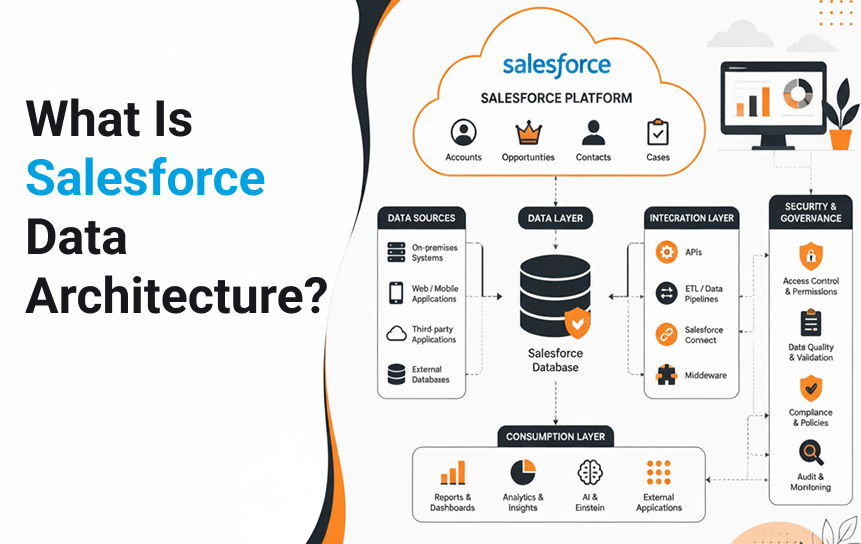
Salesforce Integration plays a key role in connecting Salesforce with other business systems, ensuring data flows smoothly across platforms without manual effort. Salesforce data architecture is the structured design that defines how data is organized, connected, and managed inside Salesforce. It includes the Salesforce data model, object structure, relationships, metadata structure, and rules that control how CRM records behave across the system, often supported through Salesforce Integration Solutions.
In simple terms, it is the blueprint of your CRM. It decides how customers, deals, and service data are stored and how they connect through a clear data hierarchy, especially when multiple systems are integrated.
A well-planned Salesforce data strategy ensures that every piece of data has a purpose and a place. It also helps teams organize CRM data effectively instead of creating scattered or duplicate records across departments, making integrations more reliable and consistent.
Why Data Architecture Matters
A weak CRM data architecture creates confusion very quickly. Different teams start entering data in different formats, leading to poor data consistency and unreliable reporting. Over time, this affects everything from sales tracking to executive dashboards.
A strong Salesforce data architecture best practices approach ensures structured data standardization, clear rules, and controlled CRM records across the organization. This is what helps teams maintain clean customer data and avoid messy duplication issues.
Without this foundation, even simple reporting becomes difficult because the underlying data is not reliable.
Relationship Between Data and CRM Performance
CRM performance is not just about speed. It is also about how well the system understands relationships between data. These data relationships define how accounts, contacts, opportunities, and other objects interact.
When the business data model is properly designed, Salesforce can optimize CRM performance, improve reporting accuracy, and ensure that data flows logically across the system. Poor relationships, on the other hand, break reporting and make decision-making harder.
A structured system helps improve decision-making because the data actually reflects real business activity.
Impact on Business Scalability
Scalability depends on structure. A weak setup cannot support growing teams, increasing data volume, or new business units. That is where CRM scalability becomes a direct outcome of good architecture.
A scalable Salesforce data architecture ensures that new processes can be added without breaking existing structures. It also supports enterprise data architecture standards, allowing Salesforce to integrate with other systems while maintaining consistency.
This is what allows companies to grow without rebuilding their CRM every year.
Core Components of Salesforce Data Architecture
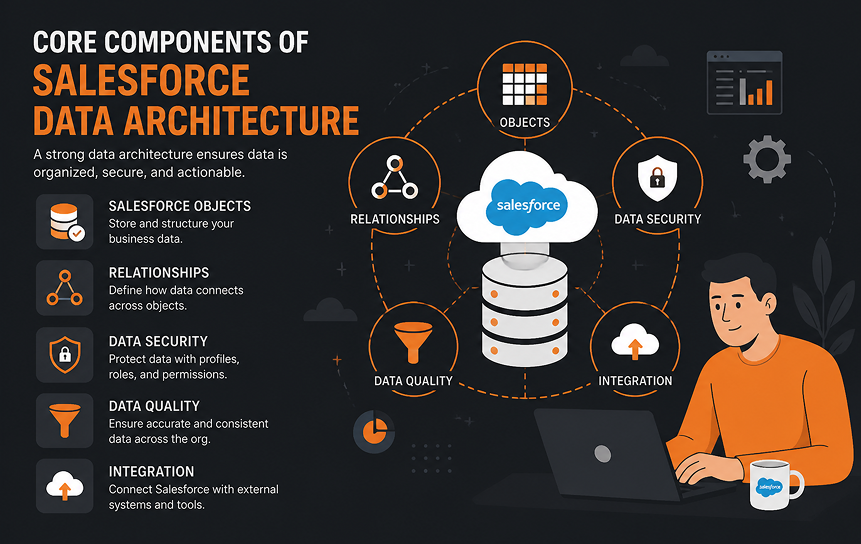
A scalable CRM is not built by adding more records or automation. It is built on a well-designed foundation that determines how data is organized, connected, and managed across the system. These foundational elements include object structures, relationships, record design, and configuration settings. Together, they create a framework that supports data quality, reporting accuracy, automation, and long-term business growth.
The information architecture of Salesforce ensures that all these components work together as a connected ecosystem rather than functioning in isolation. When designed properly, Salesforce data architecture helps organizations maintain clean data, improve user adoption, and scale operations without creating unnecessary complexity.
Standard Objects
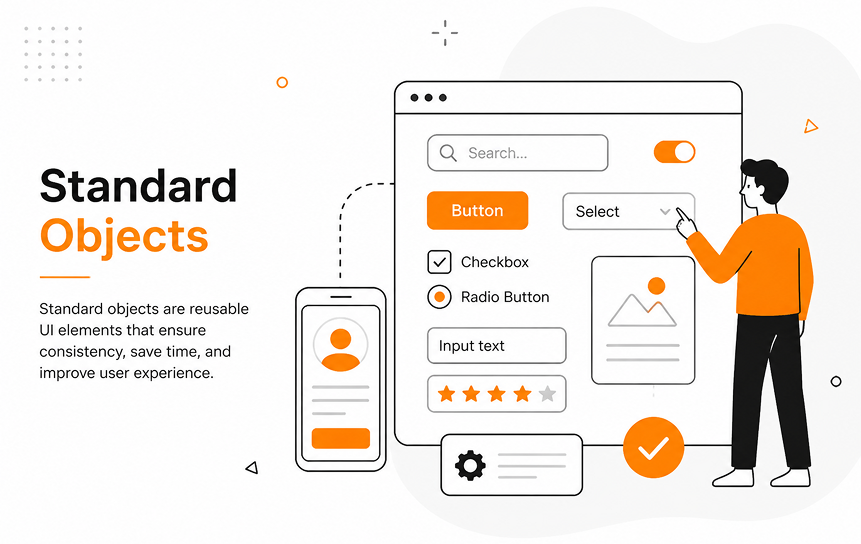
Standard objects are the core building blocks of the Salesforce data model. They include commonly used entities such as Accounts, Contacts, Leads, Opportunities, Cases, Campaigns, and Tasks. Salesforce provides these objects out of the box because they support the most common customer relationship management processes.
One of the biggest advantages of standard objects is consistency. Since they follow Salesforce best practices and are recognized across all Salesforce environments, they simplify implementation, training, and integration efforts. Teams can quickly understand how data is structured and focus on optimizing business processes instead of recreating existing functionality.
Using standard objects whenever possible also improves system maintainability and reduces technical debt. Organizations that rely heavily on standard structures often experience fewer reporting issues and smoother platform upgrades over time.
Custom Objects
While standard objects cover many business requirements, every organization has unique processes that require deeper flexibility through Salesforce Customization. It allows businesses to adapt Salesforce by adding custom objects, fields, and workflows that match specific industry or internal needs.
For example, a healthcare provider may track patient programs, while a manufacturing company may manage equipment installations or service contracts. This makes Salesforce more aligned with real-world operations and improves day-to-day efficiency. In many cases, this is delivered through Salesforce Customization Implementation to ensure proper planning and execution.
However, customization should always be done carefully. Too many unnecessary custom elements can create complexity, duplicate data, and higher maintenance effort. Poor planning in Salesforce data architecture can also make the system harder to scale and manage.
When done correctly, Salesforce Customization improves CRM structure, strengthens reporting accuracy, and supports long-term business growth.
Relationships and Dependencies

Data becomes valuable when it is connected. Relationships define how records interact with one another and create meaningful links between different objects within Salesforce. The two primary relationship types are lookup relationships and master-detail relationships.
Lookup relationships provide flexible connections between records, while master-detail relationships establish stronger dependencies where child records inherit ownership, security, and deletion behavior from parent records. Choosing the right relationship type is critical because it directly affects reporting, automation, and data governance.
Well-designed relationships create a logical flow of information throughout the CRM. For example, an Opportunity can be connected to an Account, allowing sales teams to view all related customer activity in one place. This interconnected structure improves visibility, streamlines workflows, and enhances reporting accuracy.
Strong relationship design also supports a clear data hierarchy, ensuring parent-child dependencies are maintained correctly across the system. Without proper relationships, data becomes isolated, making reporting and analysis significantly more difficult.
Record Structures
Record structures define the information captured within each object. Every record contains fields that store business-critical data such as customer status, revenue value, ownership details, contract dates, or service priorities.
A well-designed record structure ensures users consistently capture the right information at the right time. Required fields, field formats, and standardized naming conventions help maintain accuracy and reduce incomplete records. This directly contributes to stronger data quality management practices across the organization.
Good record design also minimizes duplicate entries and supports more reliable analytics. When records follow consistent standards, leadership teams can trust dashboards, forecasts, and operational reports to make informed decisions.
Ultimately, record structures serve as the foundation for reporting, automation, and customer insights. If the underlying records are inconsistent, every process built on top of them becomes less reliable.
Metadata and Configuration
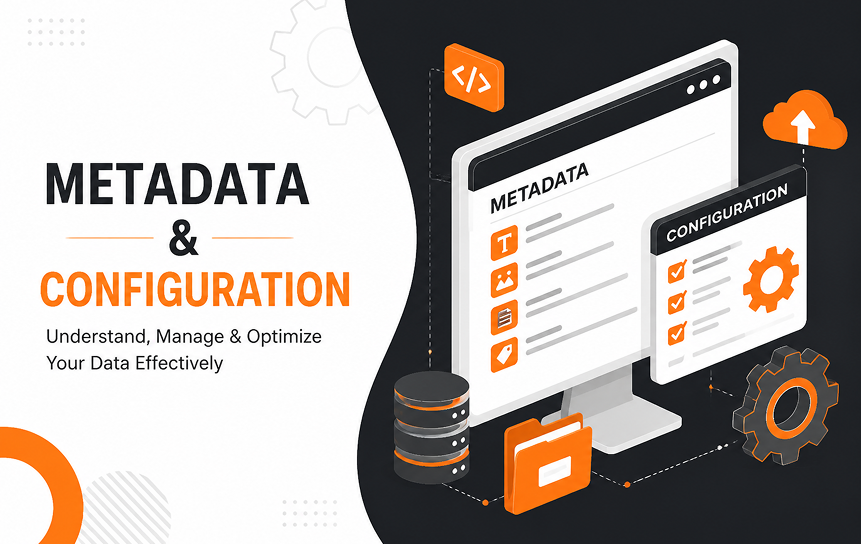
Metadata is the layer that controls how Salesforce functions behind the scenes. Unlike record data, metadata defines system behavior through field settings, validation rules, page layouts, workflows, automation logic, security permissions, and user interfaces.
Metadata plays a critical role in enforcing standards across the CRM. Validation rules ensure required information is entered correctly, page layouts guide users through structured processes, and automation reduces manual effort while maintaining consistency.
A well-configured metadata framework helps organizations enforce data governance policies and maintain data standardization across departments. It prevents users from entering incomplete or inaccurate information and creates a more predictable user experience.
As Salesforce environments grow, metadata becomes increasingly important for maintaining system stability. Proper configuration not only improves data quality but also reduces administrative overhead, supports compliance requirements, and ensures the CRM can adapt to future business needs without extensive redesign.
Why These Components Matter
Each of these elements plays a unique role, but their true value comes from working together as part of a unified Salesforce data architecture. Standard objects provide structure, custom objects add flexibility, relationships create connectivity, record structures ensure consistency, and metadata enforces governance.
When these components are thoughtfully designed, organizations gain cleaner data, more accurate reporting, stronger automation, and a CRM platform that can scale alongside the business. Without this foundation, even the most advanced Salesforce implementation can become difficult to manage, limiting both efficiency and growth.
Common Data Architecture Mistakes Businesses Make
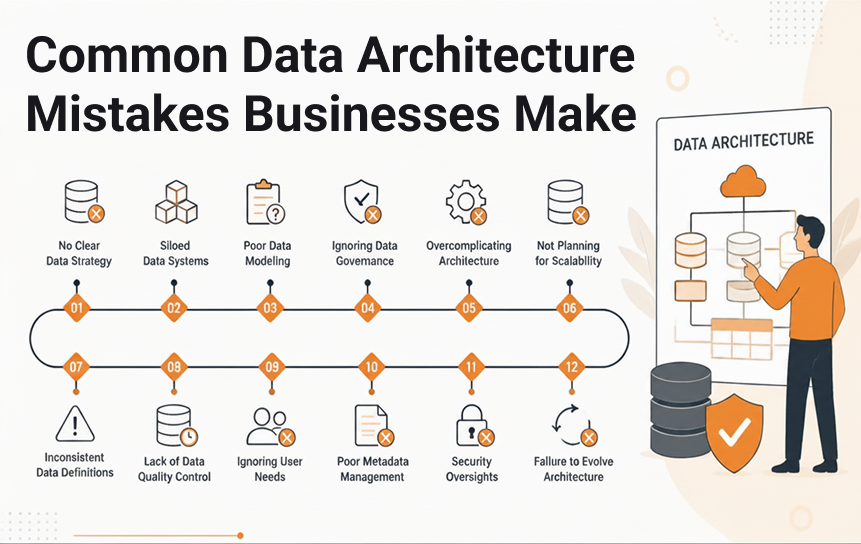
Many CRM problems come from design mistakes rather than system limitations. One of the biggest issues is over-customization, where teams create too many objects and fields without proper planning. This leads to a broken Salesforce data architecture that becomes hard to maintain.
Another common issue is duplicate structures. When teams create multiple systems for similar data, it weakens data consistency and creates reporting conflicts.
Poor naming conventions also create confusion because users no longer understand what each field represents. Weak governance makes this worse because there are no clear rules for managing data.
Finally, lack of long-term planning prevents businesses from building a scalable system that aligns with enterprise data architecture principles.
Best Practices for Building a Scalable Data Model
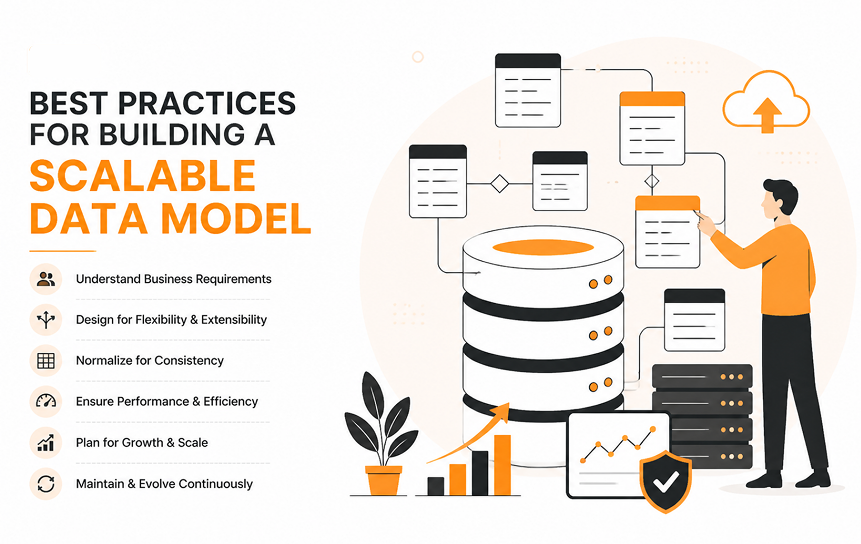
A scalable Salesforce data model starts with understanding real business processes. The goal is to represent how the organization actually works, not just store data. When the model matches real workflows, adoption improves, and insights become more reliable.
Keeping structures simple is essential in Salesforce data architecture. Complex setups slow performance and reduce usability, making the CRM harder to manage over time.
Consistency ensures data flows logically across objects and teams. Standard rules and naming conventions reduce confusion and improve reporting accuracy.
Planning for growth helps the system handle more users, data, and integrations without redesign. This reduces technical debt and supports long-term scalability.
Standardized data collection improves data quality and ensures all teams follow the same rules, leading to better reporting and decision-making.
Quick Summary
| Practice | Benefit |
| Simplicity | Easier use and better performance |
| Consistency | Reliable reporting across teams |
| Scalability | Supports business growth |
| Standardization | Cleaner, accurate data |
Data Governance Strategies That Improve CRM Performance
Data governance defines how data is controlled across the system. A strong Salesforce data governance framework ensures that every record has ownership and accountability.
Clear data quality standards help maintain clean customer data and improve data quality management across departments. Access controls protect sensitive information and ensure that only authorized users can modify key records.
Compliance requirements ensure alignment with legal and industry standards, while lifecycle management ensures data does not accumulate unnecessarily over time.
Together, these strategies support a strong Salesforce data strategy that keeps the system stable and scalable.
How Clean Data Improves Reporting and Analytics
Clean data directly improves reporting accuracy because it removes inconsistencies from the system. When CRM records are structured properly, dashboards reflect real performance instead of fragmented information.
Better forecasting becomes possible because historical data is reliable. Executive reporting becomes more meaningful because leaders can trust the numbers.
Reliable dashboards support faster decision-making because they reflect actual business activity. Clean data also improves segmentation, performance tracking, and overall CRM usability.
Data Quality Management Best Practices
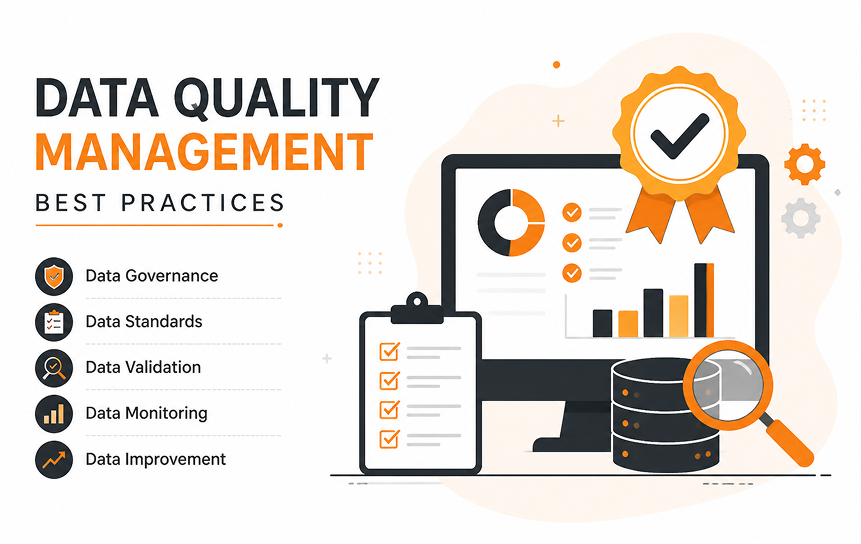
Improving data quality starts with preventing duplicates before they enter the system. Validation rules help enforce structure and ensure correct data entry.
Standardized formats across fields improve consistency and reduce confusion. Regular audits help identify outdated or incorrect data, while ongoing monitoring ensures long-term stability.
These practices work together to improve CRM data quality, reduce duplicate records, and optimize CRM performance over time.
Future-Proofing Your Salesforce Data Architecture
A future-ready Salesforce system must be designed to support new business units, third-party integrations, and growing data volumes without breaking performance or structure.
Preparing for integrations ensures that Salesforce can connect smoothly with external systems such as ERPs, marketing tools, or customer platforms while maintaining clean and consistent data flow. At the same time, managing increasing data volume helps maintain system speed, reliability, and reporting performance even as the organization scales.
Adapting to new technologies like automation, AI, and advanced analytics also requires a solid foundation built on structured and reliable data. Without proper Salesforce Support & Maintenance, even advanced features can produce inaccurate or inconsistent results.
This is what makes a scalable Salesforce data architecture truly future-proof, enabling long-term business expansion while ensuring stability and performance over time.
Conclusion
A strong Salesforce data architecture is not something businesses notice immediately, but it becomes the reason their CRM either scales smoothly or slowly turns unreliable. When structure is clear, data stays consistent, relationships make sense, and reporting reflects real business activity instead of fragmented inputs from different teams.
Good design brings discipline into how information is created, connected, and maintained. It reduces duplication, improves visibility, and gives teams confidence in the numbers they use every day. Over time, this directly strengthens decision-making and operational speed.
Most importantly, a well-planned structure doesn’t just solve today’s problems; it prevents tomorrow’s. It keeps the CRM stable even as data, users, and processes grow across the organization.
Contact us to start strengthening your CRM foundation with Salesforce data architecture and prevent data chaos from slowing your business growth.
FAQs
-
What is Salesforce data architecture?
Salesforce data architecture is the structured framework that defines how data is stored, organized, and connected inside Salesforce. It includes objects, fields, relationships, and rules that ensure business processes run smoothly. A well-planned, scalable Salesforce data architecture helps organizations manage increasing data without losing performance or clarity. It is the foundation for building a reliable CRM system that supports long-term growth and reporting accuracy.
-
Why is CRM data architecture important?
CRM data architecture is important because it ensures consistent, reliable, and well-structured data across the entire organization. It is a core part of any Salesforce data management strategy, helping teams make better decisions using accurate information. Without it, businesses struggle with misaligned reports, duplicated records, and poor visibility. Strong architecture also supports CRM data structure for growing businesses, making it easier to scale operations smoothly.
-
How does poor data architecture affect reporting?
Poor data architecture breaks the flow of reliable information. It creates duplicate records, weak relationships, and inconsistent field usage, which lead to incorrect dashboards and conflicting reports across teams. This directly reduces trust in data and slows down decision-making. In contrast, applying Salesforce data architecture best practices ensures reporting is accurate, unified, and dependable across departments.
-
What is data governance in Salesforce?
Data governance in Salesforce is the structured framework that defines rules, roles, and responsibilities for managing CRM data. A strong Salesforce data governance framework controls how data is created, validated, accessed, and maintained. It ensures compliance, reduces errors, and improves consistency. It also plays a key role in improving CRM data quality by enforcing standards across teams and preventing poor data entry practices.
-
How can businesses reduce duplicate CRM records?
Businesses can reduce duplicates by combining technical tools and strong processes. This includes using Salesforce duplicate rules, validation rules, and standardized input formats. Training users and enforcing governance policies are also essential. These practices are part of a broader Salesforce data management strategy that ensures clean, reliable, and structured data across the CRM system.
-
How often should CRM data structures be reviewed?
CRM data structures should be reviewed at least once or twice a year, or whenever major business changes occur, such as new integrations, product updates, or process changes. Regular reviews are an important part of how to design Salesforce data architecture effectively, ensuring the system remains aligned with business needs and continues improving CRM data quality over time.


