
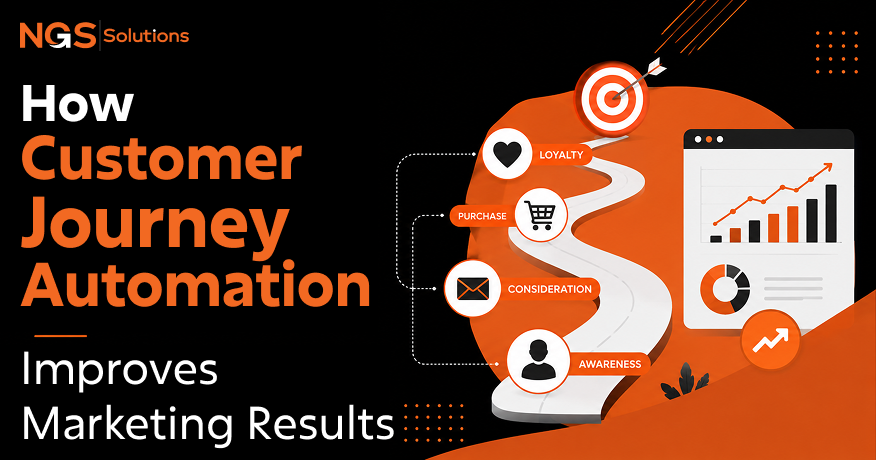
Customer behaviour has changed significantly, with buyers now interacting with brands across multiple channels before making decisions. They research, compare options, engage with content, and expect personalised experiences throughout their journey.
Customer journey automation helps businesses connect data, insights, and communication to create meaningful interactions at every stage. By using advanced platforms such as Salesforce Marketing Cloud solutions, companies can deliver targeted campaigns, automate customer engagement, and build stronger relationships through personalised messaging.
Rather than sending generic communications, businesses can create relevant experiences based on customer behaviour, preferences, and lifecycle stages. This approach improves lead nurturing, increases conversions, strengthens retention, and helps brands deliver consistent customer experiences across every touchpoint.
What Is Customer Journey Automation?
Customer journey automation is the use of technology, data, and predefined workflows to automatically manage customer interactions throughout the buying journey. It connects different marketing activities, such as email communication, website experiences, advertisements, and customer follow-ups, into a unified system.
In traditional marketing, businesses often create separate campaigns for different goals. One campaign may focus on generating leads, another may promote products, and another may attempt to retain existing customers. However, these activities can feel disconnected when they are not linked together.
A customer journey automation strategy creates a continuous experience where each interaction builds on the previous one. The system recognises customer actions and responds with relevant communication. For example, when a visitor downloads a guide from a website, they can automatically enter an email sequence designed to educate them further. If they later visit pricing pages or request information, the communication can change to focus on purchase decisions.
This process is often managed through a marketing automation workflow that uses customer information and behavioural triggers to determine what message should be delivered, when it should be delivered, and through which channel.
Understanding how customer journey automation works requires looking at the relationship between customer behaviour and automated responses. Every action a customer takes provides valuable information. A website visit, email click, product search, or previous purchase reveals something about customer interests and intent.
By analysing these signals, businesses can create an automated customer journey that feels more personalised and relevant instead of relying on one-size-fits-all marketing.
Understanding the Customer Journey
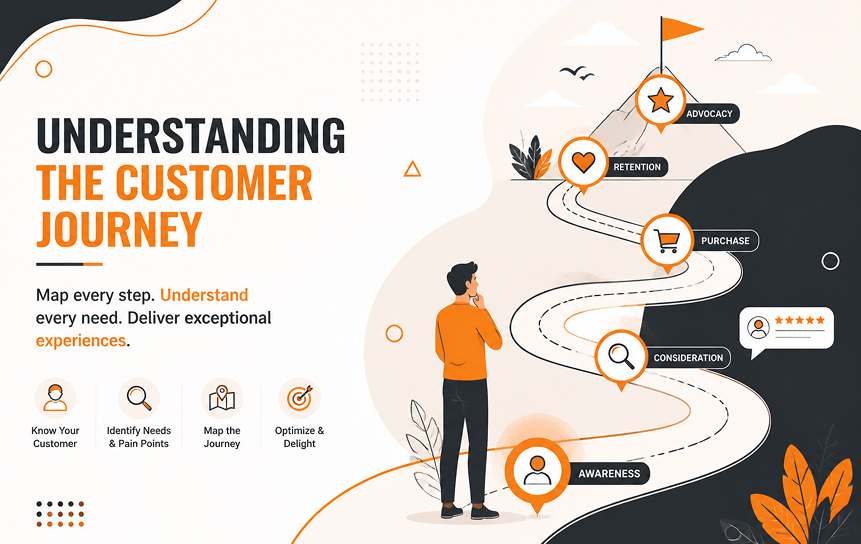
The customer journey represents the complete experience a person has with a brand from their first interaction to becoming a loyal customer. It includes every stage of the relationship, from initial awareness and research to purchasing decisions, repeat business, and brand advocacy.
A successful marketing strategy begins with understanding that customers are not simply moving through a sales funnel. They are experiencing a series of interactions that influence their perception of a brand.
This is why customer journey mapping has become an important part of modern marketing planning. Journey mapping helps businesses visualise customer behaviour, identify important customer touchpoints, and understand where improvements can be made.
A customer journey map examines how people discover a brand, what questions they have, what challenges they experience, and what influences their final decisions. It provides insights into customer expectations and helps marketers design better experiences.
For example, a potential customer researching a software product may not immediately need a sales message. At the awareness stage, they may need educational content that explains a problem and possible solutions. During the consideration stage, they may need comparisons, reviews, or demonstrations. After purchase, they may need onboarding support and guidance.
A detailed journey map allows businesses to create communication that matches customer intent rather than interrupting customers with irrelevant messages.
The process of journey mapping also helps businesses identify opportunities for customer engagement automation. When marketers understand where customers need support, they can create automated workflows that provide assistance at important moments.
Why Automation Matters
As businesses attract more customers, manually managing every interaction becomes impossible. Customers expect fast responses, relevant information, and consistent experiences across different platforms.
This is where automation becomes valuable. Customer journey automation enables businesses to maintain personalised communication without requiring marketing teams to manually manage every customer interaction.
For example, a new customer may receive an automated welcome experience after signing up for a service. A potential buyer who has shown interest but has not purchased may receive a carefully planned nurturing sequence. A customer who has not interacted with a brand for several months may receive a re-engagement campaign.
These automated processes allow businesses to create meaningful communication while saving time and improving efficiency.
The importance of automation has increased because customers now expect brands to understand their needs. Generic marketing messages often fail because they ignore customer context. A person who has already purchased a product should not receive the same message as someone who has never interacted with the brand before.
Customer lifecycle automation solves this problem by creating different communication paths based on customer relationships. It allows businesses to manage the entire customer lifecycle, from attracting new prospects to retaining existing customers.
Modern consumers also interact with brands across multiple platforms, making an omnichannel customer journey increasingly important. Customers expect a consistent experience whether they engage through email, social media, websites, mobile applications, or customer support channels.
Automation connects these interactions and ensures that customer communication remains consistent across different touchpoints.
Stages of the Customer Journey
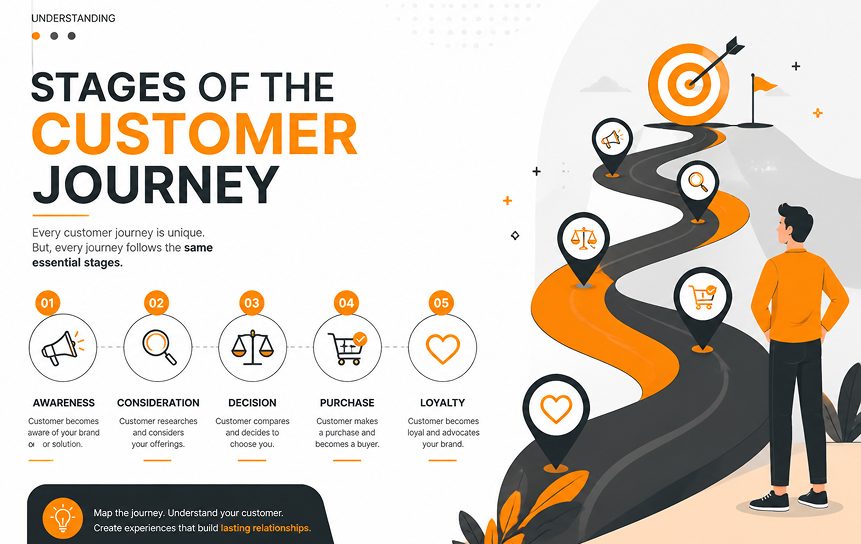
Understanding the stages of the customer journey is essential for creating effective automated marketing strategies. Each stage represents a different customer mindset and requires a different approach.
A successful automated customer journey does not treat every customer the same. Instead, it adapts communication based on where the customer is in their relationship with the brand.
Awareness
The awareness stage is the beginning of the customer journey. At this point, customers may have identified a problem or need but may not yet know which solution is right for them.
The primary goal during awareness is building trust and providing valuable information. Customers are usually looking for education rather than direct sales messages.
Businesses can use customer journey automation to capture early interest and begin building relationships. When someone interacts with a blog article, downloads a resource, or subscribes to updates, automation can deliver relevant content based on their interests.
For example, a company offering marketing software may identify that a visitor is researching ways to improve lead generation. Instead of immediately promoting a product, the company can provide educational content about lead nurturing, campaign automation, and improving customer engagement.
Over time, these interactions create familiarity and trust. The customer begins to see the brand as a useful source of information rather than simply another company trying to sell something.
Automated marketing campaigns are especially effective at this stage because they allow businesses to nurture large audiences while still maintaining personalised communication.
Consideration
The consideration stage begins when customers actively evaluate possible solutions. They understand their problem and are now comparing different brands, products, or services.
At this stage, customers need more detailed information to support their decision-making process. They may want case studies, product demonstrations, comparisons, reviews, or expert guidance.
A strong marketing automation workflow helps businesses provide this information at the right time. Instead of sending random promotional messages, automation can respond to customer behaviour.
For example, if a potential customer repeatedly visits a pricing page, the system can recognise increased purchase intent and provide content focused on benefits, customer results, or implementation guidance.
This stage is where lead nurturing becomes extremely important. Many potential customers are interested but not ready to buy immediately. Consistent, valuable communication keeps them engaged until they are ready to make a decision.
Customer journey automation examples during this stage include personalised email sequences, educational campaigns, product recommendations, and targeted follow-up communication.
Purchase
The purchase stage is where customer interest turns into action. However, even customers who are ready to buy can experience uncertainty before completing a transaction.
A complicated purchasing process, unanswered questions, or lack of confidence can prevent conversions. Customer journey automation helps businesses remove these barriers by providing timely support.
Automated messages can guide customers through the final decision-making process by offering helpful information, reminders, and personalised recommendations.
For example, an online retailer may use trigger-based campaigns to reconnect with customers who abandoned their shopping carts. A service provider may automatically send additional information after a customer requests a consultation.
The goal is to make purchasing simple and friction-free. A well-designed automated customer journey ensures customers receive support when they need it most.
Retention
Customer retention is one of the most important parts of long-term business growth. Acquiring new customers often requires significant investment, while existing customers already understand the value of a brand.
Customer lifecycle marketing automation helps businesses maintain relationships after purchase by continuing meaningful communication.
After purchasing, customers may need onboarding guidance, product education, support information, or personalised recommendations. Automation ensures these interactions happen consistently.
A strong retention strategy focuses on helping customers achieve success. When customers receive ongoing value, they are more likely to remain loyal and continue engaging with the business.
Advocacy
The advocacy stage represents the point where satisfied customers become active supporters of a brand.
Customers who have positive experiences are more likely to recommend businesses, leave reviews, and share their experiences with others. This creates valuable word-of-mouth marketing.
Customer engagement automation can help identify opportunities to encourage advocacy. Businesses can automatically request feedback, invite customers to referral programmes, or share loyalty offers with highly engaged customers.
Advocacy transforms customers from buyers into long-term brand supporters, creating additional growth opportunities through trust and recommendations.
Benefits of Journey Automation
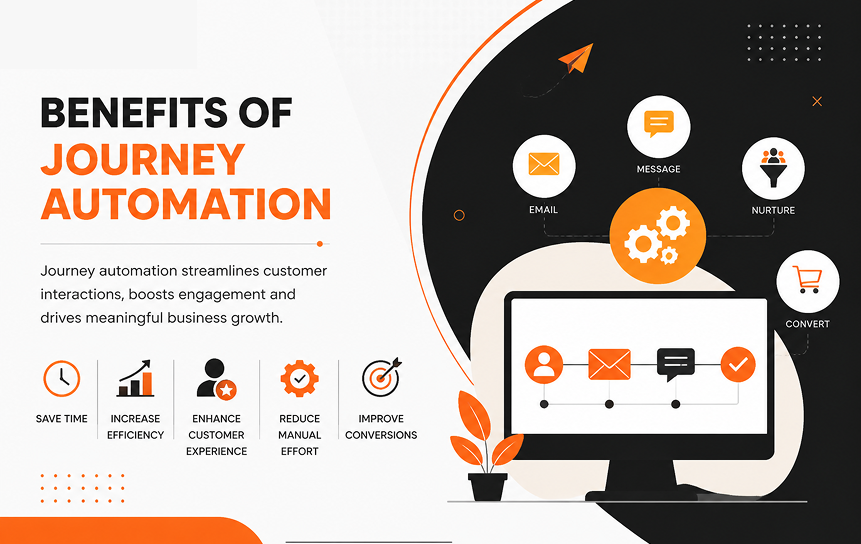
Customer journey automation has become a powerful approach for businesses that want to improve marketing performance while creating better experiences for customers. Modern customers expect brands to understand their preferences, respond quickly, and provide relevant information without unnecessary delays. Automation helps businesses achieve this by connecting customer data, marketing activities, and communication channels into a single, organised system.
The benefits of customer journey automation go beyond saving time. While automation reduces repetitive marketing tasks, its greatest value comes from improving the quality of customer interactions. Businesses can understand customer behaviour more effectively, deliver personalised experiences, and create stronger relationships throughout the customer lifecycle.
A well-designed automated customer journey helps marketers move from reactive communication to proactive engagement. Instead of waiting for customers to ask questions or take action, businesses can anticipate needs and provide useful information at important moments.
Faster Customer Response
Speed plays an important role in customer experience. Customers today expect immediate responses when they interact with brands, whether they are requesting information, downloading content, signing up for a service, or showing interest in a product.
Customer journey automation allows businesses to respond instantly through automated messages and workflows. A potential customer who completes a form does not need to wait for a salesperson to manually follow up. Instead, they can immediately receive relevant information that continues the conversation.
For example, a customer who subscribes to a company newsletter can automatically enter a welcome email sequence that introduces the brand, explains its value, and provides useful resources. This creates a smooth first impression and keeps the customer engaged.
Faster responses also improve lead nurturing because customers receive support during moments when their interest is highest. If someone has just explored a product page or downloaded a guide, timely communication can help maintain their attention and encourage further interaction.
The ability to respond quickly through automated customer engagement gives businesses a competitive advantage because customers often choose brands that provide the most convenient and responsive experiences.
Better Personalisation
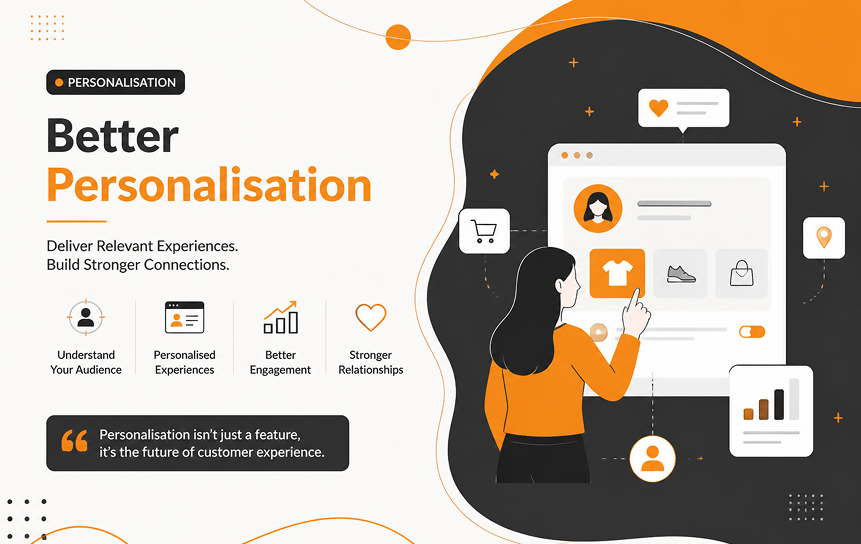
Personalisation has become one of the most important elements of successful marketing. Customers are surrounded by countless marketing messages every day, and generic communication often fails to capture their attention.
Customer journey automation enables businesses to create personalised experiences by analysing customer data, audience behaviour, and previous interactions. Instead of sending identical messages to everyone, businesses can tailor communication based on individual interests and customer lifecycle stages.
For example, an online retailer can recommend products based on previous purchases and browsing behaviour. A software company can provide educational content based on the features a customer has explored. A subscription-based business can send renewal reminders based on customer usage patterns.
This type of personalised communication makes customers feel understood. It demonstrates that a brand is paying attention to their needs rather than simply sending promotional content.
Effective personalisation also improves engagement because customers are more likely to interact with messages that are relevant to their goals. When combined with behavioural triggers, automation can deliver experiences that feel timely and natural.
Improved Customer Experience
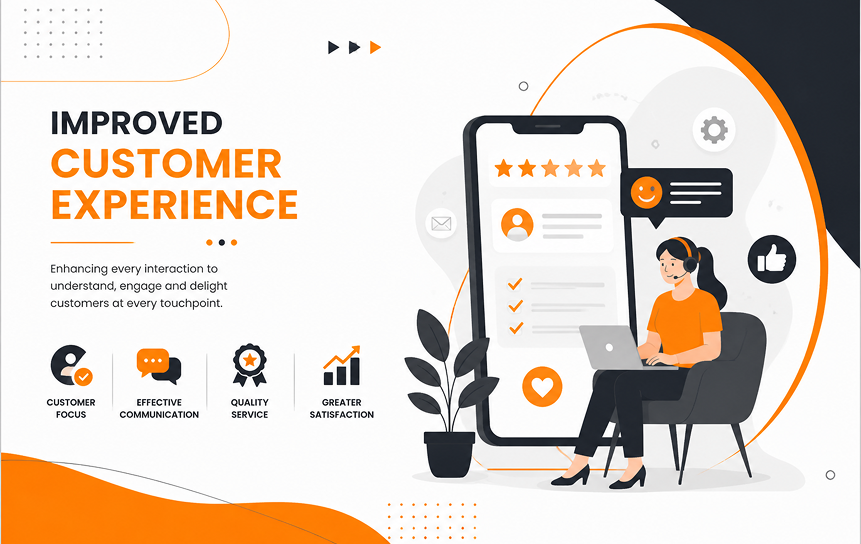
Customer experience has become a major factor influencing purchasing decisions. Customers do not judge brands only by the products they offer; they also consider how easy, helpful, and consistent every interaction feels.
A strong customer journey automation strategy improves customer experience by creating connected communication across different touchpoints. Customers receive relevant information regardless of where they interact with a brand.
For example, a customer may discover a business through social media, visit the website, communicate through email, and later contact customer support. Without automation, these interactions may feel disconnected. With a well-designed system, each channel contributes to a unified experience.
This is especially important for creating an omnichannel customer journey. Customers expect brands to recognise their previous interactions and provide consistent communication across platforms.
Automation helps businesses maintain continuity by connecting customer information from different channels. This allows companies to understand customer needs better and provide more helpful experiences.
Higher Conversion Rates
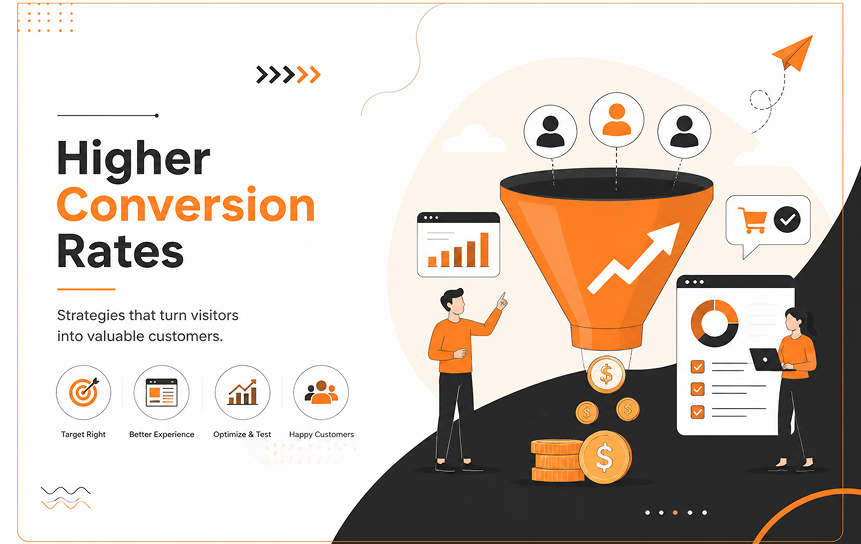
Increasing conversions is one of the main reasons businesses invest in customer journey automation. Many potential customers do not purchase immediately after discovering a brand. They need information, reassurance, and multiple interactions before making a decision.
Automation helps businesses guide customers through the marketing funnel by delivering relevant communication at each stage.
A potential customer in the awareness stage may receive educational content. Someone comparing solutions may receive product information or customer success stories. A customer who has shown strong buying intent may receive a personalised offer or sales follow-up.
These targeted interactions improve conversion optimisation because customers receive the information they need when they are most likely to respond.
Automated marketing campaigns also allow businesses to recover lost opportunities. For example, abandoned cart workflows, re-engagement campaigns, and follow-up sequences help reconnect with customers who showed interest but did not complete an action.
By improving timing and relevance, customer journey automation helps businesses convert more leads into customers.
Better Customer Retention
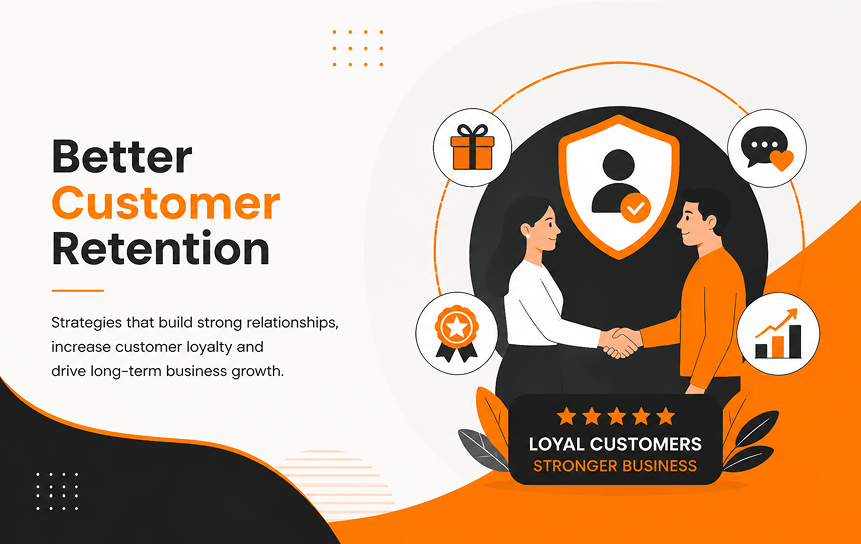
Customer retention is essential for sustainable business growth. A customer who continues purchasing from a brand over time often provides more value than a one-time buyer.
Customer lifecycle automation supports retention by maintaining relationships after the initial purchase. Many businesses focus heavily on acquiring customers but fail to provide enough communication after conversion.
Automation helps solve this problem by creating ongoing lifecycle communication. Customers can receive onboarding support, educational resources, product updates, loyalty messages, and personalised recommendations.
For example, a company offering professional software may automatically provide training resources after purchase. An e-commerce business may send personalised recommendations based on previous orders. A service provider may check customer satisfaction after completing a project.
These interactions show customers that the relationship continues beyond the transaction.
A strong retention-focused automation strategy improves customer loyalty, reduces churn, and increases the likelihood of repeat business.
Building an Effective Automated Journey
Creating a successful automated customer journey requires careful planning. Automation tools alone cannot create meaningful experiences. Businesses must first understand their customers, define their objectives, and design communication that supports customer needs.
A successful journey combines customer insights, strategic planning, and continuous improvement. The goal is to create a system that guides customers naturally while providing value at every stage.
Defining Customer Goals
The first step in building an effective automated journey is understanding what the business wants to achieve. Without clear goals, automation can become a collection of disconnected messages that do not contribute to meaningful results.
Businesses need to define the purpose of each automated workflow. Some companies may want to increase qualified leads, while others may focus on improving customer onboarding, increasing repeat purchases, or reducing customer churn.
Clear objectives help determine what type of communication customers should receive and how success should be measured.
For example, a company focused on lead generation may create an automation workflow designed to educate prospects and move them towards a sales conversation. A company focused on retention may create workflows that improve customer satisfaction after purchase.
Defining goals ensures that every automated interaction has a clear purpose.
Mapping Customer Touchpoints
Customer journey mapping is a critical part of creating effective automation. Before building workflows, businesses need to understand how customers currently interact with their brand.
Every customer touchpoint provides an opportunity to improve engagement. These touchpoints may include website visits, email interactions, social media activity, product demonstrations, customer support conversations, and purchases.
Through journey mapping, marketers can identify important moments where customers need additional guidance or information.
For example, if customers frequently visit a pricing page but do not purchase, this may indicate that they need more reassurance before making a decision. Businesses can then create automated communication that addresses common concerns.
Understanding these interactions allows companies to design customer journey workflow examples that reflect real customer behaviour rather than assumptions.
Creating Trigger Events
Trigger events are the foundation of effective automation. They determine when a specific action should happen based on customer behaviour.
A trigger may occur when someone subscribes to a newsletter, downloads content, views a product page, completes a purchase, or becomes inactive for a certain period.
These behavioural triggers allow businesses to create communication that feels timely and relevant.
For example, when a customer completes a purchase, an automated workflow can send confirmation messages, onboarding instructions, and follow-up communication. When a customer stops engaging, a reactivation campaign can attempt to rebuild interest.
The power of trigger-based campaigns comes from their ability to respond to real customer actions. Instead of guessing what customers want, businesses can use behaviour as a guide.
Measuring Success
Measuring performance is essential for improving customer journey automation. Businesses need to evaluate whether their workflows are achieving their intended objectives and delivering meaningful results.
Key performance indicators include engagement metrics, conversion rates, customer retention, response rates, and overall campaign performance. These measurements help marketers identify the effectiveness of different automation strategies and highlight areas that require improvement.
Conversion tracking allows businesses to determine which workflows are generating results and which ones need optimisation. For example, if an email sequence receives high engagement but generates limited conversions, marketers may need to refine the messaging, timing, or offer. Similarly, if customers frequently leave at a specific stage of the journey, the automation process may need adjustments to remove barriers and improve the experience.
Continuous measurement ensures that customer journey automation remains effective, adaptable, and aligned with business goals rather than becoming a set of outdated campaigns.
Common Journey Automation Mistakes
Even well-designed automation strategies can fail when businesses focus only on technology instead of customer needs. Effective automation requires careful planning, testing, and ongoing improvement.
Poor Audience Segmentation
Audience segmentation is one of the most important parts of successful automation. When businesses treat all customers the same, communication becomes less relevant.
Different customers have different needs depending on their interests, behaviour, purchase history, and relationship with the brand.
Poor segmentation can result in customers receiving messages that do not match their situation. For example, sending advanced product information to a new visitor or promotional messages to someone who has already purchased can create a poor experience.
Effective segmentation allows businesses to create more relevant automated marketing campaigns and improve engagement.
Too Many Messages
Automation makes it easier to communicate with customers, but excessive communication can damage relationships.
Customers do not want to feel overwhelmed by constant promotions or irrelevant messages. Too many automated messages can reduce trust and increase unsubscribes.
Successful marketing journey automation best practices focus on quality rather than quantity. Every message should provide value and support the customer’s current needs.
Ignoring Customer Behaviour
Customer behaviour provides valuable insights into customer preferences and buying intent. Businesses that overlook behavioural data often create automation strategies that fail to deliver relevant experiences.
Customer actions reveal important information about their interests and needs. Website activity, email engagement, purchase history, and browsing patterns help businesses identify customer expectations and create more targeted communication.
Ignoring these signals limits personalisation and can result in irrelevant messages. By analysing customer behaviour, businesses can build more effective automated journeys that improve engagement and deliver meaningful customer experiences.
Lack of Testing
Automation requires continuous testing and improvement. Customer preferences change, and what works today may not work in the future.
Businesses should regularly analyse performance and adjust their workflows based on results.
Testing different messages, timing strategies, and customer segments helps improve the effectiveness of automated journeys over time.
Best Practices for Customer Journey Automation
A successful customer journey automation strategy requires more than simply setting up automated emails or creating a series of marketing workflows. Businesses need to understand customer expectations, use data effectively, and continuously improve their communication processes.
The most effective automation strategies focus on creating value at every stage of the customer lifecycle. Automation should support the customer rather than interrupt them. When customers receive useful information, personalised recommendations, and timely support, they are more likely to develop trust and maintain a long-term relationship with a brand.
Marketing teams that follow strong automation principles can create experiences that feel natural and human while still benefiting from the efficiency of technology. The objective is not to replace human interaction but to enhance it by ensuring customers receive relevant communication when it matters most.
Use Customer Data
Customer data is the foundation of effective customer journey automation. Without accurate information about customer behaviour, preferences, and interactions, businesses cannot create meaningful personalised experiences.
Every customer interaction provides valuable insights. Website activity, purchase history, email engagement, content downloads, and customer feedback all contribute to a better understanding of customer needs.
Businesses can use this information to create more accurate audience segmentation and develop communication strategies that match different customer groups.
For example, a customer who frequently views premium products should not receive the same communication as someone who is still exploring basic options. Similarly, an existing customer should receive different messages compared to a new lead who has just discovered the brand.
Using customer data allows businesses to create more relevant automated messages and improve the overall customer experience.
However, effective data usage requires responsibility. Customers expect businesses to respect their privacy and use information in ways that provide genuine value. Data should be used to improve experiences rather than simply increase promotional communication.
When customer data is combined with marketing automation workflows, businesses can create a deeper understanding of customer behaviour and deliver more effective lifecycle communication.
Personalise Every Interaction
Personalisation has become a central element of modern marketing because customers expect brands to understand their individual needs.
Basic personalisation, such as adding a customer’s name to an email, is no longer enough. Effective personalisation involves understanding customer interests, behaviour patterns, previous interactions, and current position in the customer journey.
Customer journey automation allows businesses to personalise communication at scale. Instead of manually creating individual experiences, automation systems can deliver customised messages based on customer actions.
For example, a customer who recently purchased a product may receive educational content about how to use it effectively. A customer who repeatedly explores a specific category may receive recommendations related to those interests. A customer who has not interacted with a brand recently may receive a personalised re-engagement campaign.
This type of automated customer engagement improves relationships because customers receive communication that feels relevant rather than random.
Personalised experiences also improve marketing performance because people are more likely to engage with content that addresses their specific needs.
The future of marketing will continue moving towards deeper personalisation, where automated systems use customer insights to create highly relevant experiences across every interaction.
Optimise Continuously
Customer journey automation is not a one-time setup process. Customer behaviour, market conditions, and business goals continue to change, meaning automation strategies must evolve over time.
Businesses that achieve long-term success regularly analyse their workflows, identify weaknesses, and make improvements based on performance data.
For example, an email sequence may generate strong engagement but fail to convert customers. In this situation, marketers may need to adjust the messaging, timing, or call-to-action. Similarly, if customers frequently leave at a certain stage of the journey, businesses should investigate what barriers are preventing progression.
Continuous optimisation ensures that automated marketing campaigns remain effective and aligned with customer expectations.
Successful companies treat automation as an ongoing learning process. They analyse engagement metrics, test new approaches, and refine their strategies based on real customer behaviour.
This approach helps businesses improve conversion optimisation while maintaining a strong focus on customer satisfaction.
Monitor Analytics
Analytics provide the information businesses need to evaluate whether their automation efforts are delivering results. Without proper measurement, it becomes difficult to identify successful strategies and areas that need improvement.
Customer journey automation should be monitored through key performance indicators such as engagement rates, conversion rates, customer retention, and campaign performance.
Engagement metrics reveal how customers respond to communication. Open rates, clicks, website activity, and interactions provide valuable insights into customer interest and content effectiveness.
Conversion tracking shows whether automated workflows are successfully guiding customers towards desired actions, such as completing purchases, booking consultations, or renewing subscriptions.
Analytics also reveal changes in customer behaviour over time. By analysing patterns, marketers can identify opportunities to enhance customer journeys and develop more effective workflows.
A data-driven approach ensures automation decisions are based on measurable results rather than assumptions.
Future of Customer Journey Automation
The future of customer journey automation is being shaped by advancements in artificial intelligence, predictive analytics, and connected digital experiences. As customer expectations continue to rise, businesses are adopting smarter automation systems that can analyse behaviour, anticipate needs, and deliver more personalised interactions.
Automation is moving beyond basic rule-based communication towards intelligent systems that can adapt to individual customer preferences and actions. Future marketing strategies will focus on creating experiences that are not only automated but also responsive, relevant, and personalised across every customer touchpoint.
Businesses that invest in advanced customer lifecycle automation will be better positioned to build stronger relationships, improve customer engagement, and compete in an increasingly customer-focused digital environment.
AI Personalisation
Artificial intelligence is transforming the way businesses create personalised customer experiences. While traditional automation depends on predefined rules and workflows, AI-powered systems can analyse large volumes of customer data and identify patterns automatically. Technologies such as Salesforce AI help businesses use intelligent insights to improve customer interactions, automate decision-making, and deliver more relevant experiences.
AI personalisation enables businesses to deliver communication that adapts to customer preferences, interests, and changing behaviours. By analysing browsing activity, purchase history, engagement levels, and previous interactions, AI systems can predict which content, products, or offers are most relevant for each customer.
This creates a more flexible automated customer journey where messages and recommendations adjust based on real-time customer behaviour. AI also improves content recommendations, audience segmentation, and campaign optimisation, helping marketers create personalised experiences that feel more relevant, natural, and valuable for customers.
Predictive Marketing
Predictive marketing uses customer data and advanced analytics to anticipate future behaviour. Instead of only responding to customer actions, businesses can identify potential needs before customers actively express them.
This approach allows companies to create proactive marketing strategies.
For example, predictive systems may identify customers who are likely to purchase a particular product, customers who may require additional support, or customers who may be at risk of leaving.
By understanding these patterns, businesses can create targeted communication before problems occur.
Predictive marketing strengthens customer lifecycle marketing automation because it allows brands to engage customers at the right moment with the right message.
Rather than focusing only on past behaviour, predictive approaches help businesses prepare for future customer needs.
Omnichannel Experiences
Customers today interact with brands through multiple channels, including websites, mobile applications, email, social media, and customer service platforms.
This has increased the importance of creating a connected omnichannel customer journey. Customers expect brands to recognise them across different platforms and provide consistent experiences regardless of where interaction happens.
Customer journey automation helps connect these channels by combining customer information and communication workflows into a unified system.
For example, a customer who interacts with a brand through social media may later receive personalised email communication based on that interaction. A customer who contacts support may receive follow-up content that reflects their previous conversation.
An effective omnichannel experience removes the feeling of disconnected communication and creates a smoother relationship between customers and brands.
As digital channels continue to expand, businesses that create connected customer experiences will be better positioned to build loyalty and improve engagement.
Conclusion
Customer journey automation has become an essential part of modern marketing because customer expectations have shifted towards personalised, convenient, and connected experiences.
Businesses can no longer rely on generic campaigns that treat every customer the same. Customers expect brands to understand their needs, provide relevant information, and communicate at the right moments throughout their journey.
Through customer journey mapping, behavioural triggers, customer data analysis, and strategic marketing automation workflows, businesses can create experiences that guide customers from their first interaction to long-term loyalty.
The benefits of customer journey automation extend beyond improved efficiency. It helps businesses strengthen customer relationships, increase conversions, improve retention, and create more meaningful engagement.
Successful automation requires a customer-first approach. Businesses must focus on understanding customer behaviour, creating personalised communication, and continuously improving their strategies.
As artificial intelligence, predictive marketing, and omnichannel experiences continue to develop, customer journey automation will become even more important for businesses looking to compete in a digital-first environment.
Companies that invest in smarter automation strategies will be able to deliver better customer experiences while building stronger and more valuable relationships throughout the customer lifecycle.
FAQs
-
What is customer journey automation?
Customer journey automation uses technology and customer data to automatically deliver personalised messages and experiences throughout the customer lifecycle, from awareness to retention.
-
Why is customer journey mapping important?
Customer journey mapping helps businesses understand customer behaviour, identify important touchpoints, and create better marketing strategies based on real customer needs.
-
How does automation improve customer engagement?
Automation improves engagement by sending relevant, timely, and personalised communication based on customer actions, interests, and preferences.
What channels can be automated?
Common automated channels include email, websites, social media, mobile notifications, advertising platforms, and customer support systems.
-
How do businesses measure customer journey success?
Businesses measure success through metrics such as engagement rates, conversion rates, customer retention, customer satisfaction, and campaign performance.
-
What are the biggest automation mistakes?
Common mistakes include poor audience segmentation, sending too many messages, ignoring customer behaviour, and failing to test and optimise campaigns.


